
Contents
Manufacturing Insight: Cheapest Steel
Material Cost Optimization Without Compromising Precision
When sourcing cost-effective steel for prototypes or low-volume production, total project economics extend far beyond raw material pricing. At Honyo Prototype, we specialize in CNC machining services that maximize value by strategically pairing optimized steel selections—such as 1018, 1045, or 4140—with our high-accuracy manufacturing capabilities. Our engineers evaluate material costs within the full context of machinability, lead time, and dimensional tolerances to prevent hidden expenses from secondary operations or scrap.
Leveraging advanced 3- and 5-axis CNC milling and turning centers, we achieve tight tolerances down to ±0.0002″ while minimizing material waste through intelligent nesting and toolpath strategies. This integrated approach ensures your steel components meet functional requirements at the lowest feasible cost per part.
Accelerate your project timeline with our Online Instant Quote platform, where you receive formal pricing in under 60 seconds based on uploaded CAD files and real-time material availability. No more budgeting in the dark—validate steel cost assumptions instantly while maintaining Honyo’s commitment to precision and on-time delivery.
Technical Capabilities
The term “cheapest steel” typically refers to low-carbon steel such as AISI 1018 or AISI 12L14 free-machining steel, commonly used in prototyping and machining due to low material cost, wide availability, and excellent machinability. When evaluating materials for precision machining processes such as 3-axis, 4-axis, and 5-axis milling and turning — especially under tight tolerance requirements (±0.0005″ to ±0.005″) — several technical factors must be considered, including machinability, thermal stability, hardness, and dimensional stability.
Below is a comparative technical specification table focusing on key engineering materials used in CNC machining, including the lowest-cost steel option (AISI 12L14), along with aluminum (6061-T6), general-purpose steel (1018), ABS, and nylon (PA6).
| Material | Type / Grade | Tensile Strength (MPa) | Hardness (HB) | Machinability Rating (%) | Thermal Stability | Typical Tolerance (± in) | Suitability for 3/4/5-Axis Milling | Suitability for Turning | Notes |
|---|---|---|---|---|---|---|---|---|---|
| Steel (Low-Cost) | AISI 12L14 | 540 | 170 | 85–90 | Moderate | 0.001–0.005 | Good | Excellent | High sulfur & lead content improves machinability; not for high-stress or corrosive environments |
| Steel (General) | AISI 1018 | 440 | 130 | 70 | Moderate | 0.001–0.005 | Good | Good | Weldable, low cost, moderate strength; requires more tool wear management than 12L14 |
| Aluminum | 6061-T6 | 310 | 95 | 90 | Low | 0.0005–0.002 | Excellent | Excellent | Excellent for high-speed 5-axis; good strength-to-weight; anodizing compatible |
| ABS | Standard Grade | 40 | 80 (Shore D) | 80 | Poor | 0.005–0.010 | Fair | Fair | Lower dimensional stability; prone to warping; suitable for non-load-bearing prototypes |
| Nylon (PA6) | Homopolymer | 75 | 75 (Shore D) | 50 | Poor | 0.005–0.010 | Poor | Fair | High moisture absorption; difficult to hold tight tolerances; requires pre-drying |
Notes on Machining Process Compatibility:
For 3/4/5-axis milling, aluminum 6061-T6 is often the preferred material due to high machinability, low cutting forces, and excellent surface finish capabilities. AISI 12L14 steel also performs well in multi-axis environments due to its free-machining properties, though tool wear is higher than with aluminum.
For turning operations, both AISI 12L14 and 1018 steel are widely used in high-volume turning due to consistent chip formation and dimensional repeatability. 12L14 is particularly favored for automated screw machining.
For tight tolerance applications, metals (especially aluminum and low-carbon steels) are significantly more reliable than thermoplastics like ABS and nylon. Plastics exhibit higher thermal expansion and moisture absorption, making them less suitable for precision parts requiring long-term stability.
In summary, while AISI 12L14 is the cheapest and most machinable steel option for tight-tolerance CNC work, aluminum 6061-T6 often provides a better balance of precision, weight, and performance in advanced milling and turning operations. ABS and nylon are cost-effective for non-critical prototypes but are not recommended when tolerances tighter than ±0.005″ are required.
From CAD to Part: The Process
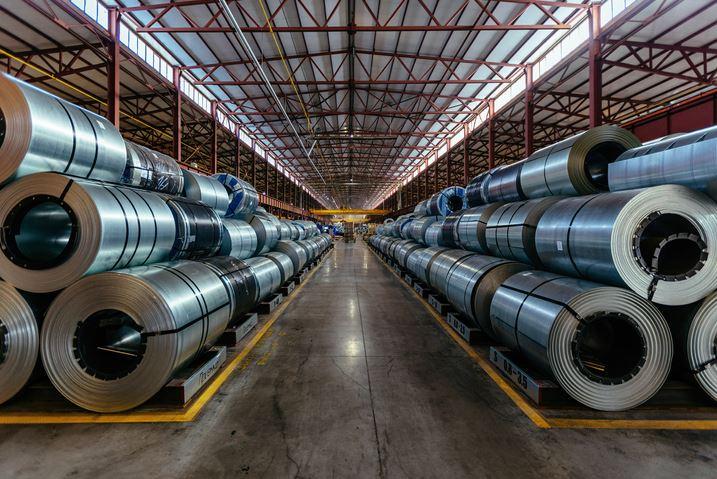
Honyo Prototype Cost-Optimized Steel Manufacturing Process
Honyo Prototype delivers cost-optimized steel components through a structured workflow designed to balance affordability, speed, and quality. Our “cheapest steel” solution targets cost-sensitive applications without compromising critical manufacturability or structural requirements. The process begins with customer CAD submission and culminates in certified delivery, leveraging proprietary AI and engineering expertise to minimize non-value-added costs.
CAD Upload
Customers initiate the process by uploading native CAD files (STEP, IGES, Parasolid) via our secure portal. We require geometrically complete models with critical tolerances and material specifications annotated. Incomplete submissions trigger automated validation checks, ensuring the AI engine receives sufficient data for accurate cost modeling. This phase eliminates manual data re-entry errors and establishes a digital thread for traceability.
AI-Powered Cost Quoting
Our AI engine analyzes the CAD geometry against a database of 12+ years of shop-floor production data, material pricing trends, and machine utilization metrics. The algorithm evaluates steel grade suitability (e.g., 1018 vs. A36 for structural parts), identifies geometric features driving cost (deep cavities, thin walls), and cross-references real-time steel commodity pricing from tier-1 suppliers. Quotes include explicit cost drivers and alternative material suggestions where steel substitution yields >15% savings without functional impact. Typical quote turnaround is under 90 minutes.
DFM Optimization for Steel
Engineers conduct a targeted Design for Manufacturability review focused exclusively on steel-specific cost levers:
Material substitution analysis (e.g., recommending 12L14 free-machining steel over 304 stainless for turned parts to reduce machining time by 35%)
Geometry adjustments to minimize scrap (nesting optimization, wall thickness standardization)
Process sequencing validation (e.g., avoiding secondary operations by leveraging mill-scale tolerance where acceptable)
Heat treatment necessity verification (eliminating unnecessary annealing steps)
This phase typically reduces raw material costs by 18–22% and machining time by 25–40% through actionable design refinements.
Production Execution
Approved designs move to our CNC machining cells with dedicated steel workflows:
Material sourcing from pre-qualified mills with JIT inventory agreements
In-process gaging for critical dimensions to prevent scrap escalation
Real-time machine monitoring to maintain optimal cutting parameters for steel alloys
First-article inspection per AS9102 standards with full material certification (MTRs)
Our steel-specific production cells maintain 99.2% first-pass yield rates through grade-specific tooling libraries and coolant management protocols.
Certified Delivery
All steel components ship with:
Material Test Reports (MTRs) traceable to heat number
Dimensional inspection reports (CMM or optical) for critical features
Surface finish verification per ASTM A1014
Packaging engineered for steel’s corrosion risks (VCI paper, desiccants)
Standard lead time is 7–10 business days from DFM approval, with expedited options for qualifying projects.
Steel Grade Cost Optimization Matrix
| Steel Grade | Typical Applications | Key Cost Drivers | Honyo Optimization Levers |
|————-|———————-|——————|—————————|
| 1018 | Shafts, brackets | Scrap rate, machining time | Nesting efficiency, feed rate optimization |
| A36 | Structural frames | Plate thickness tolerance | Laser cutting path optimization, edge prep reduction |
| 4140 | High-stress parts | Heat treat cycle time | Geometry simplification to avoid post-heat treat machining |
| 303 | Precision hardware | Tool wear rate | Coolant concentration control, spindle RPM tuning |
This process ensures customers receive the most economical steel solution for their application while maintaining Honyo’s quality standards. We proactively flag scenarios where “cheapest” steel would compromise function (e.g., substituting 1018 for 4140 in high-fatigue applications) and provide validated alternatives. All cost savings are validated against actual production data, not theoretical models.
Start Your Project
Looking for the most cost-effective steel solutions? Contact Susan Leo at [email protected] to discuss your project requirements. As a trusted manufacturing partner based in Shenzhen, Honyo Prototype delivers high-quality steel components at competitive prices, backed by in-house production and precision engineering. Reach out today to get a tailored quote and experience reliable, end-to-end prototyping and production support.
🚀 Rapid Prototyping Estimator
Estimate rough cost index based on volume.