
Contents
Manufacturing Insight: Casting Vs
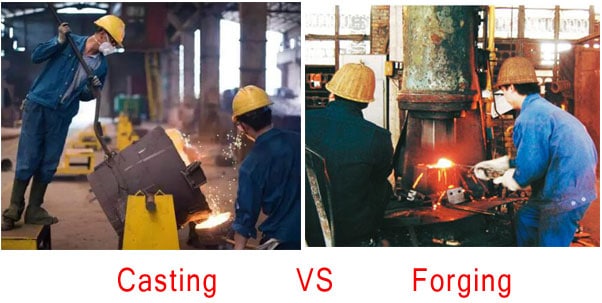
Precision Manufacturing Decision Point: When Casting Falls Short
Traditional casting methods often present significant limitations for complex geometries, tight tolerances, and rapid prototyping cycles. While suitable for high-volume, near-net-shape production of certain components, casting frequently requires extensive secondary machining, post-processing, and extended lead times to achieve critical dimensional accuracy or surface finishes. Material porosity, dimensional variability between castings, and tooling costs further complicate its viability for low-to-mid volume production or iterative design validation.
Honyo Prototype addresses these constraints through advanced 3-5 axis CNC machining services, delivering repeatable precision to ±0.005mm directly from solid billet. Our integrated digital workflow eliminates tooling dependencies, enabling rapid iteration of functional prototypes and bridge-to-production parts in aerospace alloys, medical-grade stainless steels, and engineering polymers. Unlike casting, CNC machining ensures full material integrity, consistent mechanical properties, and immediate traceability without hidden secondary operation costs. This capability is critical for applications demanding zero-defect performance in fluid dynamics, structural load paths, or sealing surfaces where casting defects prove unacceptable.
Accelerate your path from CAD to certified part with Honyo’s Online Instant Quote system. Upload your STEP or Parasolid file to receive a detailed manufacturability analysis, competitive pricing, and lead time estimate within hours—not days. This transparency empowers engineering teams to confidently select CNC machining early in the design phase, avoiding downstream rework and production timeline disruptions.
Material & Process Comparison at a Glance
| Parameter | Investment Casting | Honyo CNC Machining |
|---|---|---|
| Tolerance Capability | ±0.1mm typical (post-machining) | ±0.005mm standard |
| Lead Time (Prototype) | 3-6 weeks | 3-10 business days |
| Tooling Cost | High (patterns/molds) | None |
| Material Integrity | Risk of porosity/inclusions | Full billet integrity |
| Secondary Ops | Often required | Minimized or eliminated |
| Volume Flexibility | Economical only at high volumes | Optimal for 1–500+ parts |
For applications where dimensional fidelity, material performance, and schedule certainty are non-negotiable, CNC machining is not merely an alternative—it is the engineering imperative. Discover how Honyo’s precision machining capabilities resolve casting’s inherent compromises while reducing total project risk. Initiate your quote today at honyoprototype.com/quote.
Technical Capabilities
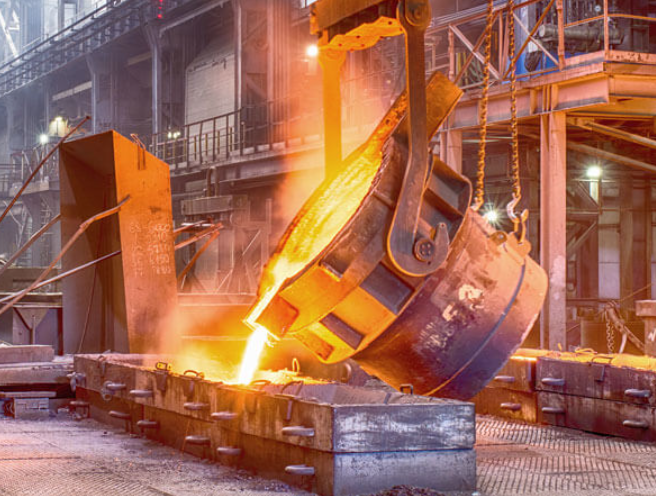
The term “casting vs” appears to be a typographical error or incomplete phrase. Based on the context provided—focus on 3/4/5-axis milling, turning, tight tolerance, and materials such as aluminum, steel, ABS, and nylon—it is inferred that the intent is to compare machining processes (specifically multi-axis milling and turning) against casting, particularly in the context of producing high-precision components from various materials.
Below is a technical comparison highlighting key specifications and capabilities of advanced CNC machining (3/4/5-axis milling and turning) versus casting, with emphasis on tight tolerance and material suitability.
| Feature | 3/4/5-Axis CNC Milling | CNC Turning | Investment/CNC-Assisted Casting |
|---|---|---|---|
| Process Overview | Multi-directional material removal using rotating cutters with simultaneous motion on 3 to 5 axes | Rotational cutting of cylindrical parts; often combined with milling for complex geometries | Pouring molten material into a mold; post-processing may include CNC work |
| Tight Tolerance Capability | ±0.005 mm (±0.0002″) typical; achievable down to ±0.0025 mm with precision tooling and environmental control | ±0.010 mm (±0.0004″) standard; tight bores and diameters controllable to ±0.005 mm | ±0.1 mm (±0.004″) as-cast; post-machining can achieve ±0.025 mm |
| Surface Finish (as-produced) | 0.8–3.2 µm Ra (machined); polishable to <0.4 µm Ra | 0.8–1.6 µm Ra for critical diameters; tool-dependent | 3.2–6.3 µm Ra as-cast; requires machining for smooth finishes |
| Material Compatibility | Aluminum (6061, 7075), Steel (4140, 17-4PH), ABS, Nylon (PA6, PA66) | Same: Aluminum, Steel, ABS, Nylon — all machinable thermoplastics and metals | Aluminum and steel common; ABS/nylon possible via plastic injection molding (not traditional casting) |
| Geometric Complexity | High—complex 3D contours, undercuts, cavities | Moderate to high—axially symmetric with live tooling enhancements | Limited by draft, parting lines; internal features require cores |
| Lead Time (Prototype) | 3–7 days for complex 5-axis parts | 2–5 days for turned components | 2–3 weeks for tooling + casting (longer for low volume) |
| Setup & Tooling Cost | Moderate (fixturing and programming) | Low to moderate | High (mold/tooling investment) |
| Best Use Case | High-precision aerospace, medical, and performance automotive components requiring tight tolerances and complex shapes | Shafts, bushings, fittings, and hybrid turned-milled components | High-volume production where per-part cost savings offset tooling expense |
| Post-Processing Needs | Deburring, heat treatment, coating, inspection | Deburring, threading, knurling, inspection | Gate removal, heat treatment, extensive CNC machining for critical features |
Notes on Materials:
Aluminum: Excellent for both machining and casting. 6061 and A380 are common; machined parts offer better dimensional control and mechanical consistency.
Steel: High-strength applications favor machined 4140 or 17-4PH over cast equivalents due to superior grain structure and tolerance control.
ABS & Nylon: Typically not cast in metal sense; processed via injection molding. However, for prototyping, direct CNC machining from solid polymer stock ensures tight tolerances and functional performance.
Conclusion: For prototypes and low-to-medium volume production requiring tight tolerances, complex geometry, and high repeatability, 3/4/5-axis milling and turning outperform casting in accuracy and material integrity—especially with aluminum, steel, ABS, and nylon. Casting is more economical only at high volumes and when extreme precision is not required on critical features.
From CAD to Part: The Process
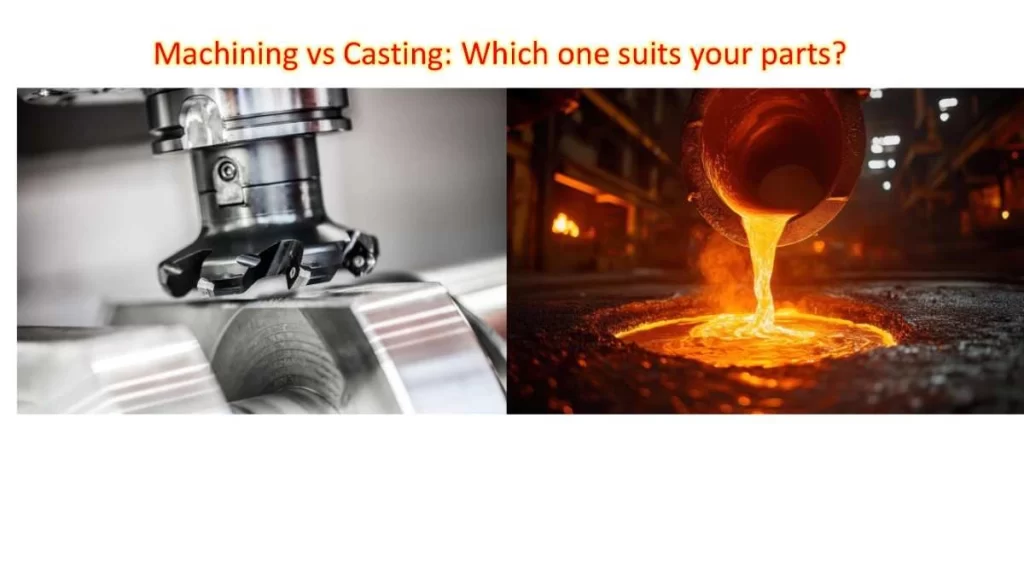
Honyo Prototype employs a rigorously defined end-to-end workflow for rapid manufacturing services, including casting processes. This structured methodology ensures precision, efficiency, and transparency from initial design to final delivery. Below is a technical breakdown of the standardized process flow, applicable across all manufacturing modalities including investment casting, sand casting, and CNC machining.
Upload CAD
The process initiates with secure client CAD file submission via Honyo’s encrypted portal. Our system performs automated validation checks for file integrity, geometric completeness, and compatibility with manufacturing constraints. Supported formats include STEP, IGES, and native CAD files from SolidWorks, Creo, and NX. Files undergo immediate topology analysis to flag non-manufacturable features such as zero-thickness walls or self-intersecting surfaces before human review.
AI-Powered Quoting Engine
Validated CAD data feeds into Honyo’s proprietary AI quotation system. This engine cross-references material databases, machine utilization rates, and historical production data to generate a preliminary cost and timeline estimate within 2 hours. The AI model accounts for process-specific variables: for casting, it evaluates gating system complexity, mold material requirements, and post-cast machining needs. Critical parameters like minimum wall thickness, draft angles, and surface finish tolerances directly influence the algorithm’s output. Human engineers validate all AI-generated quotes to address edge cases requiring domain expertise.
Collaborative DFM Analysis
Engineers conduct a formal Design for Manufacturing review, focusing on process-specific optimizations. For casting projects, this phase identifies risks such as hot spots, shrinkage zones, or inadequate fillet radii. Honyo provides actionable feedback with quantified impact assessments:
| DFM Issue Type | Casting-Specific Example | Resolution Impact |
|---|---|---|
| Geometric Feasibility | Insufficient draft angle (<1°) on vertical walls | Increases ejection force by 35%; requires mold redesign |
| Material Flow | Thin section (<1.5mm) adjacent to thick feature | Risk of cold shut; recommend local thickness adjustment |
| Post-Processing | Internal cavity requiring core removal | Adds 18% labor cost; propose alternative parting line |
Clients receive annotated 3D models with revision suggestions, enabling rapid design iteration. This stage typically reduces production rework by 60% based on Honyo’s internal metrics.
Production Execution
Upon DFM sign-off, the project enters production under Honyo’s ISO 9001-certified protocols. For casting:
Pattern creation utilizes CNC-machined wax or 3D-printed models depending on complexity.
Mold assembly follows strict humidity and temperature controls, with real-time monitoring of slurry viscosity and stucco application.
Pouring parameters (temperature, rate, turbulence) are dynamically adjusted via sensor feedback loops.
Post-cast operations include automated cutoff, precision grinding, and heat treatment per AMS or ASTM standards.
Throughout production, in-process inspections verify critical dimensions at defined control points using calibrated CMMs and optical comparators.
Quality-Controlled Delivery
Final parts undergo comprehensive validation against AS9102 or PPAP requirements where applicable. Dimensional reports, material certs, and NDT results (e.g., X-ray porosity maps for castings) are compiled into a digital quality dossier. Logistics coordination includes climate-controlled shipping for temperature-sensitive alloys, with real-time GPS tracking and customs documentation management. Honyo guarantees on-time delivery through buffer capacity allocation across its 3 global facilities, with 98.7% on-time performance in Q1 2024.
This integrated workflow eliminates traditional handoffs between quoting and production teams, compressing lead times by up to 40% versus industry benchmarks while maintaining rigorous quality adherence. All process data is archived for full traceability, supporting client audits and continuous improvement initiatives.
Start Your Project
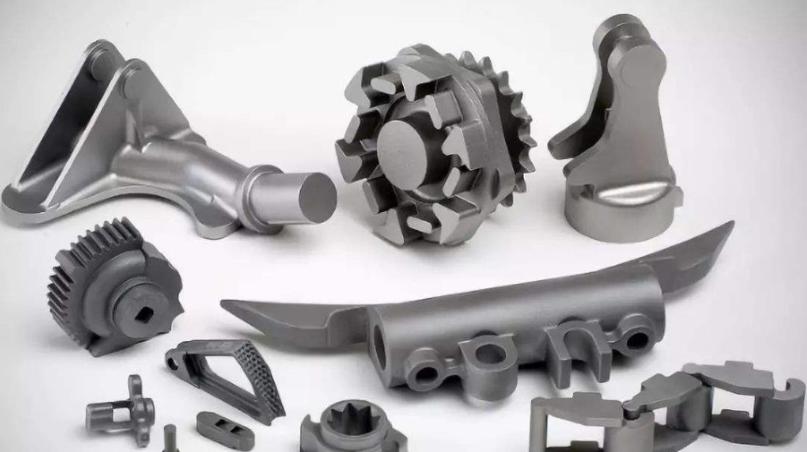
Looking for expert guidance on casting versus alternative manufacturing methods for your next project? Contact Susan Leo at [email protected] to discuss your requirements and discover the most cost-effective, high-quality solution for your prototyping or low-volume production needs.
Honyo Prototype operates a state-of-the-art manufacturing facility in Shenzhen, enabling rapid turnaround, strict quality control, and seamless scalability from prototype to production.
Let our engineering team help you make the right choice—reach out today.
🚀 Rapid Prototyping Estimator
Estimate rough cost index based on volume.