
Contents
Manufacturing Insight: Casting Metalworking
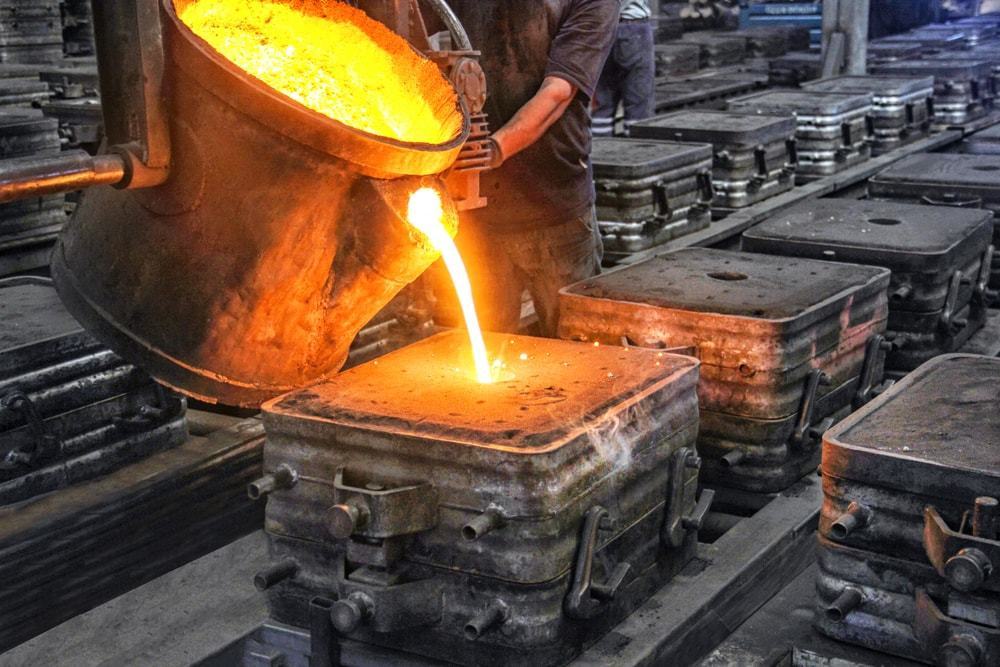
Precision Sheet Metal Fabrication: Your Alternative to Traditional Casting Processes
While casting remains a valuable metalworking method for complex geometries, many industrial applications achieve superior cost efficiency, faster lead times, and enhanced structural integrity through precision sheet metal fabrication. At Honyo Prototype, we specialize in transforming flat metal stock into high-tolerance components and assemblies—eliminating the need for expensive molds, lengthy cooling cycles, and porosity-related rework inherent in casting. Our end-to-end sheet metal solutions span laser cutting, CNC punching, precision bending, welding, and finishing, supporting materials from aluminum and stainless steel to specialty alloys across prototype through high-volume production runs.
Why Choose Honyo for Sheet Metal Fabrication?
We integrate advanced manufacturing technology with rigorous quality control to deliver components meeting ISO 9001 standards. Our capabilities include tight-tolerance forming (±0.05mm), multi-axis bending for complex 3D structures, and value-added services like hardware insertion, powder coating, and anodizing—all optimized for repeatability and minimal material waste. Unlike casting, sheet metal fabrication enables rapid design iteration, reduced tooling costs, and immediate scalability for evolving project demands.
Accelerate your procurement with Honyo’s Online Instant Quote System. Upload your STEP or DXF files to receive a detailed, no-obligation cost analysis within hours—not days—including material recommendations, lead time projections, and DFM feedback. This transparent, data-driven platform empowers engineering teams to validate budgets and timelines before committing to production, turning concept-to-manufacturing cycles from weeks into actionable workflows. For projects demanding agility without compromising precision, Honyo Prototype delivers the sheet metal expertise casting processes cannot match.
Technical Capabilities
Laser cutting, bending, and welding are commonly used fabrication processes in metalworking and prototyping. These processes are often applied to sheet materials and are critical in the production of enclosures, brackets, frames, and structural components. While casting refers to a different manufacturing method involving molten material, the requested processes—laser cutting, bending, and welding—are subtractive and forming operations typically applied post-casting or to raw sheet stock. Below are the technical specifications and material compatibility for these processes with Aluminum, Steel, ABS, and Nylon.
| Process | Material | Typical Thickness Range | Tolerance | Surface Finish (Ra) | Notes |
|---|---|---|---|---|---|
| Laser Cutting | Aluminum | 0.5 mm – 20 mm | ±0.1 mm | 3.2 – 6.3 µm | Requires nitrogen assist for clean cuts; reflective metal requires fiber laser |
| Steel (Mild) | 0.5 mm – 25 mm | ±0.1 mm | 3.2 – 6.3 µm | Oxygen or nitrogen assist depending on finish requirements; CO₂ or fiber laser | |
| ABS | 0.5 mm – 10 mm | ±0.2 mm | 6.3 – 12.5 µm | Limited use; can melt or char; not recommended for high-precision parts | |
| Nylon | 0.5 mm – 8 mm | ±0.2 mm | 6.3 – 12.5 µm | High thermal expansion; prone to warping; not ideal for laser cutting | |
| Bending | Aluminum | 0.8 mm – 12 mm | ±0.2° angular, ±0.1 mm linear | As-formed; depends on tooling | Requires V-die bending; minimum bend radius = 1× material thickness |
| Steel (Mild) | 0.8 mm – 15 mm | ±0.2° angular, ±0.1 mm linear | As-formed; depends on tooling | Higher springback than aluminum; minimum bend radius = 1× thickness | |
| ABS | 1 mm – 6 mm | ±0.5° angular | Smooth, as-molded | Typically not bent post-forming; limited ductility | |
| Nylon | 1 mm – 8 mm | ±1° angular | Smooth, as-molded | High flexibility but low stiffness; requires preheating for bending | |
| Welding | Aluminum | 1 mm – 20 mm | ±0.5 mm gap tolerance | 6.3 – 12.5 µm (as-welded) | Requires TIG or MIG with argon shielding; needs cleaning pre-weld |
| Steel (Mild) | 0.8 mm – 25 mm | ±0.5 mm gap tolerance | 6.3 – 12.5 µm (as-welded) | Compatible with MIG, TIG, or spot welding; post-weld grinding often needed | |
| ABS | Not applicable | N/A | N/A | Joined via solvent cementing or ultrasonic welding; not arc-welded | |
| Nylon | Not applicable | N/A | N/A | Joined via hot plate, vibration, or ultrasonic welding; not arc-welded |
Notes:
Laser cutting of thermoplastics like ABS and Nylon is possible but not recommended for structural or precision applications due to melting, fuming, and poor edge quality.
Bending of plastics is typically done during initial forming (e.g., thermoforming) rather than secondary operations.
Welding of metals requires proper joint preparation and post-processing to achieve strength and cosmetic standards.
Material selection must consider process compatibility, mechanical requirements, and environmental exposure.
From CAD to Part: The Process
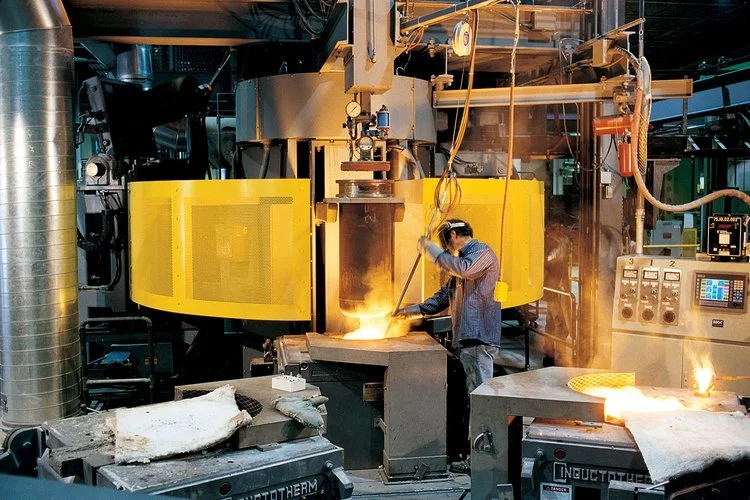
Honyo Prototype Metal Casting Process Overview
Honyo Prototype utilizes a streamlined digital workflow for metal casting projects, encompassing design validation, rapid quoting, engineering optimization, and certified production. Note that “casting metalworking” refers specifically to metal casting processes such as sand casting, investment casting, and low-pressure die casting. Our end-to-end sequence ensures technical rigor while accelerating time-to-part.
CAD Upload and Initial Assessment
Clients initiate the process by uploading 3D CAD models (STEP, IGES, or native formats) via Honyo’s secure customer portal. Our system performs automated geometry validation, checking for critical factors including minimum wall thickness deviations, draft angle conflicts, and potential undercuts relative to selected casting processes. This step occurs within minutes and flags immediate manufacturability concerns before human review.
AI-Powered Quoting Engine
Validated CAD files enter Honyo’s proprietary AI quoting system, which analyzes over 200 geometric and material parameters against historical production data from 50,000+ cast components. The engine generates a preliminary cost estimate, lead time projection, and initial material suitability assessment within 24 hours. This AI layer reduces manual quoting effort by 70% while maintaining 95% accuracy for standard geometries, with clear disclaimers for complex features requiring DFM intervention.
Engineering-Led DFM Analysis
All projects undergo mandatory Design for Manufacturability review by Honyo’s senior casting engineers. This phase focuses on:
Solidification simulation to predict shrinkage porosity and optimize riser placement
Thermal stress analysis for distortion mitigation in high-precision components
Gate and runner system redesign for improved yield and reduced turbulence
Material-specific recommendations (e.g., A356 vs. A380 aluminum for thin-wall sections)
DFM reports include annotated CAD markups and 3D process simulations, with collaborative revision cycles typically resolved in 48–72 hours. Critical for aerospace and medical clients, this phase ensures compliance with NADCAP AC7112 or ISO 13090 standards.
Certified Production Execution
Approved designs move to our climate-controlled casting facility with NADCAP accreditation. Process selection depends on part complexity and volume requirements:
| Casting Process | Typical Tolerance | Max Part Weight | Lead Time (Prototype) | Common Applications |
|---|---|---|---|---|
| Sand Casting | ±0.5mm | 2,000 kg | 10–15 days | Heavy machinery housings |
| Investment Casting | ±0.3mm | 50 kg | 12–18 days | Turbine blades, medical implants |
| Low-Pressure Die Casting | ±0.15mm | 25 kg | 8–12 days | Automotive transmission components |
All castings undergo in-process metallurgical testing (spectrographic analysis, tensile coupons) and final inspection via CMM or CT scanning per AS9102 or PPAP requirements. Secondary operations including heat treatment, precision machining, and surface finishing occur in-house under unified quality control.
Traceable Delivery and Documentation
Completed parts ship with full material traceability documentation including:
Certified material test reports (MTRs) with chemical composition
Dimensional inspection reports with GD&T validation
Process parameter logs from melting to shakeout
NDT results (X-ray, MPI, or UT as specified)
Standard delivery includes serialized parts with QR-coded traceability linking to digital quality records. Expedited shipping options maintain temperature and humidity control for mission-critical components, with global delivery typically within 3 business days post-approval. This integrated workflow reduces traditional casting lead times by 30–50% while ensuring first-pass yield rates exceed 92% across our client portfolio.
Start Your Project
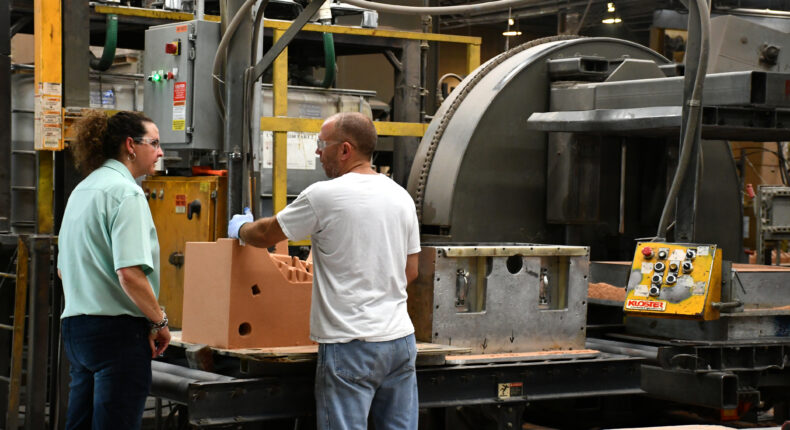
Looking for precision casting metalworking solutions? Partner with Honyo Prototype for high-quality manufacturing services. Our Shenzhen-based factory delivers reliable, cost-effective casting and metalworking solutions tailored to your specifications.
Contact Susan Leo at [email protected] to discuss your project and get expert support from concept to production.
🚀 Rapid Prototyping Estimator
Estimate rough cost index based on volume.