
Contents
Manufacturing Insight: Casting Carbon Steel
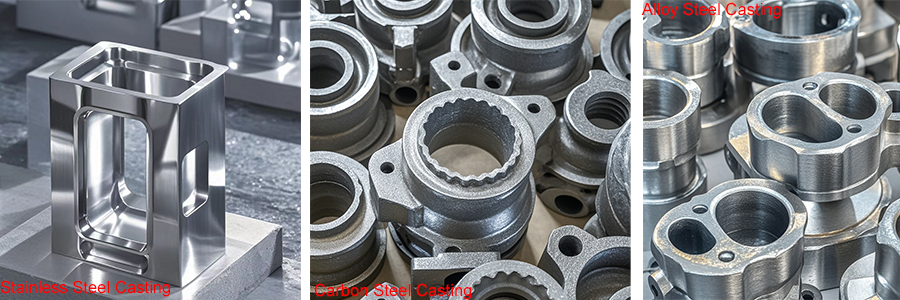
Precision Carbon Steel Casting Components Through Advanced CNC Machining
Carbon steel castings deliver exceptional strength and wear resistance for demanding industrial applications, yet achieving final dimensional accuracy and surface integrity requires expert post-casting machining. At Honyo Prototype, we specialize in transforming near-net-shape carbon steel castings into precision-engineered components through our integrated CNC machining services. Our technical expertise bridges the gap between casting foundries and end-use requirements, ensuring cast parts meet tight tolerances, critical geometries, and functional specifications that raw casting alone cannot achieve.
We deploy multi-axis CNC milling, turning, and grinding systems to address the unique challenges of machining carbon steel—including variability in material hardness, surface scale, and dimensional distortion from the casting process. Our engineers collaborate with clients during the design phase to optimize part geometry for machinability, minimizing secondary operations while maintaining structural integrity. Capabilities include precision boring of hydraulic manifolds, finishing of pump housings to ISO 2768-mK tolerances, and thread milling for high-pressure valve components, all performed under stringent in-process inspection protocols. This seamless transition from casting to finished part reduces lead times by up to 30% compared to fragmented supplier workflows.
For engineering teams accelerating prototyping or low-volume production, Honyo’s Online Instant Quote platform delivers validated pricing and lead times in under 90 seconds. Simply upload your casting-ready CAD file (STEP, IGES, or native formats), specify material grades like ASTM A27 or A126, and define critical tolerances. Our system automatically assesses machining complexity, toolpath requirements, and secondary operations to generate a transparent, no-obligation quote—enabling faster design validation and procurement decisions without compromising technical rigor.
Leverage Honyo Prototype’s CNC machining precision to transform your carbon steel castings into mission-critical components, backed by real-time quoting that keeps your projects on schedule.
Technical Capabilities
Technical Specifications for Casting Carbon Steel Components in Precision Machining Applications
Casting carbon steel parts are commonly used in industrial applications requiring high strength, wear resistance, and thermal stability. When these cast components undergo precision 3/4/5-axis milling and turning operations, tight tolerance control is critical for performance in aerospace, automotive, and heavy machinery sectors. Below are key technical specifications and machining capabilities relevant to cast carbon steel and other common materials such as aluminum, steel (wrought), ABS, and nylon.
| Parameter | Cast Carbon Steel | Aluminum (e.g., 6061-T6) | Wrought Steel (e.g., 4140) | ABS (Acrylonitrile Butadiene Styrene) | Nylon (Polyamide) |
|---|---|---|---|---|---|
| Typical Casting Form | Sand or Investment Cast | Not typically cast for machining | N/A (bar stock form) | Not applicable | Not applicable |
| Machinability Rating | Moderate (requires rigid setup, carbide tools) | Excellent (high MRR, low cutting forces) | Moderate to Poor (harder, generates heat) | Excellent (soft, low tool wear) | Good (tends to gall, requires sharp tools) |
| Common Tolerance Range (Milling/Turning) | ±0.005″ (standard), down to ±0.001″ (tight tolerance) | ±0.005″, achievable to ±0.0005″ with precision setup | ±0.005″, down to ±0.001″ | ±0.005″, up to ±0.002″ (dimensionally stable) | ±0.005″, up to ±0.002″ (hygroscopic) |
| Surface Finish (Milling) | 125–32 μin Ra (machined), 16–8 μin Ra (with finishing passes) | 64–16 μin Ra (easily achievable) | 125–32 μin Ra | 125–64 μin Ra | 125–64 μin Ra |
| Recommended Tooling | Carbide end mills, CBN or ceramic inserts for turning | Carbide or HSS, high rake angles | Carbide with negative rake, coated inserts | Carbide, high rake, polished flutes | Carbide, sharp cutting edges |
| Coolant Requirement | Required (flood coolant for heat control) | Recommended (for finish and tool life) | Required (high heat generation) | Not required (air blow often sufficient) | Not required (air cooling preferred) |
| Max Complexity (Milling) | High (5-axis capable for intricate contours) | Very High (ideal for complex 5-axis geometries) | High (5-axis compatible) | High (5-axis for molds, fixtures) | Moderate (limited by rigidity) |
| Typical Applications | Hydraulic manifolds, pump housings, valve bodies | Aerospace brackets, heat sinks, enclosures | Shafts, gears, tooling components | Prototypes, jigs, non-structural parts | Wear strips, gears, insulators |
Notes on Tight Tolerance Machining:
For cast carbon steel, stress relief prior to machining is essential to minimize distortion and maintain dimensional stability.
Multi-axis milling (4/5-axis) enables single-setup machining of complex features, improving accuracy and reducing cumulative tolerance stack-up.
In-situ probing and on-machine measurement are recommended for achieving tolerances below ±0.001″.
Material homogeneity in castings affects tool life and surface integrity—pre-machining ultrasonic testing may be advised for critical components.
This comparison highlights the adaptability of various materials across high-precision manufacturing processes, with cast carbon steel offering robust mechanical properties at the expense of more challenging machining requirements compared to aluminum or polymers.
From CAD to Part: The Process
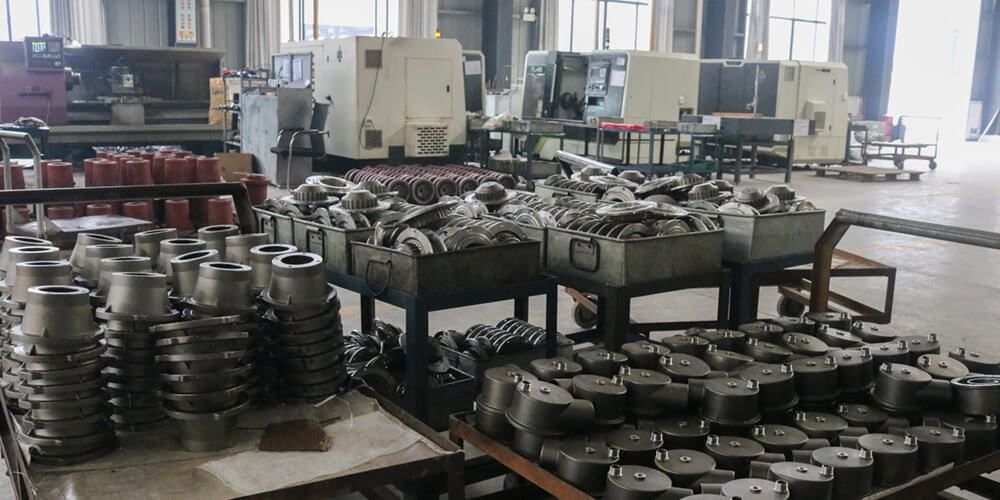
Honyo Prototype Carbon Steel Casting Process Overview
Our end-to-end carbon steel casting process integrates advanced digital tools with metallurgical expertise to ensure precision, cost efficiency, and material integrity. Below is a detailed technical breakdown of each phase, specifically addressing carbon steel requirements such as fluidity control, solidification behavior, and post-casting heat treatment compatibility.
Upload CAD
Clients initiate the process by uploading 3D CAD models (STEP, IGES, or native formats) via our secure portal. For carbon steel castings, we require clear indications of critical dimensions, surface finish specifications (per ASTM A802), and any geometric features prone to solidification defects—such as thick-to-thin section transitions. Our system automatically validates file integrity and identifies potential data gaps, including missing draft angles or undercuts that could compromise mold release in sand casting.
AI-Powered Quoting Engine
Honyo’s proprietary AI engine analyzes the CAD geometry alongside material-specific parameters for carbon steel grades (e.g., ASTM A27, A148). The algorithm calculates:
Volume-based material costs accounting for carbon steel’s density (7.85 g/cm³) and typical yield loss (15–25% for complex geometries)
Solidification simulation to predict shrinkage risks in heavy sections
Optimal gating system design to mitigate turbulence-induced oxide defects
Preliminary heat treatment duration based on section thickness
Quotes are generated within 2 business hours, including granular cost drivers like scrap rate projections and secondary operation estimates.
DFM Analysis with Carbon Steel Focus
Our engineering team conducts a rigorous Design for Manufacturing review, prioritizing carbon steel’s metallurgical constraints. Key checks include:
| DFM Parameter | Carbon Steel-Specific Criteria | Severity Level |
|---|---|---|
| Section Thickness Variation | Max 3:1 ratio to prevent macro-porosity; >50mm sections require chills | Critical |
| Draft Angles | Minimum 1.5° for green sand molds; 0.5° for shell molding | High |
| Fillet Radii | ≥50% of adjoining wall thickness to avoid hot tears | Medium |
| Parting Line Placement | Avoids critical surfaces; minimizes core prints in high-stress zones | High |
We provide annotated CAD feedback with suggested modifications, such as adding localized chill inserts or adjusting rib thickness to ensure directional solidification. This phase typically reduces casting scrap rates by 30–40% for carbon steel components.
Production Execution
Carbon steel casting follows a controlled workflow:
Pattern creation uses CNC-machined tooling with thermal expansion compensation (0.8–1.0% for carbon steel). Sand molds (Furan or cold-box) are prepared with moisture-controlled silica sand to prevent gas defects. Molten steel (typically 1,600–1,650°C) is tapped from electric arc furnaces with spectrographic verification of carbon content (0.15–0.30% for low-alloy grades). Pouring employs vacuum-assisted techniques to minimize oxygen pickup, followed by controlled cooling per section thickness. All castings undergo:
Thermal stress relief at 550–650°C (per ASTM A488)
Shot blasting to ASME B46.1 Surface Roughness Ra 25 μm
100% dimensional validation via CMM against CAD nominal
Magnetic particle inspection (ASTM E709) for surface cracks
Delivery and Documentation
Final delivery includes certified carbon steel castings with full traceability:
Material test reports (MTRs) showing chemical composition (C, Mn, Si, P, S) and mechanical properties (tensile/yield strength, elongation)
Heat treatment records with soak time/temperature logs
NDT certification (MPI/UT) for critical zones
Dimensional inspection report with deviation analysis
Shipments are palletized with anti-corrosion VCI paper and humidity indicators. Lead times average 18–25 days from CAD approval, with JIT scheduling available for volume orders.
This integrated approach ensures carbon steel castings meet structural integrity requirements while optimizing cost and lead time through predictive engineering and material science rigor.
Start Your Project
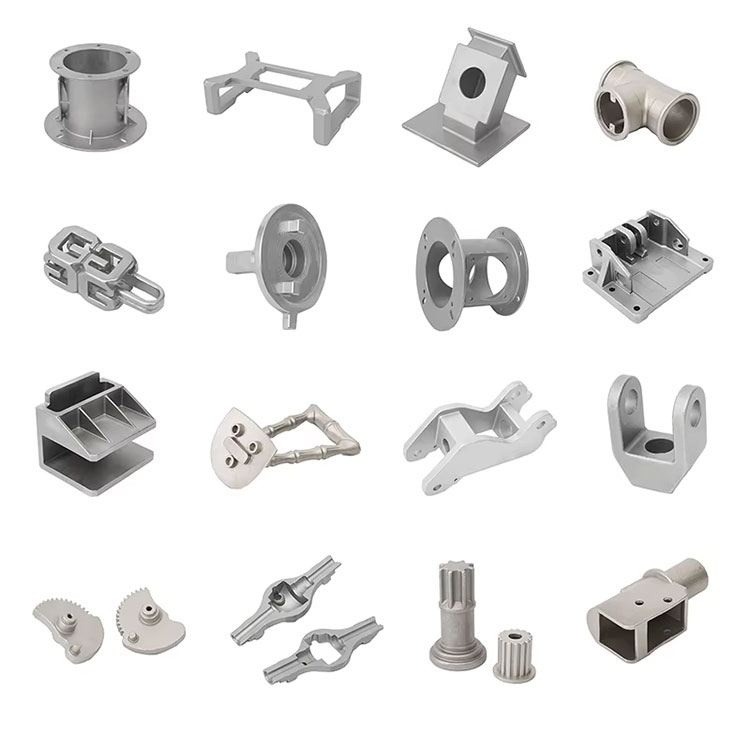
Looking for high-quality casting carbon steel components? Contact Susan Leo at [email protected] to discuss your project requirements. With our advanced manufacturing capabilities and strict quality control, Honyo Prototype delivers precision steel castings for demanding industrial applications.
Our production facility is located in Shenzhen, China, enabling fast turnaround and scalable production for both prototypes and volume orders. Reach out today to request a quote or technical consultation.
🚀 Rapid Prototyping Estimator
Estimate rough cost index based on volume.