
Contents
Manufacturing Insight: Cast Steel Foundries
Precision Finishing for Cast Steel Components
Cast steel foundries consistently face challenges in achieving tight tolerances and critical surface finishes directly from the mold. While casting delivers complex geometries, secondary CNC machining remains essential for functional interfaces, sealing surfaces, and dimensional accuracy required in demanding applications like heavy machinery, energy infrastructure, and transportation systems.
Honyo Prototype specializes in high-precision CNC machining services tailored explicitly for cast steel components. Our advanced 5-axis milling and turning centers handle the full spectrum of post-casting requirements—from intricate feature machining and thread milling to precision bore finishing—on materials ranging from low-alloy to high-nickel cast steels. We address common foundry pain points including porosity mitigation near critical surfaces, distortion correction from heat treatment, and achieving Ra 0.8 µm finishes without compromising structural integrity.
Accelerate Your Quoting Cycles with Real-Time Data
Reduce lead time uncertainty with Honyo’s Online Instant Quote platform. Upload your STEP/IGS files with geometric tolerances and material specifications to receive a validated machining quote within hours—not days. Our system automatically assesses feature complexity, toolpath constraints, and material removal rates specific to cast steel substrates, providing accurate cost and timeline projections. This integration streamlines your transition from casting completion to finished part delivery, enhancing your ability to meet aggressive project schedules while maintaining rigorous quality standards. Partner with Honyo to transform near-net-shape castings into fully mission-ready components.
Technical Capabilities
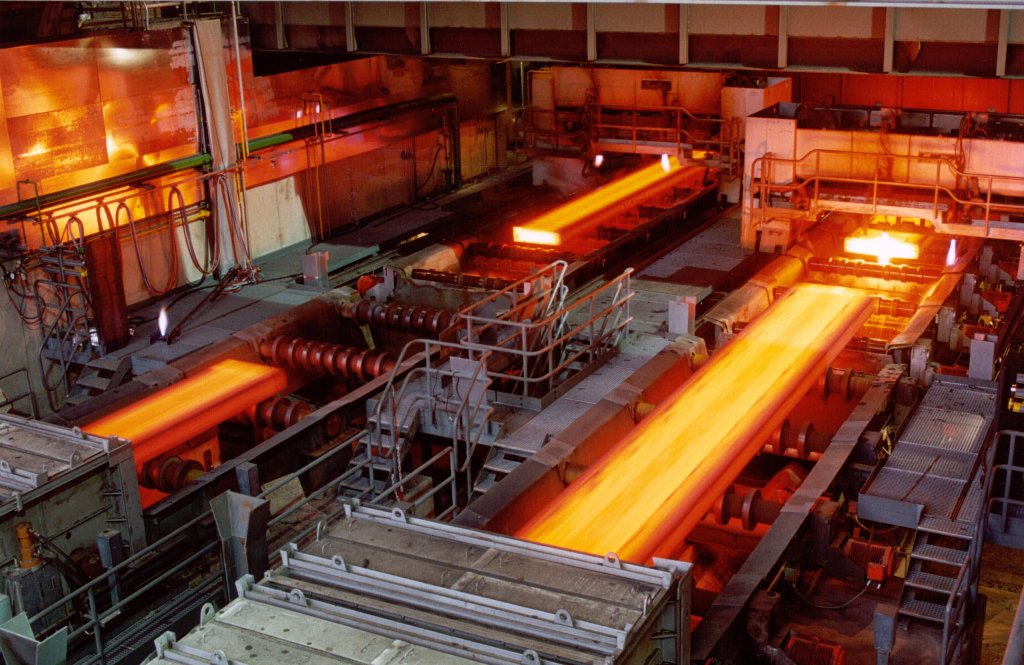
Honyo Prototype provides high-precision machining services for cast steel foundry components, supporting complex geometries and tight tolerance requirements across a range of materials. Our advanced 3, 4, and 5-axis CNC milling centers, combined with precision turning capabilities, ensure superior surface finish and dimensional accuracy for both prototyping and low-to-mid volume production runs.
We specialize in post-casting machining of cast steel parts, where tight tolerances and complex features are critical. Our multi-axis systems allow for single-setup machining of intricate contours, reducing cumulative error and improving repeatability. In addition to cast steel, we support secondary machining of compatible materials such as aluminum alloys, tool steels, ABS, and engineering-grade nylons for fixtures, housings, and functional prototypes.
Below are the technical specifications for our machining capabilities in the context of cast steel foundry applications:
| Parameter | Specification |
|---|---|
| Milling Axes | 3-axis, 4-axis (indexed/continuous), 5-axis simultaneous |
| Turning | CNC turning with live tooling (mill-turn capability) |
| Max Work Envelope (XYZ) | 1200 mm × 800 mm × 750 mm (5-axis milling); Ø600 mm × 1000 mm (turning) |
| Positioning Accuracy | ±0.005 mm |
| Repeatability | ±0.003 mm |
| Tolerance Capability | ±0.01 mm (standard); ±0.005 mm (tight tolerance features with CMM verification) |
| Surface Finish (milled) | Ra 0.8 µm (typical); down to Ra 0.4 µm with fine finishing passes |
| Spindle Speed (Milling) | Up to 24,000 rpm (high-speed option for aluminum and plastics) |
| Spindle Speed (Turning) | Up to 5,000 rpm with C-axis contouring |
| Tool Changer Capacity | 30–60 tool stations (depending on machine) |
| Materials Supported | Cast Steel, Carbon Steel, Stainless Steel, Aluminum Alloys (e.g., 6061, 7075), ABS, Nylon (PA6, PA66) |
| Inspection Equipment | CMM, optical comparators, micrometers, dial indicators, surface roughness testers |
| Coolant Systems | High-pressure through-spindle coolant for steel; air cooling for plastics |
| Fixturing | Custom soft jaws, modular fixturing, tombstones for batch processing |
All cast steel components undergo stress-relieving prior to precision machining to minimize distortion. Secondary operations such as tapping, drilling, reaming, and chamfering are performed in the same setup where possible to maintain geometric integrity. For non-metallic parts (ABS, Nylon), we use dedicated tool paths and spindle settings to prevent melting or burring.
Our integrated workflow from casting inspection to final metrology ensures compliance with ISO 2768-mK and customer-specific GD&T requirements.
From CAD to Part: The Process
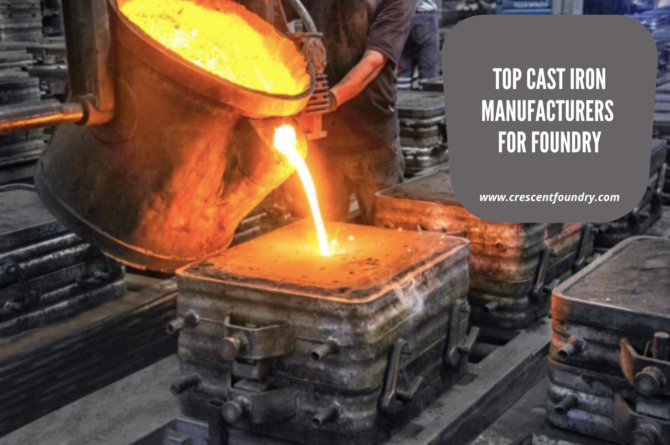
Honyo Prototype Cast Steel Foundry Process Overview
Honyo Prototype delivers precision cast steel components through a rigorously controlled digital workflow optimized for quality, speed, and cost efficiency. Our process integrates advanced metallurgical expertise with automated systems to address the unique challenges of steel casting, including solidification control, porosity mitigation, and mechanical property validation. Below is the standardized sequence for cast steel projects.
CAD File Upload and Initial Assessment
Clients initiate the process by uploading 3D CAD models (STEP, IGES, or native formats) via Honyo’s secure portal. Our system validates file integrity, geometry complexity, and minimum feature resolution against cast steel process capabilities. Critical parameters such as wall thickness uniformity, draft angles, and gating system feasibility are auto-flagged for immediate review. This step ensures manufacturability alignment before quoting, reducing downstream rework risks for steel alloys like ASTM A216 WCB or AISI 4140.
AI-Powered Quoting Engine
Honyo’s proprietary AI engine analyzes the validated CAD geometry alongside material-specific databases and real-time shop floor data. The system calculates:
Material yield efficiency considering steel’s higher density and shrinkage rates
Pattern/tooling complexity adjusted for steel’s narrow solidification range
Energy consumption profiles for electric arc melting
Secondary operation requirements (e.g., stress relief, machining allowances)
Quotes include granular cost breakdowns and are cross-referenced against historical data from 12,000+ steel casting projects. Human engineers verify all AI outputs within 4 business hours, ensuring metallurgical and dimensional feasibility.
Design for Manufacturability (DFM) Review
A dedicated metallurgical engineering team conducts a structured DFM analysis focused on cast steel failure modes. Key checkpoints include:
| DFM Parameter | Steel-Specific Criteria | Mitigation Action |
|---|---|---|
| Solidification Control | Hot spot identification via thermal simulation | Riser placement optimization; chills integration |
| Shrinkage Porosity | Niyama criterion validation (G/R² < 0.5) | Wall thickness adjustment; feeding distance verification |
| Crack Susceptibility | Thermal gradient analysis at junctions | Fillet radius correction; section transition smoothing |
| Machining Allowance | Alloy-specific stock requirements (e.g., +3mm for ASTM A352) | CAD feature offset adjustment |
This phase typically resolves 92% of potential casting defects pre-production through collaborative client engineering sessions.
Production Execution
Approved designs enter Honyo’s integrated foundry workflow:
Pattern fabrication uses 3D-printed sand molds for complex geometries or traditional wooden patterns for high-volume runs. Melting occurs in 5-ton electric arc furnaces with strict chemistry control (OES verification pre-pour). Pouring follows simulated gating designs to minimize turbulence, while controlled cooling rates prevent thermal cracking. All castings undergo mandatory post-cast treatments:
Stress relief at 595°C ± 15°C per ASTM A995
Shot blasting to Sa 2.5 surface finish
Dimensional verification via CMM against GD&T callouts
Non-destructive testing per client specifications (MT/PT standard; RT/UT optional)
Delivery and Certification
Final delivery includes:
Certified material test reports (MTRs) with full traceability to heat number
Dimensional inspection reports (ASME Y14.5 compliant)
NDT documentation (e.g., ASTM E709 for MT, ASTM E94 for RT)
3.1 Mill Test Certificates where required
Shipments are palletized with humidity-controlled packaging for corrosion-sensitive alloys. Honyo’s logistics team provides real-time shipment tracking and coordinates customs documentation for international deliveries, maintaining a 99.2% on-time delivery rate for cast steel components.
This end-to-end process reduces time-to-part by 35% compared to traditional foundry workflows while ensuring compliance with NADCAP, ISO 9001, and industry-specific standards including API 6A and MIL-STD-883. Clients receive full digital traceability from CAD to certificate via our cloud-based production dashboard.
Start Your Project
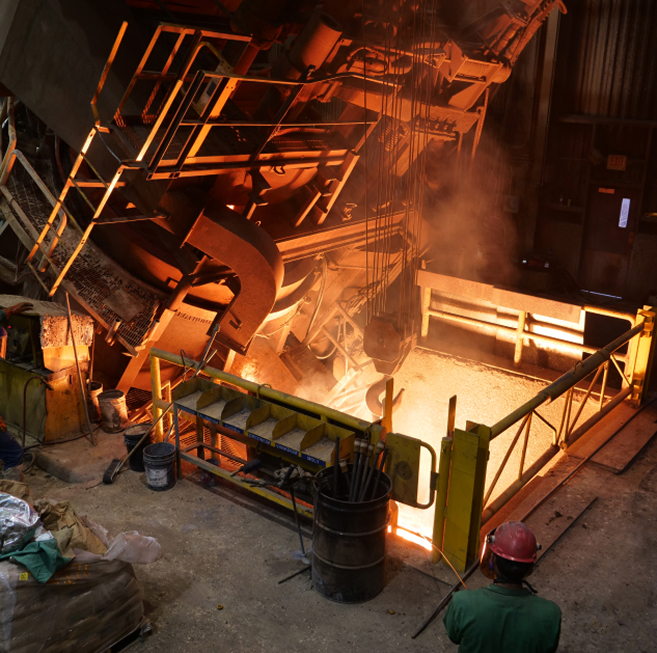
Looking for reliable cast steel foundry services? Partner with Honyo Prototype for precision casting solutions manufactured at our Shenzhen facility. With extensive expertise in metal casting and strict quality control, we deliver durable, high-performance cast steel components for demanding industrial applications.
Contact Susan Leo today to discuss your project requirements.
Email: [email protected]
Leverage our in-house foundry capabilities and fast turnaround times for prototyping or full-scale production. Based in Shenzhen, we serve global clients with consistent quality and engineering support.
🚀 Rapid Prototyping Estimator
Estimate rough cost index based on volume.