
Contents
Manufacturing Insight: Cast Iron Carbon Steel
Material Excellence Meets Precision Manufacturing
Cast iron and carbon steel remain foundational materials across industrial sectors due to their exceptional wear resistance, thermal stability, and structural integrity. However, machining these materials presents unique challenges—including managing graphite flake integrity in cast iron and controlling hardenability in carbon steel alloys—that demand specialized expertise to achieve tight tolerances and superior surface finishes. At Honyo Prototype, we leverage decades of metallurgical insight and advanced CNC machining capabilities to transform these robust materials into mission-critical components without compromising dimensional stability or performance.
Precision CNC Machining Capabilities for Demanding Applications
Our dedicated CNC machining centers, equipped with optimized tooling strategies and real-time process monitoring, ensure consistent results for complex geometries in gray iron, ductile iron, and low-to-medium carbon steel grades. From automotive brake components to industrial pump housings, we address material-specific variables like thermal expansion and chip control through proven process controls, reducing scrap rates and accelerating time-to-market. To streamline your procurement cycle, Honyo Prototype offers an Online Instant Quote platform that delivers accurate, detailed pricing for cast iron and carbon steel parts within hours—enabling faster decision-making without sacrificing technical rigor. Partner with us to convert material potential into engineered reality.
Technical Capabilities
The term “cast iron carbon steel” refers to two distinct material families—cast iron and carbon steel—commonly used in precision machining applications such as 3/4/5-axis milling and turning. These materials differ in composition, mechanical properties, and machinability, especially under tight tolerance requirements (±0.0005″ to ±0.005″, depending on geometry and size). Below is a technical comparison relevant to multi-axis CNC machining processes, including considerations for tooling, surface finish, and dimensional stability.
Material Properties and Machinability in Precision CNC Machining
| Material | Composition Range | Tensile Strength (MPa) | Hardness (HB) | Machinability Rating | Typical Applications in 3/4/5-Axis Milling & Turning | Tight Tolerance Suitability | Notes on CNC Processing |
|---|---|---|---|---|---|---|---|
| Gray Cast Iron (e.g., ASTM A48 Class 30) | 2.5–4.0% C, 1.0–3.0% Si, 0.5–1.0% Mn | 150–250 | 170–250 | Excellent | Engine blocks, fixtures, brake components | High (with stable heat treatment) | Produces discontinuous chips; good vibration damping; use carbide tools; prone to micro-cracking if cooled too rapidly |
| Ductile Cast Iron (e.g., ASTM A536 65-45-12) | 3.2–3.6% C, 1.8–2.8% Si, Mg treated | 415–620 | 150–200 | Good | Gears, pump housings, structural parts | High (with controlled machining sequence) | Better ductility than gray iron; requires sharp inserts; sensitive to residual stress |
| Carbon Steel (e.g., AISI 1045) | 0.40–0.50% C, 0.60–0.90% Mn | 570–700 | 170–210 | Good | Shafts, couplings, machine components | High (with stress relief) | Requires rigid setup; prone to work hardening; use HSS or carbide tooling; coolant recommended |
| Aluminum 6061-T6 | Al-Mg-Si alloy | 310 | 95–105 | Excellent | Enclosures, aerospace parts, prototypes | Excellent | High material removal rate; low cutting forces; requires sharp tools to avoid built-up edge |
| Mild Steel (AISI 1018) | 0.18% C, 0.6–0.9% Mn | 440 | 125–135 | Very Good | Jigs, fixtures, low-stress components | High | Weldable and formable; consistent chip formation; moderate tool wear |
| ABS (Acrylonitrile Butadiene Styrene) | Thermoplastic polymer | 40–50 | 80–100 (Shore D) | Excellent | Prototypes, enclosures, non-structural parts | Moderate (humidity sensitive) | Low melting point; use high-speed, low-feed; avoid excessive heat |
| Nylon 6/6 | Polyamide thermoplastic | 70–85 | 85–95 (Shore D) | Good | Bushings, gears, insulating components | Moderate (hygroscopic) | Absorbs moisture; pre-dry before precision machining; use sharp tools and light cuts |
Key Considerations for Tight Tolerance Machining:
Thermal Stability: Aluminum and plastics (ABS, Nylon) are more sensitive to thermal expansion, requiring controlled ambient conditions during high-precision work.
Tool Selection: Carbide end mills and inserts are standard for cast iron and carbon steel; polycrystalline diamond (PCD) tools are preferred for high-volume aluminum machining.
Fixturing: Rigid setups are essential for maintaining tolerances, especially in deep cavities or thin-walled features common in 5-axis work.
Post-Machining: Stress relieving is recommended for carbon steels and cast irons prior to final finishing passes to minimize distortion.
Surface Finish: Cast iron typically achieves a matte finish ideal for mating surfaces; aluminum allows for high-gloss finishes with proper tool paths.
Honyo Prototype leverages this material knowledge to optimize CNC programs, toolpaths, and inspection protocols, ensuring tight tolerance compliance across complex geometries in both ferrous and non-ferrous components.
From CAD to Part: The Process
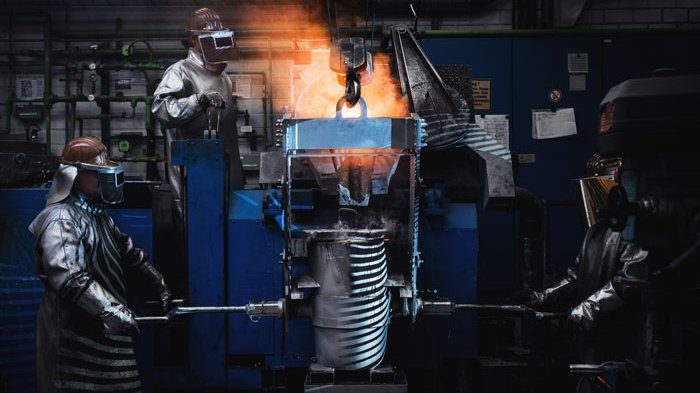
Honyo Prototype maintains a rigorously defined process for manufacturing components in cast iron and carbon steel, ensuring technical precision and supply chain transparency. It is critical to clarify that cast iron and carbon steel represent distinct material categories with unique processing requirements; our workflow explicitly differentiates between them during engineering analysis. The integrated sequence begins with CAD submission and concludes with certified delivery.
CAD File Submission and Material Specification
Clients initiate the process by uploading validated 3D CAD models in STEP, IGES, or native formats via our secure portal. At this stage, explicit declaration of the target material—whether gray cast iron (e.g., ASTM A48 Class 30), ductile iron (ASTM A536), or carbon steel grades (e.g., AISI 1045, 4140)—is mandatory. Material selection directly triggers downstream parameters in our AI quotation engine, as thermal properties, machinability indices, and casting behaviors differ significantly. For cast iron, shrinkage allowances and gating system requirements are pre-validated; for carbon steel, weldability and heat treatment paths are flagged.
AI-Powered Quotation with Material Intelligence
Our proprietary AI quotation system analyzes the CAD geometry against real-time material cost databases, shop floor capacity, and physics-based process models. Key differentiators include:
| Material Type | AI Analysis Focus | Typical Lead Time Impact |
|---|---|---|
| Cast Iron | Solidification simulation, riser design feasibility, shakeout timing | +3–5 days for pattern/tooling validation |
| Carbon Steel | Machining time prediction (based on hardness), welding distortion risk, stress-relief requirements | +2–4 days for heat treat scheduling |
The output provides granular cost breakdowns separating material procurement, casting/machining labor, and secondary operations. Clients receive a formal quote with traceable assumptions within 4 business hours.
Engineering-Led DFM Review
All quotes undergo mandatory Design for Manufacturability (DFM) validation by our materials engineering team. For cast iron components, we verify: minimum section thickness to prevent cold shuts, draft angles ≥ 1.5°, and fillet radii ≥ 3 mm to avoid hot tearing. Carbon steel parts are scrutinized for weld accessibility, avoidance of sharp notches in high-stress zones, and feasibility of post-machining heat treatment without distortion. Clients receive a formal DFM report with actionable recommendations—typically within 24 hours of quote acceptance—with zero obligation to proceed if modifications are required.
Material-Specific Production Execution
Production diverges based on material classification:
Cast Iron Path: Green sand or shell molding at our partner foundry, with spectral analysis of molten metal pre-pour. In-process checks include ultrasonic testing for porosity and dimensional validation after stress relief.
Carbon Steel Path: Plate fabrication or forging followed by CNC machining. Critical welds undergo MPI/UT per ASME Section IX, with hardness mapping post-heat treatment.
Both paths enforce ISO 9001:2015-compliant documentation, including material test reports (MTRs) traceable to heat numbers. Typical production timelines range from 10–25 days depending on complexity and finishing requirements.
Certified Delivery and Traceability
Final inspection packages include first-article reports (FAIR), 3D scan data against nominal CAD, and full material certification. Cast iron deliveries include hardness test records per ASTM E10; carbon steel shipments contain tensile/yield strength data per ASTM A370. Parts ship via tracked logistics with environmental controls where specified, accompanied by a digital twin of the as-manufactured geometry. All documentation is archived for 10 years to support client audit requirements.
This structured workflow eliminates ambiguity between cast iron and carbon steel processing while providing clients with engineering-grade transparency from quotation through delivery. For complex geometries, we recommend engaging our applications engineering team during CAD preparation to optimize manufacturability.
Start Your Project
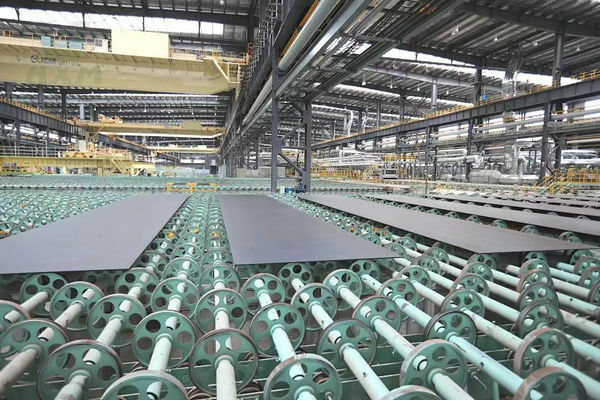
Looking for high-quality cast iron and carbon steel components? Partner with Honyo Prototype for precision manufacturing and reliable production.
Our factory in Shenzhen is equipped to handle demanding material specifications and tight tolerances, ensuring your parts meet the highest industry standards.
Contact Susan Leo today at [email protected] to discuss your project requirements and get a fast, competitive quote.
🚀 Rapid Prototyping Estimator
Estimate rough cost index based on volume.