
Contents
Manufacturing Insight: Cast Iron And Steel Difference
Understanding the fundamental differences between cast iron and steel is critical for achieving optimal performance, cost-efficiency, and manufacturability in precision components. As a leading provider of high-integrity CNC machining services, Honyo Prototype specializes in transforming both materials into complex, tight-tolerance parts for demanding industrial applications. Selecting the appropriate base material directly impacts machinability, dimensional stability, wear resistance, and final part functionality. Cast iron, characterized by its high carbon content (typically 2-4%) primarily in the form of graphite flakes or nodules, offers excellent damping capacity, good wear resistance, and relatively lower cost, making it ideal for bases, housings, and engine blocks. Steel, with lower carbon content (generally below 2%) and a more homogeneous metallic structure, provides superior tensile strength, toughness, and weldability, suited for structural components, shafts, and high-stress applications requiring fatigue resistance.
Key distinctions influencing CNC machining strategy include:
| Property | Cast Iron (e.g., Gray Iron) | Steel (e.g., Mild Steel, Alloy Steel) |
|---|---|---|
| Composition | High Carbon (2-4%), Silicon | Lower Carbon (<2%), Alloying Elements |
| Machinability | Generally easier due to graphite lubrication; produces discontinuous chips | Varies by grade; often requires sharper tools, controlled parameters; produces continuous chips |
| Chip Formation | Short, brittle chips | Long, continuous chips requiring management |
| Thermal Conductivity | Lower (can lead to localized heat) | Higher (aids heat dissipation) |
| Primary Applications | Machine bases, brake discs, engine blocks | Shafts, gears, structural frames, high-strength fixtures |
Honyo Prototype leverages decades of metallurgical expertise and state-of-the-art multi-axis CNC machining centers to expertly handle the unique challenges presented by both cast iron and steel. Our engineers optimize tooling, cutting parameters, and fixturing specifically for each material’s properties, ensuring exceptional surface finishes, micron-level accuracy, and consistent repeatability. We mitigate common issues such as built-up edge in steel or vibration during cast iron milling, delivering parts that meet stringent aerospace, automotive, and industrial specifications. For projects requiring rapid material evaluation or prototyping, our precision CNC capabilities provide the agility to validate designs efficiently.
Accelerate your next project from concept to certified component. Honyo Prototype’s Online Instant Quote system provides immediate, transparent pricing for CNC-machined parts in cast iron, steel, and a wide range of other engineering materials. Simply upload your CAD file to receive a detailed manufacturability analysis and competitive quote within hours, streamlining your procurement process and enabling faster time-to-market. Partner with Honyo for precision machining where material science meets manufacturing excellence.
Technical Capabilities
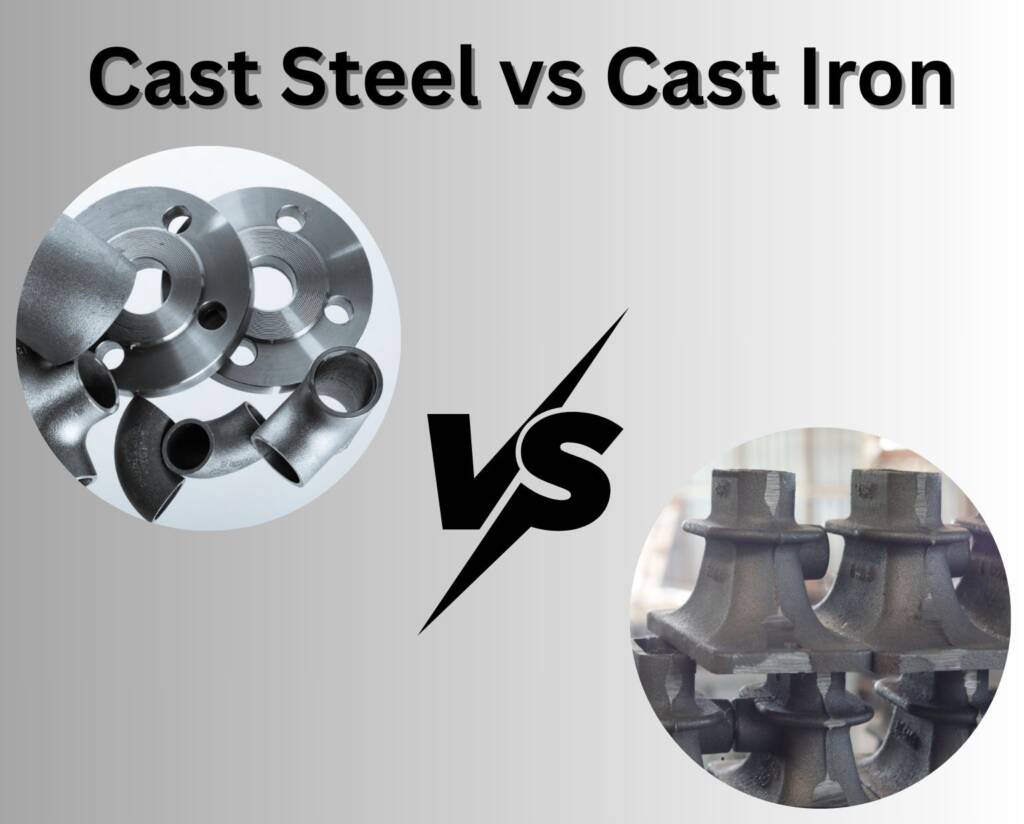
The terms “cast iron” and “steel” refer to distinct ferrous materials with differing compositions, mechanical properties, and machinability characteristics. When discussing differences in the context of precision machining processes such as 3-axis, 4-axis, and 5-axis milling and turning—especially under tight tolerance requirements (±0.0005″ or tighter)—material selection significantly impacts tool life, surface finish, dimensional stability, and overall process efficiency.
Below is a comparative technical analysis focusing on material differences and their implications for high-precision CNC machining. Additional reference materials—aluminum, ABS, and nylon—are included to provide context across a broader material spectrum.
| Property / Material | Cast Iron (Gray Iron, Class 30) | Steel (AISI 1045 Medium Carbon) | Aluminum (6061-T6) | ABS (Acrylonitrile Butadiene Styrene) | Nylon (PA6/PA66) |
|---|---|---|---|---|---|
| Density (g/cm³) | 7.1–7.3 | 7.85 | 2.7 | 1.04 | 1.13 |
| Tensile Strength (MPa) | 200–300 | 570–700 | 310 | 40–45 | 70–85 |
| Hardness (HB) | 170–220 | 170–210 (annealed), up to 250+ (hardened) | 95 | 80–100 (Shore D) | 80–90 (Shore D) |
| Thermal Conductivity (W/m·K) | 50–60 | 50–54 | 167 | 0.19 | 0.25 |
| Coefficient of Thermal Expansion (µm/m·°C) | 10.4–12.0 | 11.7 | 23.6 | 70–100 | 80–120 |
| Machinability Rating (%) | 80–90 (excellent chip control) | 60–70 (moderate; higher tool wear) | 90–100 (excellent) | Not applicable (non-metallic) | Not applicable |
| Typical Use in Precision Machining | Fixtures, machine bases, wear plates | Shafts, gears, structural components | Aerospace, enclosures, prototypes | Prototypes, jigs, low-stress fixtures | Gears, bushings, wear components |
| 3/4/5-Axis Milling Suitability | Good; rigid but abrasive; requires carbide tools | Good; stable but generates heat; needs proper coolant | Excellent; fast feeds, low cutting forces | Fair; low melting point; requires sharp tools | Fair; gummy; prone to melt/deflection |
| Turning Suitability | Good; self-damping; excellent for interrupted cuts | Very Good; consistent finish with proper parameters | Excellent; high-speed capability | Fair; requires low RPM and sharp tools | Poor to Fair; stringy chips, thermal sensitivity |
| Dimensional Stability (Tight Tolerance ±0.0005″) | Excellent (high damping, low distortion) | Good (stable if stress-relieved) | Moderate (thermal sensitivity) | Poor (high creep, moisture absorption) | Poor (hygroscopic, creep-prone) |
| Surface Finish Achievable (Ra µin) | 32–64 (milling), 16–32 (turning) | 16–32 (milling), 8–16 (turning) | 8–16 (milling/turning) | 64–125 (depends on tooling) | 32–64 (with care) |
| Tool Wear Consideration | High (graphite flakes abrasive) | Moderate to High (especially hardened) | Low | Low (but melting risk) | Moderate (gumming) |
| Recommended Tooling | Carbide or CBN inserts | Carbide, coated HSS | Carbide, polycrystalline diamond (PCD) | Carbide, sharp high-rake | Carbide, polished flutes |
Key Technical Notes:
Cast iron offers superior damping characteristics, making it ideal for machine tool structures and fixtures in 5-axis milling systems where vibration control is critical. However, its abrasive nature accelerates tool wear, particularly on fine-tolerance features.
Steel (e.g., 1045) provides higher strength and toughness than cast iron and is commonly used for rotating components requiring tight geometric tolerances. Pre-machining heat treatment (annealing, stress relieving) is essential to maintain dimensional stability during precision turning and milling.
Aluminum 6061-T6 is highly favorable in multi-axis milling due to low mass, high thermal conductivity, and excellent machinability. It is frequently used in aerospace and automation where tight tolerances and lightweight are critical.
ABS and nylon, as engineering thermoplastics, are used in prototyping and non-structural applications. They present challenges in tight-tolerance machining due to thermal expansion and creep, requiring reduced speeds, sharp tooling, and minimal clamping force.
For all materials, achieving sub-0.001″ tolerances demands optimized toolpaths, thermal management, in-process probing (especially in 5-axis), and post-machining inspection using CMM or optical comparators. Material homogeneity and pre-conditioning (aging, stress relief) are critical success factors.
From CAD to Part: The Process
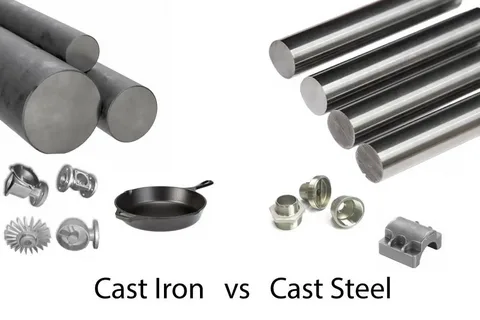
Honyo Prototype’s workflow for material-specific manufacturing, including critical differentiation between cast iron and steel components, is rigorously integrated across all stages. This ensures material properties align with design intent, manufacturability, and performance requirements. The process does not treat “cast iron vs. steel” as a standalone step but embeds material verification and validation throughout the defined sequence. Below is the precise execution within each phase:
Upon CAD file upload, our AI quoting engine performs initial material classification. The system analyzes geometric features, wall thicknesses, draft angles, and fillet radii against material-specific databases. Cast iron designs typically exhibit thicker sections (>6mm), larger radii (>5mm), and simplified geometries due to casting limitations, while steel parts often show thinner walls (<4mm), tighter tolerances, and features suited for machining or welding. The AI flags inconsistencies—such as a CAD model labeled “steel” but exhibiting cast iron geometry—and prompts manual review if material ambiguity exists.
During the AI Quote phase, material-specific cost drivers are calculated. Cast iron pricing factors in foundry tooling, melt shop costs, and shakeout/deburring labor, while steel fabrication quotes emphasize machining time, weld preparation, and potential heat treatment. The system cross-references the CAD’s material specification (e.g., ASTM A48 Class 30 for cast iron vs. AISI 1045 for steel) against industry-standard property databases. Discrepancies trigger an automated hold requiring engineering clarification before quote finalization.
The DFM (Design for Manufacturability) review is where material differentiation becomes critical. Our engineers validate the CAD’s material callout against functional requirements:
For cast iron: Confirming adequate section uniformity to prevent shrinkage, verifying minimum 3° draft for sand casting, and assessing riser placement feasibility.
For steel: Evaluating weld joint accessibility, heat-affected zone risks, and machinability of specified grades (e.g., 304 stainless vs. A36 carbon steel).
Material substitution risks are explicitly addressed; for instance, replacing cast iron with steel in a vibration-damping application would require customer sign-off due to differing damping capacities.
Production execution strictly adheres to material-specific protocols. Cast iron parts undergo spectral analysis of molten metal (verifying carbon content 2.5–4.0% and silicon 1–3%) and post-casting stress relief. Steel components receive mill test reports (MTRs) validating chemistry and mechanical properties, with welding procedures qualified per AWS D1.1. Each lot is segregated with material-specific work instructions—cast iron avoids rapid quenching, while steel may require pre-heating for thick sections.
Delivery includes comprehensive material traceability documentation. Cast iron shipments accompany foundry test certificates showing tensile strength and hardness, while steel parts include MTRs with yield strength, elongation, and Charpy impact values. Non-conformances related to material misidentification (e.g., graphite structure issues in cast iron or weld porosity in steel) halt shipment until root cause analysis is completed.
Material verification checkpoints are enforced at every transition point. The following table summarizes key differentiators managed within our workflow:
| Process Phase | Cast Iron Focus Areas | Steel Focus Areas | Verification Method |
|---|---|---|---|
| CAD Upload | Section thickness uniformity, riser geometry | Thin-wall stability, weld prep features | AI geometry analysis against material databases |
| AI Quote | Foundry pattern/tooling cost drivers | Machining cycle time, weld filler costs | Material property database cross-check |
| DFM Review | Shrinkage compensation, draft angles | Weld accessibility, HAZ management | Engineer-led review of functional requirements |
| Production | Spectro analysis (C/Si content), stress relief | MTR validation, pre-heat protocols | In-process material testing and documentation |
| Delivery | Graphite structure certification | Impact strength and weld procedure records | Traceable test reports with shipment |
This integrated approach prevents material-related failures by treating cast iron and steel as fundamentally distinct manufacturing pathways from initial design validation through final certification. Material integrity is non-negotiable in our quality management system, with deviations requiring formal engineering change orders.
Start Your Project
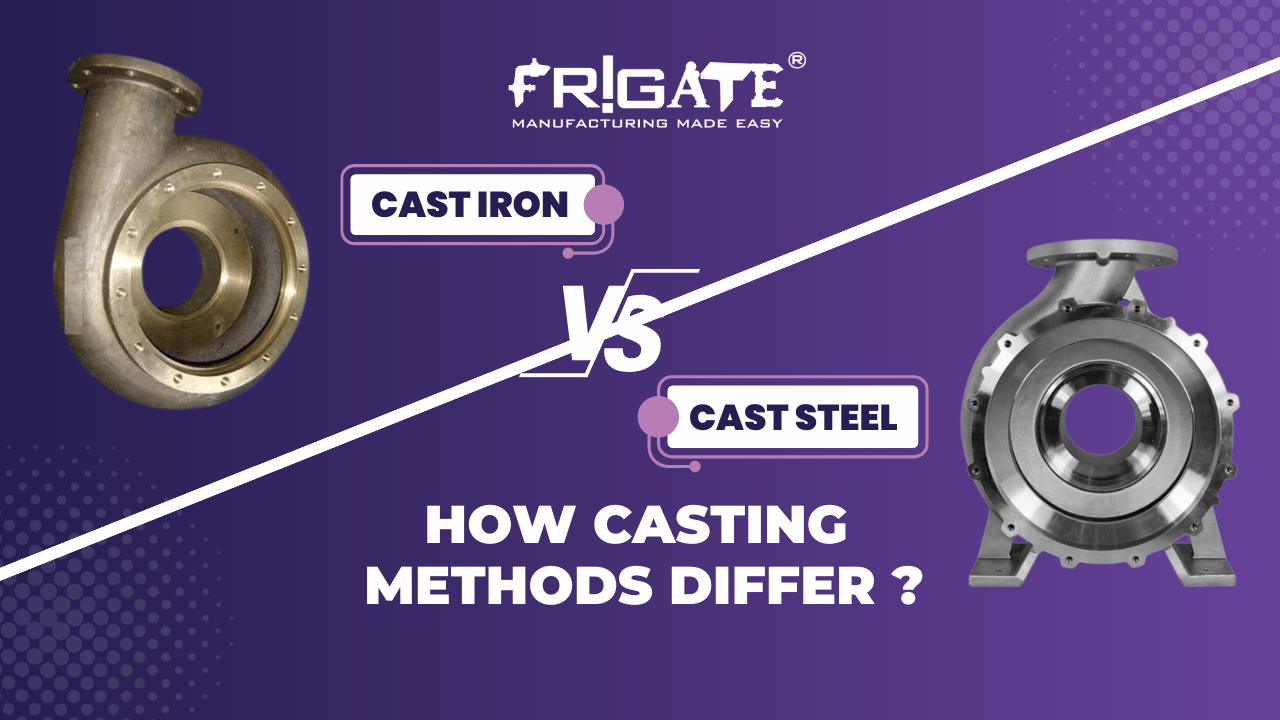
Understanding the difference between cast iron and steel is critical when selecting materials for your manufacturing projects. Each offers unique properties in terms of strength, durability, machinability, and cost—factors that directly impact performance and production efficiency.
For expert guidance tailored to your specific application, contact Susan Leo at [email protected]. With our precision manufacturing facility located in Shenzhen, Honyo Prototype delivers high-quality, material-optimized solutions for clients worldwide. Let us help you make the right material choice from the start.
🚀 Rapid Prototyping Estimator
Estimate rough cost index based on volume.