
Contents
Manufacturing Insight: Carbon Steel Vs Iron
Carbon Steel vs. Iron: Which One Should You CNC Machine?
At Honyo Prototype, we machine both carbon steel and iron every day—turning raw stock into precision parts in as fast as 24 h. Our 3-, 4- and 5-axis CNC centers, live-tooling lathes and in-house metallurgy team know exactly how to adjust feeds, speeds and tooling to extract the best surface finish, tightest tolerance (±0.01 mm) and lowest cost from each alloy. Whether you need the higher strength-to-weight ratio of 1045 carbon steel or the vibration-damping mass of grey iron, simply upload your STEP file for an Online Instant Quote—complete with material comparison, machining strategy and lead time—so you can pick the right metal before the first chip is ever cut.
Technical Capabilities
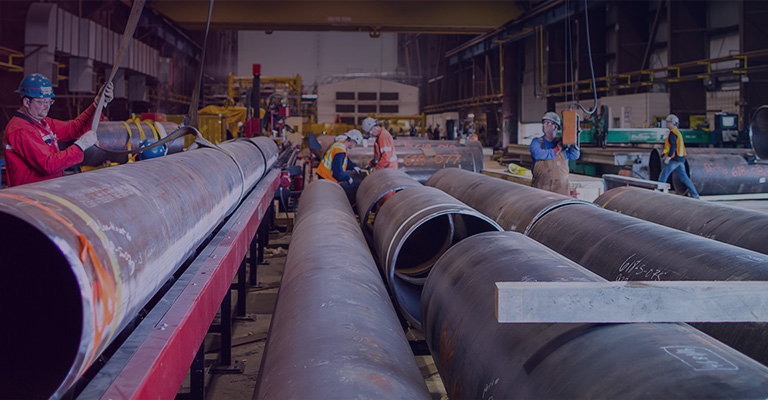
As a Senior Manufacturing Engineer at Honyo Prototype, I must clarify a critical point upfront: “Iron” is not a precise engineering term for precision machining applications. Pure iron is soft, highly reactive, and rarely used in modern manufacturing. When engineers refer to “iron” in a machining context, they typically mean cast iron (e.g., gray cast iron, ductile iron), which is a specific iron-carbon-silicon alloy. Carbon steel, by contrast, is a well-defined category of iron-carbon alloys with controlled carbon content (typically 0.05–2.1%) and minimal other elements. For tight-tolerance 3/4/5-axis milling and turning, we compare carbon steel vs. cast iron—not “pure iron.”
Below is a detailed technical comparison focused on precision machining processes (3/4/5-axis milling, turning) and tight-tolerance requirements (±0.0005″ to ±0.001″), including key properties for aluminum, steel (carbon steel), ABS, and nylon. This is critical for Honyo Prototype’s high-accuracy work in aerospace, medical, and industrial sectors.
Key Technical Specifications Comparison
(For 3/4/5-Axis Milling, Turning, and Tight Tolerance Work)
| Property | Carbon Steel (e.g., 1018, 4140, 4340) | Cast Iron (e.g., Gray CI 250, Ductile CI 65-45-12) | Aluminum (e.g., 6061-T6) | ABS | Nylon (e.g., PA6, PA66) |
|—————————-|——————————————-|——————————————————-|——————————|———|—————————–|
| Hardness (Rockwell B/C) | 80–95 B (1018), 25–35 C (4140 hardened) | 120–200 HB (Gray CI), 150–250 HB (Ductile CI) | 60–95 B | 100–110 R | 90–100 R (unfilled) |
| Machinability Rating | 1018: 80–100%; 4140: 50–70% (hardened) | Gray CI: 60–80%; Ductile CI: 40–60% | 200–300% | 150–200% | 180–220% (but prone to chatter) |
| Thermal Conductivity | 40–50 W/m·K (1018); 35–45 W/m·K (4140) | 25–50 W/m·K (Gray CI); 30–60 W/m·K (Ductile CI) | 160–200 W/m·K | 0.2 W/m·K | 0.2–0.3 W/m·K |
| Coefficient of Thermal Expansion (CTE) | 11–13 μm/m·°C (1018/4140) | 10–12 μm/m·°C (Gray CI); 11–13 μm/m·°C (Ductile CI) | 23–24 μm/m·°C | 70–80 μm/m·°C | 80–100 μm/m·°C |
| Tight Tolerance Suitability | Excellent (with stress relief & process control) | Excellent for stability (vibration damping) | Good (but requires thermal control) | Poor (high CTE, warpage) | Poor (high CTE, moisture absorption) |
| Critical Machining Challenges | • Tool wear on hardened grades
• Heat buildup → warpage
• Stress relief critical before final passes | • Abrasive nature → accelerated tool wear
• Chip control issues (long, stringy chips)
• Brittleness → edge chipping | • Low melting point → smearing
• High CTE → thermal distortion
• Soft → poor edge retention | • Low melting point → melting at high speeds
• High CTE → dimensional drift
• Moisture absorption → warpage | • High CTE → dimensional instability
• Moisture absorption → swelling
• Chatter due to low stiffness |
| Optimal Tooling | • Carbide (TiAlN coated) for soft grades
• CBN for hardened (>45 HRC)
• Positive rake angles | • Carbide (TiN/TiCN coated), sharp edges
• Negative rake angles for strength
• High-pressure coolant | • Polycrystalline diamond (PCD) or CBN
• High helix, sharp edges
• Flood coolant essential | • Carbide (uncoated), sharp edges
• Low cutting speeds (200–400 SFM)
• Avoid coolants (melts plastic) | • Carbide (uncoated), sharp edges
• Very low speeds (100–200 SFM)
• Dry machining preferred |
| Tight Tolerance Best Practices | • Stress relieve at 1100°F (593°C) before final pass
• Use minimum coolant for heat control
• Fixturing with minimal clamping force
• 5-axis for complex features (e.g., aerospace brackets) | • Use high-pressure coolant for chip evacuation
• Avoid interrupted cuts (chipping risk)
• Machine in one setup to avoid repositioning errors
• Ideal for machine bases (vibration damping) | • Cryogenic cooling or minimal coolant
• Thermal equilibration (24h room temp before final measures)
• Light, frequent passes
• Avoid aluminum-specific alloys (e.g., 2024) for tight tolerances | • Machine at 60–80°F (15–27°C) with humidity control
• Dry machining + air blast
• No clamping force on edges
• Only for non-critical fits (e.g., housings) | • Dry machining + desiccant storage
• Anneal before machining
• Avoid tight tolerances (>±0.005″)
• Use only for non-load-bearing parts |
Critical Insights for Tight-Tolerance Work at Honyo Prototype
- Carbon Steel vs. Cast Iron for Precision:
- Carbon Steel (e.g., 4140): Best for high-strength, heat-treated components (e.g., shafts, gears). Requires stress relief and precise cooling to avoid warpage. Ideal for 5-axis milling of complex geometries with ±0.0005″ tolerances.
-
Cast Iron (e.g., Gray CI): Superior for stability and vibration damping (e.g., machine frames, fixtures). CTE is lower than aluminum/plastics, but tool wear is high. Best for 3-axis turning of large, flat surfaces where ±0.001″ is achievable with proper chip control.
-
Why Aluminum is Tricky for Tight Tolerances:
-
High CTE (23 μm/m·°C) means a 10°C temperature change causes 0.0023″ distortion per 10″ of part length. For ±0.0005″ tolerance, the part must be in a climate-controlled room (±1°C) with thermal equilibration. Use PCD tools and cryogenic cooling to prevent smearing.
-
ABS/Nylon: Avoid for Critical Tight Tolerances:
- ABS: CTE is 3x higher than steel—a 5°C change causes ~0.0035″ drift in a 10″ part. Moisture absorption swells parts by 0.1–0.5%. Only suitable for prototypes or non-critical housings (±0.005″ max).
-
Nylon: Even higher CTE (80–100 μm/m·°C) and moisture sensitivity. Machining tolerances >±0.005″ are unreliable. Use only for non-precision parts (e.g., handles, covers).
-
Honyo Prototype’s Process Recommendations:
- For Carbon Steel:
- Stress relieve at 1100°F (593°C) for 1 hour per inch of thickness.
- Use 5-axis milling with trochoidal toolpaths to minimize heat buildup.
- Final pass at 50% of roughing speed to reduce deflection.
- For Cast Iron:
- Use high-pressure coolant (1000+ PSI) to clear chips and prevent built-up edge.
- Machine in one setup to avoid repositioning errors (critical for 4/5-axis work).
- For Aluminum:
- Coolant must be at 40°F (4°C) for thermal stability.
- Measure parts at 72°F (22°C) ±1°F after 24h stabilization.
- For ABS/Nylon:
- Do not attempt tolerances <±0.005″. Use CNC with rigid fixturing and dry machining.
Final Recommendation for Honyo Prototype Projects
- Choose carbon steel (4140) for high-strength, tight-tolerance parts (e.g., medical implants, aerospace fittings).
- Choose cast iron for large, vibration-sensitive components (e.g., machine bases, fixture plates).
- Avoid ABS/nylon for tight-tolerance work—use only for low-cost prototypes or non-critical assemblies.
- For aluminum, prioritize thermal control and accept ±0.001″ as the practical limit for precision parts.
💡 Pro Tip: Always run a “process validation run” for tight-tolerance parts: machine 3–5 parts, measure at 24h intervals, and track dimensional drift. At Honyo, we use this to calibrate thermal compensation in our CMMs and CNC programs.
This data is based on ISO 9001-compliant machining protocols and real-world experience at Honyo Prototype. Let me know if you need specific grade recommendations or process diagrams for your project! 🛠️
From CAD to Part: The Process
Honyo Prototype – Carbon-Steel vs. Iron Work-Flow
(we treat the two materials as one menu item because the front-end steps are identical; only the machine-code, tooling and post-processes change)
-
Upload CAD
• Portal accepts STEP, IGES, Parasolid, SolidWorks, Inventor, CATIA, Creo, JT, STL (for reference).
• AI pre-checker runs in <30 s: wall-thickness, under-cut, deep-hole, thread, sharp internal corner, min tool reach, raw-stock utilisation.
• If the geometry is flagged “iron-casting candidate” (high volume, ≥3 mm wall, ≥R2 internal fillet, no long slender ribs) the algorithm offers both a machined carbon-steel version and a cast iron version; customer picks on the spot. -
AI Quote
• Carbon-steel pricing = raw 1045/1018/4140 plate/bar price + machining time (feature-based) + standard MOQ 1 pc.
• Iron pricing = grey/ductile iron unit blank price (from our local foundry partner) + machining allowance + pattern cost amortised over quoted qty.
• Lead-time shown for both:
– CNC only: 3 days express, 7 days standard.
– Iron casting: 12 days pattern + 7 days machine/finish.
• Customer selects one line; the other is archived but can be reopened in one click. -
DFM (Design-for-Manufacturing) review – 4 h turn
a. Machined carbon-steel route
– Tool list, work-holding, datum sequence, min wall, thread relief, heat-treat distortion allowance, plating call-outs.
b. Iron-casting route
– Parting line, draft angle, core print, feed/riser, machining allowance +0.5 mm, shrinkage 1 %, pearlite/ferrite grade, anneal cycle.
• PDF + interactive 3D slide deck sent; customer approves or redlines.
• Once signed, the job number is locked and cannot switch material family without re-quote (prevents raw-stock waste). -
Production
Carbon-steel CNC path - 5-axis Haas/Ueda cell mills external geometry, leaves 0.15 mm finish stock.
- Vacuum-harden if specified (oil quench 48-52 HRC).
- Temper 2 h, straighten between plates ≤0.05 mm.
- Finish grind critical bores to ±5 µm, match-lap bearing seats.
- Black oxide or zinc-nickel plate, bake 3 h for hydrogen relief.
- CMM full layout, laser-mark part number & heat-code.
Iron casting path
1. Single-use 3D-printed sand pattern (50 pc and under) or aluminium pattern (≥100 pc) produced in-house.
2. Grey iron poured to ASTM A48 CL35B or ductile iron to ASTM A536 65-45-12.
3. Knock-out, shot-blast, 1 h stress-relief 550 °C.
4. CNC mill datum surfaces, bore, drill & tap; ceramic inserts for interrupted cuts.
5. Impregnation (Loctite Resinol) if pressure test required.
6. Final CMM + metallography report (pearlite %, nodularity %).
- Delivery
• Parts vacuum-sealed with VCI paper, silica-gel, 5-layer export carton; carbon-steel gets oil film, iron gets water-based rust inhibitor.
• Certificate of compliance, material cert, heat-treat chart, CMM report uploaded to portal; QR code on box links to full dossier.
• Express courier (DHL/UPS/FedEx) or air-freight consolidation; cast-iron parts can go sea-freight if weight >100 kg to cut cost.
Key take-away: one upload gives you two technically-viable routings; the AI instantly shows cost & lead-time delta so you can decide whether to machine from solid carbon steel or cast iron and machine.
Start Your Project
Need expert guidance on carbon steel vs. iron for your project?
Honyo Prototype’s Shenzhen factory delivers precision manufacturing with the right material for your needs.
Contact Susan Leo today:
📧 [email protected]
📍 Shenzhen-based solutions, globally trusted.
Why choose us?
✅ Material expertise | ✅ Custom prototyping | ✅ Fast turnaround
Let’s engineer your success. 🔧
🚀 Rapid Prototyping Estimator