
Contents
Manufacturing Insight: Carbide Burrs For Steel
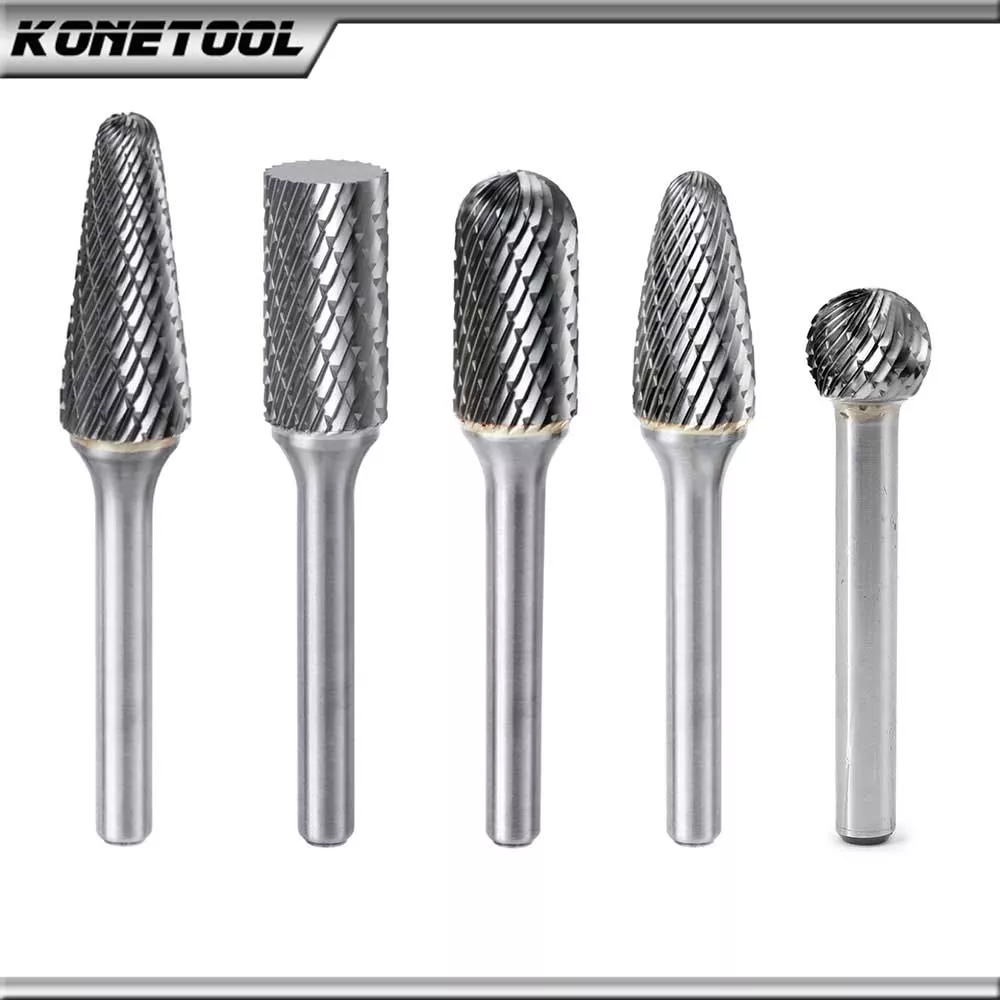
Precision Carbide Burrs Engineered for Demanding Steel Applications
Steel machining presents unique challenges including work hardening, thermal management, and stringent surface finish requirements. Standard carbide burrs often fail under these conditions, leading to accelerated tool wear, inconsistent results, and compromised part integrity. Honyo Prototype addresses these critical pain points through application-specific carbide burr solutions developed in direct alignment with our advanced CNC machining expertise.
Our engineering team leverages proprietary grain structure optimization and precision CNC grinding processes to manufacture burrs capable of maintaining edge retention and dimensional stability when machining high-tensile steels, stainless alloys, and hardened components. Each burr geometry is validated through rigorous in-house testing on actual steel workpieces under production-relevant parameters, ensuring optimal chip evacuation, reduced vibration, and extended tool life. This integration of material science and machining process knowledge allows us to deliver burrs that directly enhance your CNC milling, deburring, and contouring operations.
As a full-spectrum CNC machining service provider, Honyo Prototype understands that tool performance is inseparable from machine rigidity, programming strategy, and operational workflow. We extend this holistic perspective to every burr we produce, providing not just a consumable but a validated component of your steel machining process. To accelerate your prototyping and production timelines, our Online Instant Quote platform delivers precise pricing and lead times within minutes. Simply upload your CAD file or technical specifications to receive a manufacturability assessment and formal quotation without sales delays—enabling faster iteration and reduced time-to-market for steel-intensive projects.
| Key Performance Advantage | Honyo Implementation |
|---|---|
| Thermal Stability in Steel | Sub-micron grain carbide with specialized binder formulations |
| Edge Retention | CNC-ground precision flute geometries optimized for steel chip flow |
| Vibration Reduction | Balanced shank designs validated on HAAS and DMG MORI machining centers |
| Process Integration | Burrs engineered to complement common CNC feed/speed parameters for steel |
Technical Capabilities
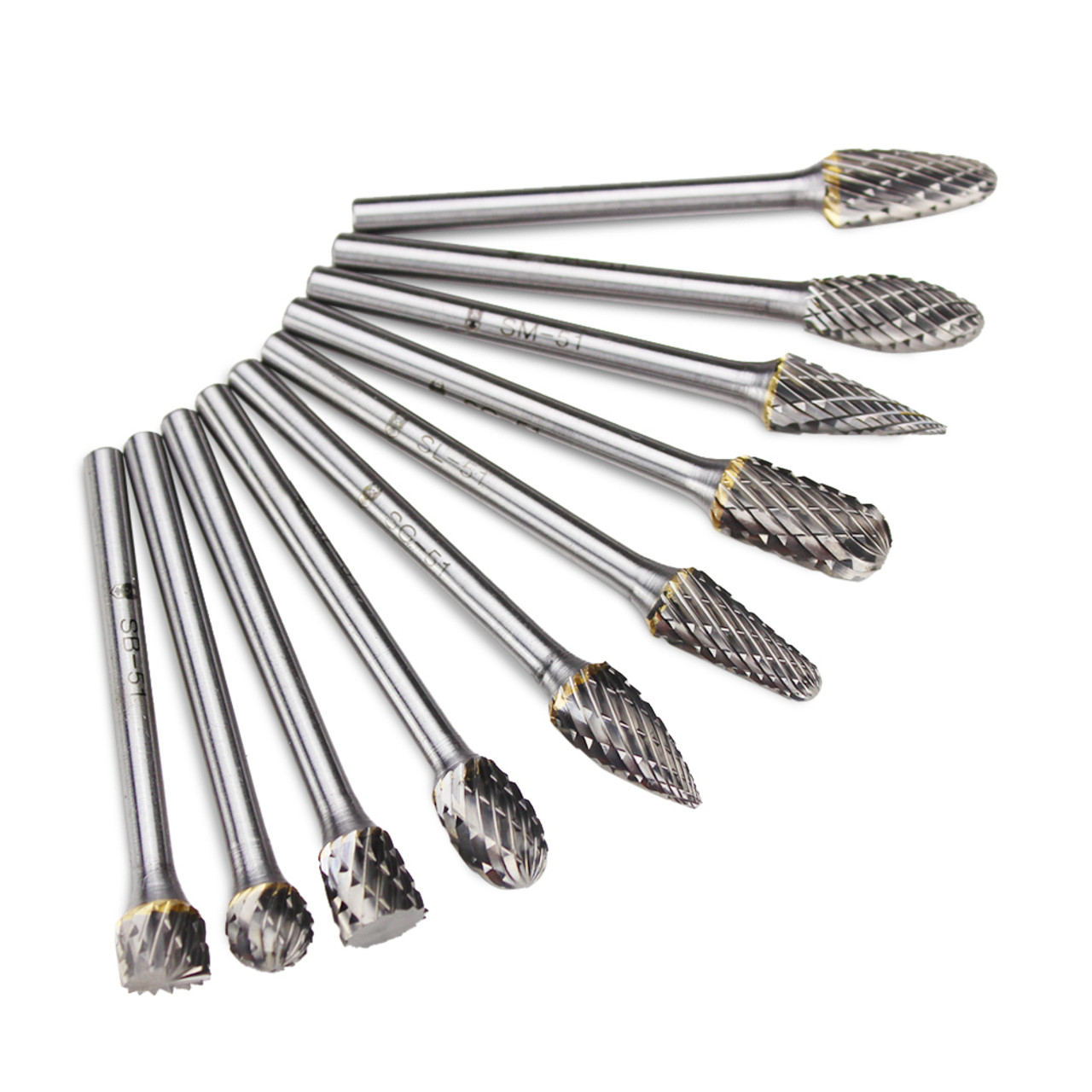
Technical specifications for carbide burrs used in high-precision applications such as 3/4/5-axis milling and turning operations require a focus on material compatibility, dimensional accuracy, geometry, and performance under tight tolerance conditions. These burrs are engineered for aggressive material removal while maintaining edge consistency and surface finish, particularly in complex geometries typical of multi-axis machining.
Carbide burrs designed for steel are typically constructed from premium-grade tungsten carbide with specialized coatings to enhance wear resistance, reduce heat buildup, and extend tool life. They are suitable not only for steel but also for a range of materials including aluminum, ABS, nylon, and other engineering plastics and metals—provided proper cutting parameters are applied to avoid melting (in thermoplastics) or work hardening (in stainless steels).
Below is a detailed specification table outlining key technical attributes:
| Feature | Specification |
|---|---|
| Material Composition | Solid tungsten carbide (WC) with cobalt binder; optional TiAlN or AlCrN coating for enhanced heat and wear resistance |
| Shank Diameter | 6.35 mm (1/4″) and 3.175 mm (1/8″) with tight tolerance (±0.005 mm) for secure collet grip in high-speed spindles |
| Overall Length (OAL) | 38 mm to 50 mm, optimized for tool clearance in 5-axis and deep cavity milling |
| Cutting Diameter Range | 3 mm to 12 mm, available in ball nose, cylindrical, tree, and inverted tree profiles |
| Flute Count | 2 to 4 flutes; 3-flute common for balanced performance in steel and mixed materials |
| Helix Angle | 30° to 40° variable helix design to reduce chatter and improve chip evacuation |
| Surface Finish (Ra) | ≤ 0.8 µm on cutting edges for precision finishing in tight tolerance applications |
| Tolerance (Dia.) | ±0.01 mm for critical diametrical control in multi-axis contouring |
| Max Operating Speed | Up to 25,000 RPM (dependent on diameter and spindle balance) |
| Compatible Materials | Carbon steel, stainless steel, tool steel, aluminum (including 6061, 7075), ABS, nylon (PA6, PA66), and other engineering thermoplastics |
| Application Focus | 3/4/5-axis milling, deburring internal contours, edge blending, mold finishing, precision turning setups |
| Coolant Compatibility | Designed for use with flood coolant, mist, or air blast; recommended for steel and high-temp alloys |
| Edge Treatment | Micro-chamfered or honed edges to improve durability in interrupted cuts and hardened materials |
These burrs are manufactured using precision grinding techniques and undergo rigorous quality control to ensure geometric consistency. When used in CNC environments involving mixed materials—such as transitioning from steel to aluminum or polymers—proper cleaning and parameter adjustments (e.g., reduced feed in nylon to prevent gumming) are essential to maintain burr performance and workpiece integrity.
From CAD to Part: The Process
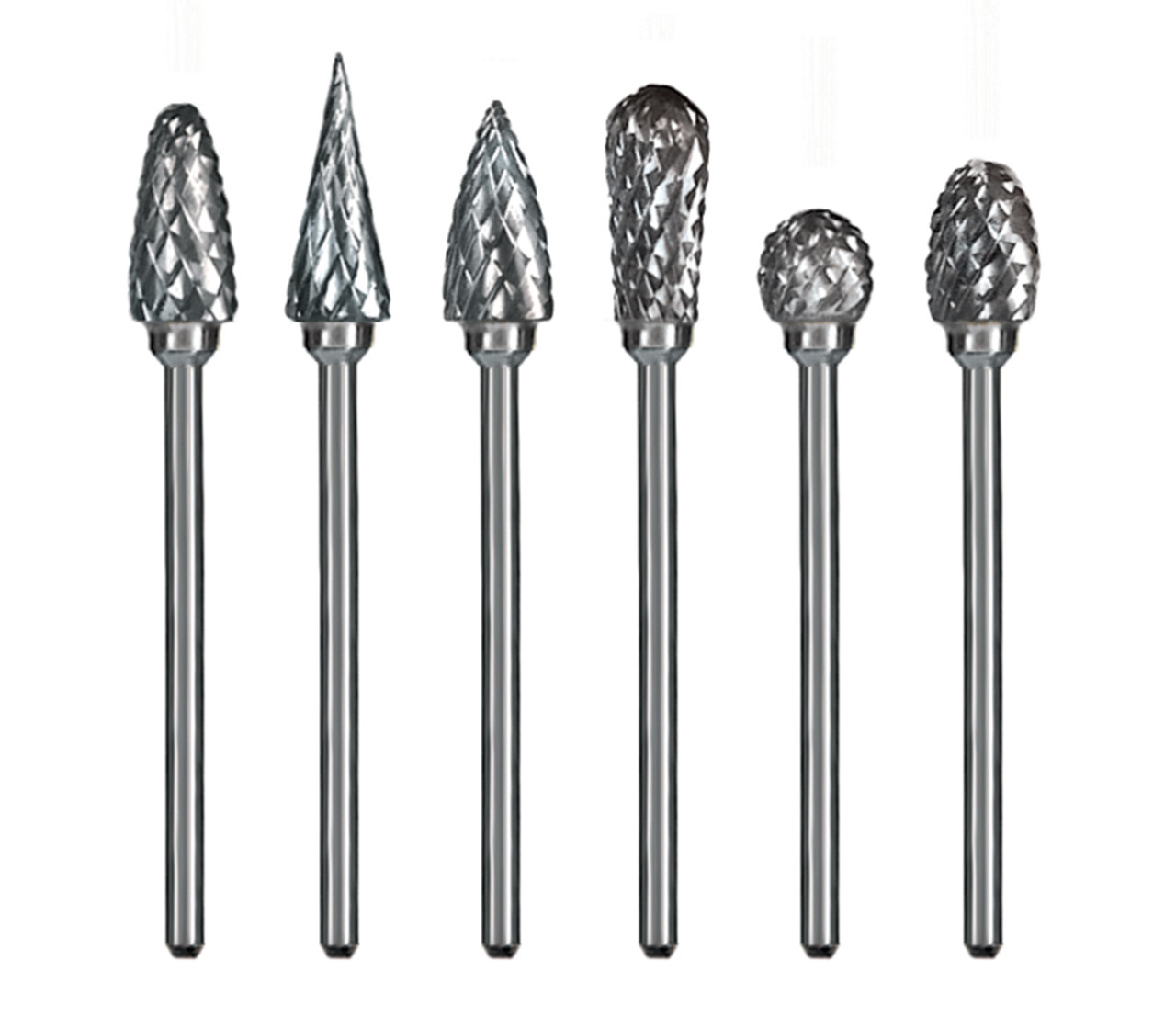
Honyo Prototype delivers precision carbide burrs for steel machining through a rigorously controlled digital workflow designed for speed and metallurgical reliability. Our process integrates advanced validation at each stage to ensure optimal performance on hardened and structural steel alloys.
CAD Upload and Initial Validation
Clients submit 3D CAD models via our secure portal with steel application specifications including target material grade hardness range and operational parameters. Our system immediately performs geometric sanity checks confirming minimum feature sizes align with carbide’s fracture limits and verifying shank compatibility with standard collet systems. Steel-specific requirements such as flute geometry for chip evacuation in 4140 or 1045 steel trigger automatic alerts if design thresholds are exceeded.
AI-Powered Quoting Engine
Proprietary algorithms analyze the CAD data alongside real-time inputs from our production floor. The quote engine factors in steel-specific variables:
Tungsten carbide grade selection (e.g., K20 for general steel vs K01 for hardened tool steels)
Required post-sintering surface treatments for steel adhesion resistance
Flute sharpening tolerances based on steel’s abrasiveness
Quotes include material certification paths per ASTM B200 and delivery timelines reflecting steel-grade dependent sintering cycles. Clients receive granular cost breakdowns showing how steel hardness ranges impact tool life and pricing.
Steel-Optimized DFM Analysis
Our engineering team conducts a dual-phase DFM review focused explicitly on steel machining challenges. The table below outlines critical steel-specific checks:
| DFM Parameter | Steel-Specific Threshold | Validation Method |
|---|---|---|
| Flute Rake Angle | -5° to +3° for 25-45 HRC steel | FEA chip flow simulation |
| Core Diameter | ≥30% of burr diameter | Fracture stress modeling |
| Surface Roughness | Ra ≤0.4 µm on cutting edges | Optical profilometry scan |
| Hardness Gradient | ≤5% variation across cutting zone | Cross-section microhardness testing |
We provide actionable redesign suggestions such as modifying helix angles to prevent built-up edge formation in stainless steel or adjusting clearance angles for cast iron inclusions. All recommendations reference ISO 848 standards for rotary cutting tools.
Precision Production for Steel Applications
Manufacturing occurs in our climate-controlled carbide facility with steel-specific protocols:
Green compaction uses pressure curves calibrated for steel’s high thermal conductivity during machining. Sintering profiles incorporate slow cooling ramps to minimize residual stresses that cause chipping in interrupted steel cuts. CNC grinding employs diamond wheels with 150-200 grit for optimal edge retention on steel, followed by ultrasonic deburring to eliminate micro-cracks. Every lot undergoes Rockwell A hardness verification (88-92 HRA) and 100% visual inspection for edge defects using 200x magnification.
Certified Delivery with Steel Performance Data
Shipments include full material traceability from cemented carbide ingot to finished burr with:
Mill test reports showing cobalt binder content (6-12% for steel applications)
Microstructure certification per ISO 4506
Batch-specific cutting test data on 1045 steel at 250 SFM
VDI 2768-compliant packaging with vibration-dampened inserts to protect cutting edges during transit.
Typical lead time from CAD approval to delivery is 7-10 business days with expedited steel-critical paths available. All burrs meet or exceed ISO 1832 classifications for form and dimensional accuracy on steel substrates.
Start Your Project
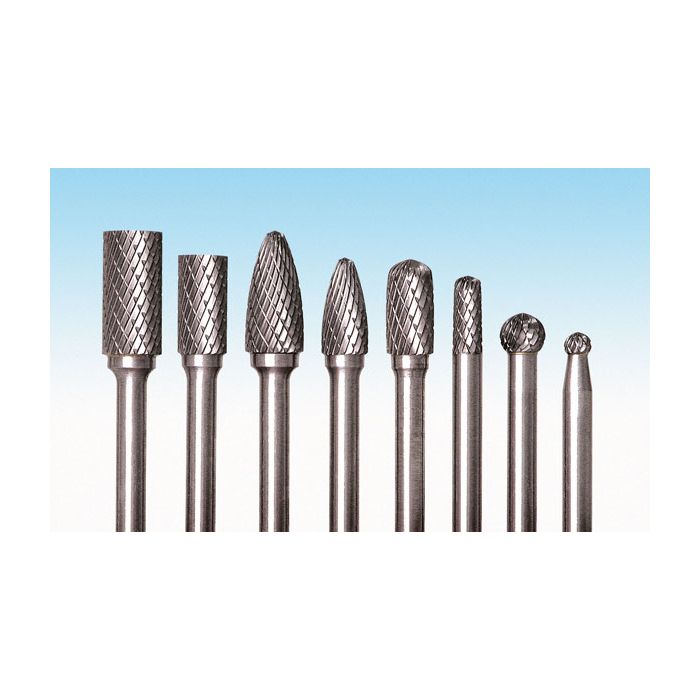
Looking for high-performance carbide burrs designed specifically for steel? Our precision-engineered tools are built to deliver clean, efficient material removal with extended tool life—ideal for demanding industrial applications.
Manufactured in our Shenzhen factory with strict quality control, Honyo Prototype ensures consistent performance and durability. Whether you’re working on milling, deburring, or shaping steel, our carbide burrs are optimized for maximum efficiency.
For product specifications, pricing, or bulk order inquiries, contact Susan Leo at [email protected]. Let us support your machining needs with reliable, factory-direct solutions.
🚀 Rapid Prototyping Estimator
Estimate rough cost index based on volume.