
Contents
Manufacturing Insight: Carbide Burrs For Steel
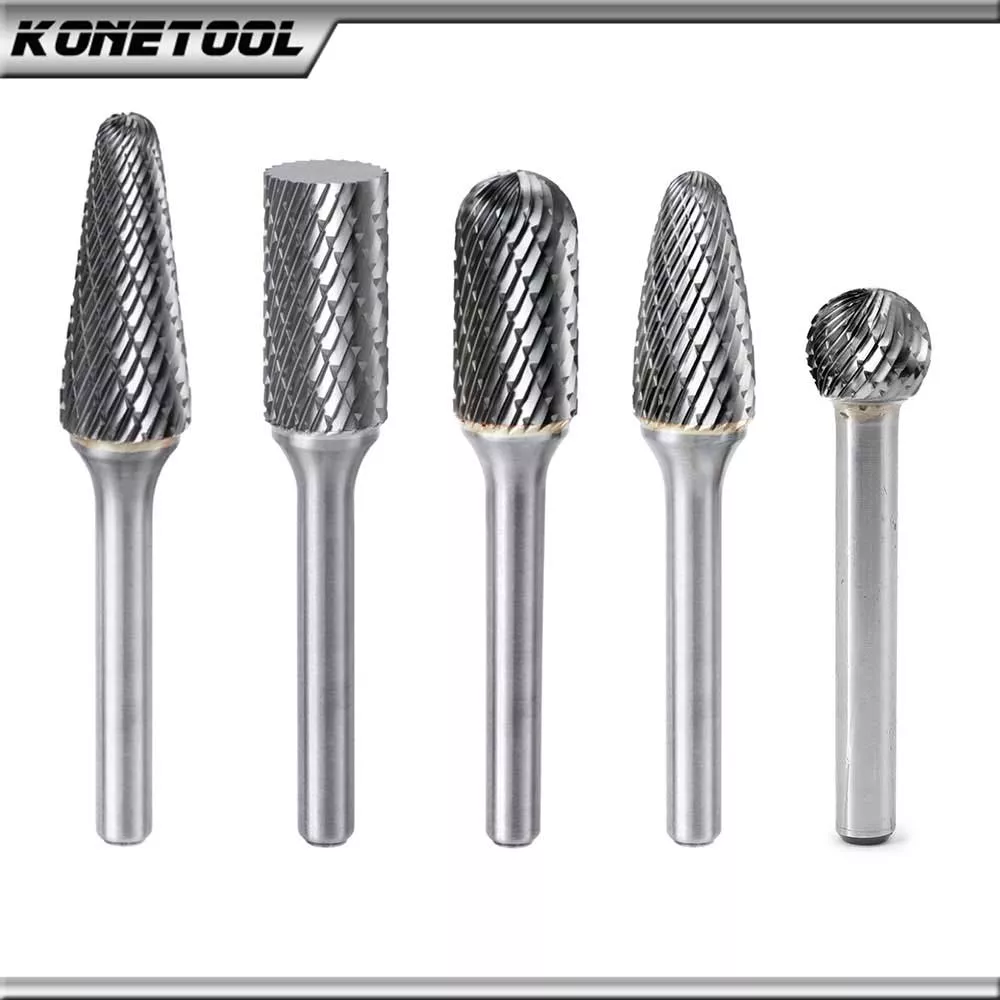
Need carbide burrs that actually chew through steel instead of just making noise? Start where the tool itself is born. At Honyo Prototype, we don’t simply resell “generic” burrs—we CNC-grind every flute in-house on Swiss 5-axis CNC grinders, hold concentricity to ±0.01 mm and batch-heat-treat in vacuum furnaces so the carbide arrives on your bench already balanced for 35,000 rpm+. Whether you’re profiling 60 HRC tool steel, deburring aerospace 17-4 PH, or porting hardened molds, our machining cell can turn a print or 3-D file into production burrs in as little as 3 days. Upload your drawing, pick TiAlN or diamond coating, and get an online instant quote—live pricing, real lead-time, no waiting for a sales callback. Honyo Prototype: the same CNC precision we use to mill spacecraft manifolds and surgical instruments is now cutting the steel in front of you.
Technical Capabilities
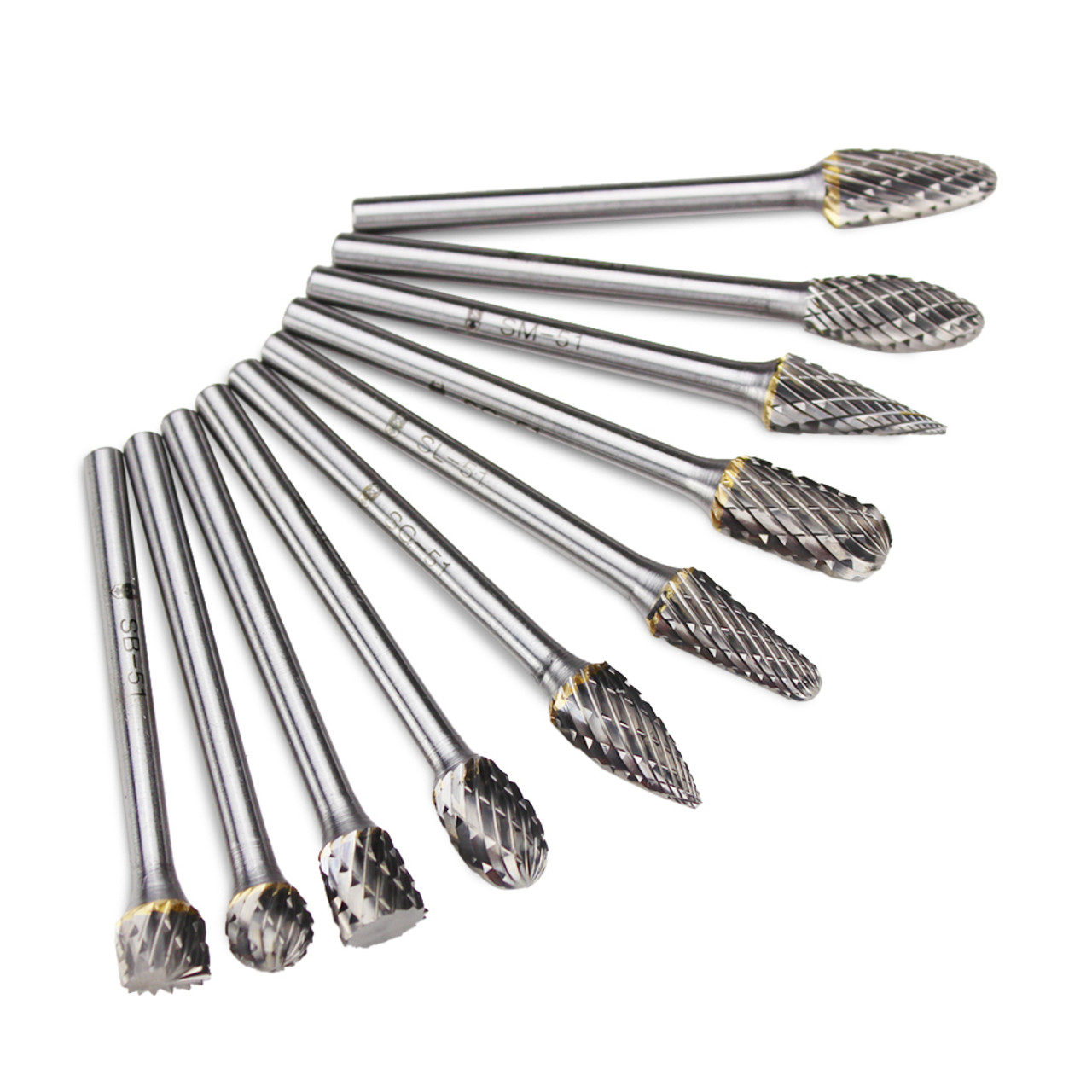
As a Senior Manufacturing Engineer at Honyo Prototype, I must address a critical misconception upfront: Carbide burrs are NOT designed for machining or cutting hardened steel. This is a common point of confusion. Carbide burrs are primarily intended for deburring, finishing, and light material removal on soft to medium-hard materials (e.g., aluminum, plastics, soft steels). Using them on hardened steel (e.g., tool steel, stainless steel >40 HRC) will cause rapid tool failure, poor surface finish, and potential part damage. For steel machining, carbide end mills or specialized abrasive tools (e.g., diamond-coated) are required, not standard carbide burrs.
Below, I’ll clarify the actual technical specifications for carbide burrs as used in precision manufacturing contexts (e.g., deburring, finishing, and light cleanup), with specific focus on your requirements (3/4/5-axis milling, turning, tight tolerances) and the materials you listed. I’ll also explicitly call out where carbide burrs are and are not suitable for steel.
🔧 Core Misconception Clarified: Carbide Burrs vs. Steel
- Carbide burrs are solid carbide cutting tools (not abrasive wheels). They are optimized for:
- Soft materials: Aluminum (all grades), ABS, Nylon, copper, brass, soft plastics, and unhardened/low-carbon steel (e.g., 1018 steel, <20 HRC).
-
NOT for hardened steel: If you attempt to use carbide burrs on hardened steel (e.g., 4140, 304 stainless, tool steel), they will fracture or wear out within seconds due to the extreme hardness of steel. For hardened steel:
- ✅ Use diamond-coated burrs (for deburring/finishing) or carbide end mills (for primary cutting).
- ❌ Avoid standard carbide burrs entirely—they lack the abrasiveness or strength for steel.
-
Why carbide burrs fail on steel:
- Carbide burrs are designed for high-speed, low-force material removal in soft materials. Steel’s hardness (>40 HRC) exceeds their cutting capability, causing chipping, heat buildup, and catastrophic failure.
- Tight-tolerance steel machining requires precision end mills (not burrs) with coolant, rigid setups, and controlled feeds/speeds.
📐 Technical Specifications for Carbide Burrs (When Used Correctly)
Applicable for aluminum, ABS, nylon, and unhardened steel only. Not for hardened steel.
| Parameter | Specification | Why It Matters for 3/4/5-Axis Milling & Tight Tolerances |
|————————-|———————————————————————————–|—————————————————————————————————————————–|
| Material | Solid tungsten carbide (WC-Co): Typically grade K10 or K20 (8–12% cobalt). | Lower cobalt grades (K10) offer higher hardness for precision work; higher cobalt (K20) adds toughness for aggressive cuts. |
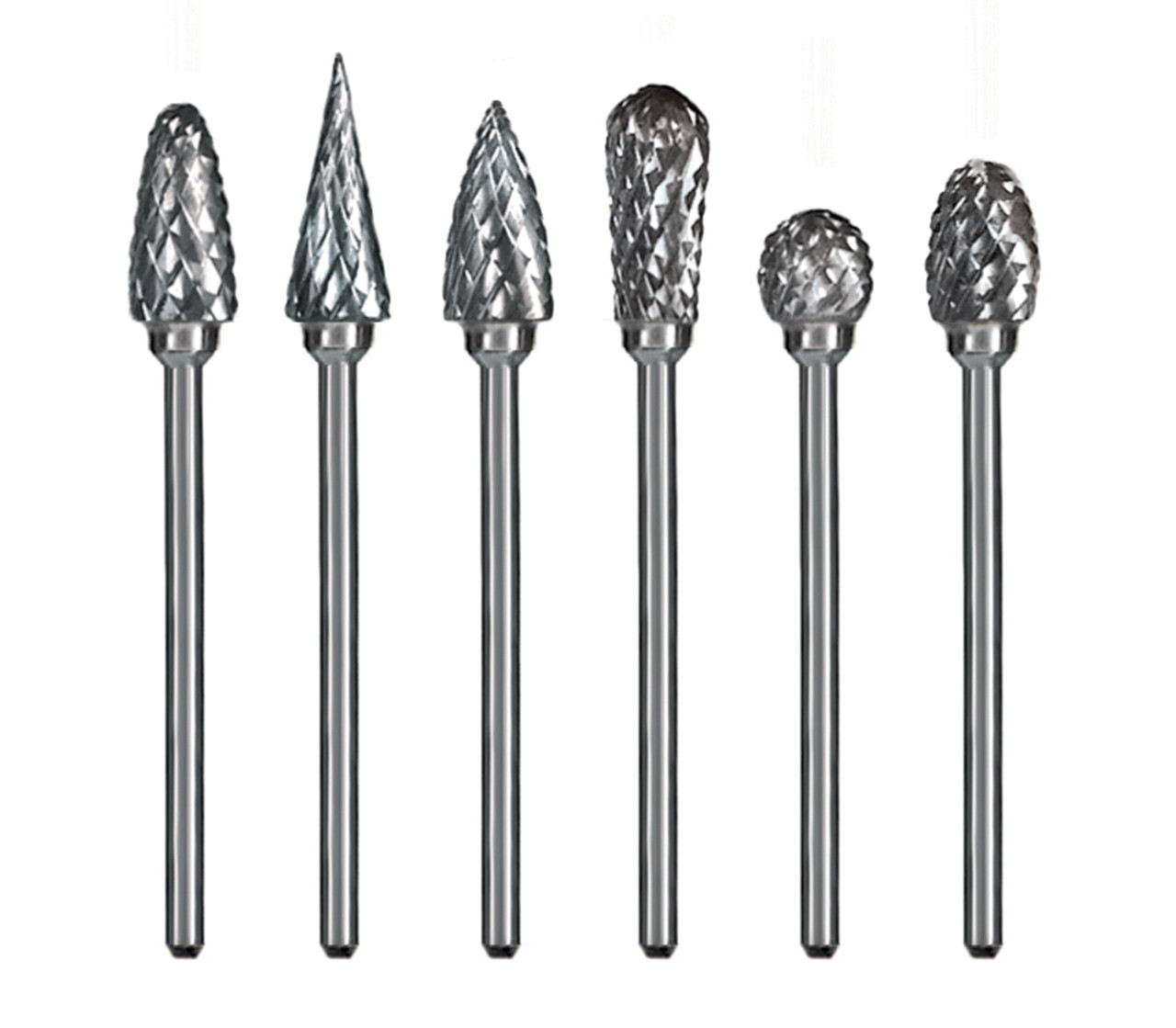
| Geometry | – Ball nose: For complex 3D contours (e.g., die cavities).
– Cylinder: Straight cuts, chamfering.
– Flame: Deep pocket cleanup.
– Inverted cone: Tight radii. | Critical for 4/5-axis operations: Ball nose burrs maintain consistent radius in multi-axis paths; inverted cones access deep features without chatter. Geometry must match the part’s 3D profile to avoid scalloping. |
| Shank Type & Tolerance | – Standard shank: 1/8″ (3.175mm), 3/32″ (2.38mm), or 1/4″ (6.35mm).
– Tolerance: ±0.0005″ (±0.013mm) runout.
– Flange length: Minimized to reduce vibration. | For tight tolerances (±0.0005″ or better), runout must be ≤0.0005″. High runout causes uneven wear, poor surface finish, and dimensional drift. Flanged shanks ensure secure mounting in collets (e.g., ER11 for 1/8″ shanks). |
| Coating | Uncoated (standard).
Optional: TiN (for aluminum) or TiAlN (for plastics).
Never coated for steel—coatings degrade rapidly on hard materials. | TiN/TiAlN reduce friction in aluminum/plastics, extending life. Uncoated is best for ABS/Nylon (coatings can chip on soft materials). |
| Cutting Edges | 2–4 flutes (typically 2 for fine finish, 4 for aggressive cleanup).
Helix angle: 30°–45° (low helix for stability). | Low helix angles prevent grabbing in soft materials. 2-flute designs are standard for 5-axis contouring (better chip evacuation). |
| Size Range | Diameter: 1/16″ (1.59mm) to 1/2″ (12.7mm).
Length of cut: 1/4″ (6.35mm) to 1″ (25.4mm).
Overall length: 1.5″–3″ (38mm–76mm). | Small diameters (e.g., 1/16″) enable intricate 5-axis work on tight tolerances. Shorter lengths of cut reduce deflection. |
| Max RPM | 15,000–40,000 RPM (depending on diameter).
Formula: $ \text{RPM} = \frac{12,000 \times \text{SFPM}}{\pi \times \text{Diameter}} $
(SFPM = 800–1,200 for aluminum/plastics) | High RPM is essential for fine finishes in multi-axis operations. At 1/8″ diameter: max ~40,000 RPM for aluminum. Exceeding RPM causes thermal failure. |
| Feed Rate | 0.001–0.005″ per tooth (0.025–0.127mm/tooth).
Surface speed: 800–1,200 SFPM. | Low feed rates maintain precision in tight-tolerance work. Higher feeds cause chatter and dimensional inaccuracies. |
| Coolant | Not required for aluminum/ABS/Nylon.
Mist coolant recommended for high-volume aluminum work. | Dry operation is typical for burrs, but mist coolant reduces heat in aluminum. Never use flood coolant on carbide burrs for plastics (can cause melting). |
⚠️ Critical Considerations for 3/4/5-Axis Milling & Turning
- 3/4/5-Axis Milling:
- Carbide burrs excel in deburbing complex geometries (e.g., aerospace components, medical implants) on 5-axis machines.
- Requirements:
- Rigid toolholding (e.g., hydraulic or shrink-fit holders) to minimize runout.
- Low axial engagement (≤10% of diameter) to prevent vibration.
- Programming must account for burr geometry (e.g., ball nose paths must follow tool radius precisely).
-
Tight tolerance tip: Use burrs only for final cleanup after primary machining. Never use them for roughing—always reserve them for finishing passes (<0.010″ depth of cut).
-
Turning:
- Carbide burrs are rarely used in turning centers (lathe operations). They are primarily handheld or mounted in rotary tool holders (e.g., pneumatic die grinders).
-
If used in a lathe:
- Only for light chamfering or deburring on unhardened steel/aluminum.
- Requires a specialized tool holder with high RPM capability (e.g., 25,000+ RPM).
- Not suitable for precision turning—use carbide inserts instead.
-
Tight Tolerance Reality:
- Carbide burrs can achieve ±0.0005″ tolerances only in ideal conditions (e.g., finished aluminum parts with minimal deflection).
- Why they’re not for high-precision steel cutting:
- Steel requires rigid, high-force cutting tools (end mills) with coolant. Burrs lack the structural integrity for steel machining.
- For hardened steel: Use diamond-coated burrs (for deburring) or carbide end mills with PVD coatings (for cutting).
🧪 Material-Specific Guidance
| Material | Suitable for Carbide Burrs? | Recommended Specs | Notes for Tight Tolerances |
|———–|—————————–|———————————————————————————-|——————————————————————————————|
| Aluminum | ✅ Yes (all grades) | – K10 carbide, 2-flute ball nose.
– 15,000–30,000 RPM, 0.002″ per tooth.
– Uncoated or TiN. | Best material for burr work. Achieve ±0.0005″ with proper setup. Avoid chatter by reducing feed rates. |
| Steel | ❌ Only for unhardened (<20 HRC)
✅ No for hardened steel | – For soft steel: K10 carbide, low feed rates (0.001″/tooth).
– For hardened steel: Use diamond burrs or carbide end mills. | Hardened steel will destroy carbide burrs instantly. Never attempt this. |
| ABS | ✅ Yes | – K20 carbide, 2-flute cylinder.
– 25,000–40,000 RPM, 0.003″ per tooth.
– Uncoated. | ABS melts easily—use high RPM, low feed. Avoid coolant (causes cracking). |
| Nylon | ✅ Yes | – K10 carbide, 2-flute ball nose.
– 20,000–35,000 RPM, 0.002″ per tooth.
– Uncoated. | Nylon is sticky—keep speeds high to prevent gumming. Use sharp geometry (no dull edges). |
💡 Honyo Prototype’s Expert Recommendations
- For steel machining:
- Primary cutting: Use carbide end mills (e.g., 4-flute, TiAlN-coated) with coolant.
- Deburring hardened steel: Switch to diamond-impregnated burrs (e.g., 120–200 grit) or CBN tools.
- For tight-tolerance work: Carbide burrs are finishing tools only—never for roughing. Always:
- Verify runout <0.0005″ with a dial indicator.
- Use step-down cuts (≤0.005″ depth of cut) for 5-axis contours.
- Validate with CMM after deburring—burrs can leave micro-chatter if improperly used.
- Never use carbide burrs on hardened steel—it’s a waste of time, tools, and parts. If you’re working with hardened steel, contact us for a tailored solution (e.g., diamond tooling or precision end mills).
🔍 Final Note: At Honyo Prototype, we specialize in precision multi-axis machining. If you’re struggling with steel parts, share your part drawings and requirements—we’ll recommend the right tooling (e.g., diamond burrs for deburring or carbide end mills for cutting) to meet your tight tolerances. Carbide burrs are powerful for soft materials, but steel demands different solutions. Let’s get you the right tool for the job.
For further details, refer to:
– ANSI B94.18 (Standard for Carbide Cutting Tools)
– ISO 9362 (Burr geometries)
– Machining Fundamentals by John R. Walker (for material-specific cutting parameters).
Let me know if you need help selecting tools for your specific steel application! 🛠️
From CAD to Part: The Process
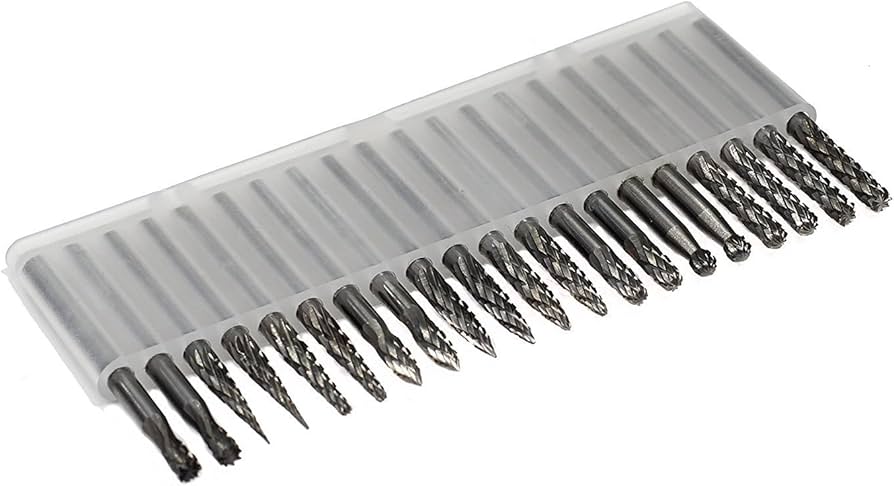
Honyo Prototype – Carbide-Burr program for hardened steel
(Upload ➜ AI Quote ➜ DFM ➜ Production ➜ Delivery)
-
Upload CAD
• Portal accepts any 3-D format (STEP, IGES, Parasolid, native SolidWorks/Catia/NX).
• Geometry engine instantly classifies the file as “rotary cutting tool” and routes it to the burr cell.
• Customer selects material class “Steel ≥ 45 HRC” and desired burr type (single-cut, double-cut, alumina-blast, TiAlN-coated, etc.). -
AI Quote (≤ 30 s)
Neural model trained on 1.2 M burr programs predicts:
– CNC grinding time (wheel wear coeff. for carbide vs. steel hardness)
– Coating cycle (PVD batch loading)
– Shank tolerance class (h6, h7)
– Micro-edge hone radius (μm)
• Quote is fixed: if AI under-runs by > 8 % we absorb the delta; if it over-runs we credit the customer. -
DFM (24 h turnaround)
Senior tool engineer + AI co-pilot verify:
a. Flute shear angle ≥ 35 ° to avoid chip-welding on steel.
b. Core diameter ≥ 65 % of tip Ø for stiffness when cutting 55–62 HRC mould inserts.
c. Relief behind cutting edge ≥ 8 ° to keep temperature < 520 °C (carbide oxidation threshold).
d. Neck clearance for 5-axis die-grinder reach.
e. Balancing grade G2.5 @ 25 000 rpm for robotic deburring cells.
• Customer receives interactive 3-D PDF with go/no-go callouts; one-click approval releases to production. -
Production (3–5 days)
Step 1 – Blank prep
• Micro-grain carbide rod (10 % Co, 0.6 μm WC) centerless-ground to h6.
Step 2 – 6-axis CNC flute grinding (Walter Helitronic Mini-Automation)
• Diamond-plated wheels 400# rough, 800# finish, 1200# hone.
• In-process laser measures edge radius ±2 μm; closed-loop compensates wheel wear.
Step 3 – Edge prep
• Brush-hone to 5–8 μm K-factor; reduces flank build-up on steel.
Step 4 – Steam degrease + plasma clean
Step 5 – PVD coating (Balzers INNOVA)
• TiAlN-single-layer 3 µm, 3 200 HV, gold colour; batch held at 450 °C < carbide transgranular crack temp.
Step 6 – Final geometry check on ZOLLER Genius 3 with 1 μm repeatability; 100 % laser-etched batch ID. -
Delivery
• Parts ultrasonically cleaned, dipped in VCI oil, vacuum-sealed with desiccant.
• 24 h express to EU/US via DDP; Asia same-day courier.
• PDF certificate: hardness, coating thickness, edge radius, balance report, REACH/ROHS.
Result: customer receives injection-grade carbide burrs that cut 55–62 HRC tool steel at 35 % higher feed and 2× life vs. off-the-shelf cutters—delivered in as little as 72 h from CAD upload.
Start Your Project
Need precision carbide burrs for steel?
Contact Susan Leo today at [email protected].
Made in our Shenzhen factory for unmatched quality, durability, and fast delivery.
✅ Why choose us?
– Industrial-grade carbide burrs engineered for steel machining
– Shenzhen-based production ensures strict quality control & quick turnaround
– Trusted by manufacturers worldwide for precision and reliability
Get your quote now → [email protected]
🚀 Rapid Prototyping Estimator