
Contents
Manufacturing Insight: Burr Bits For Steel
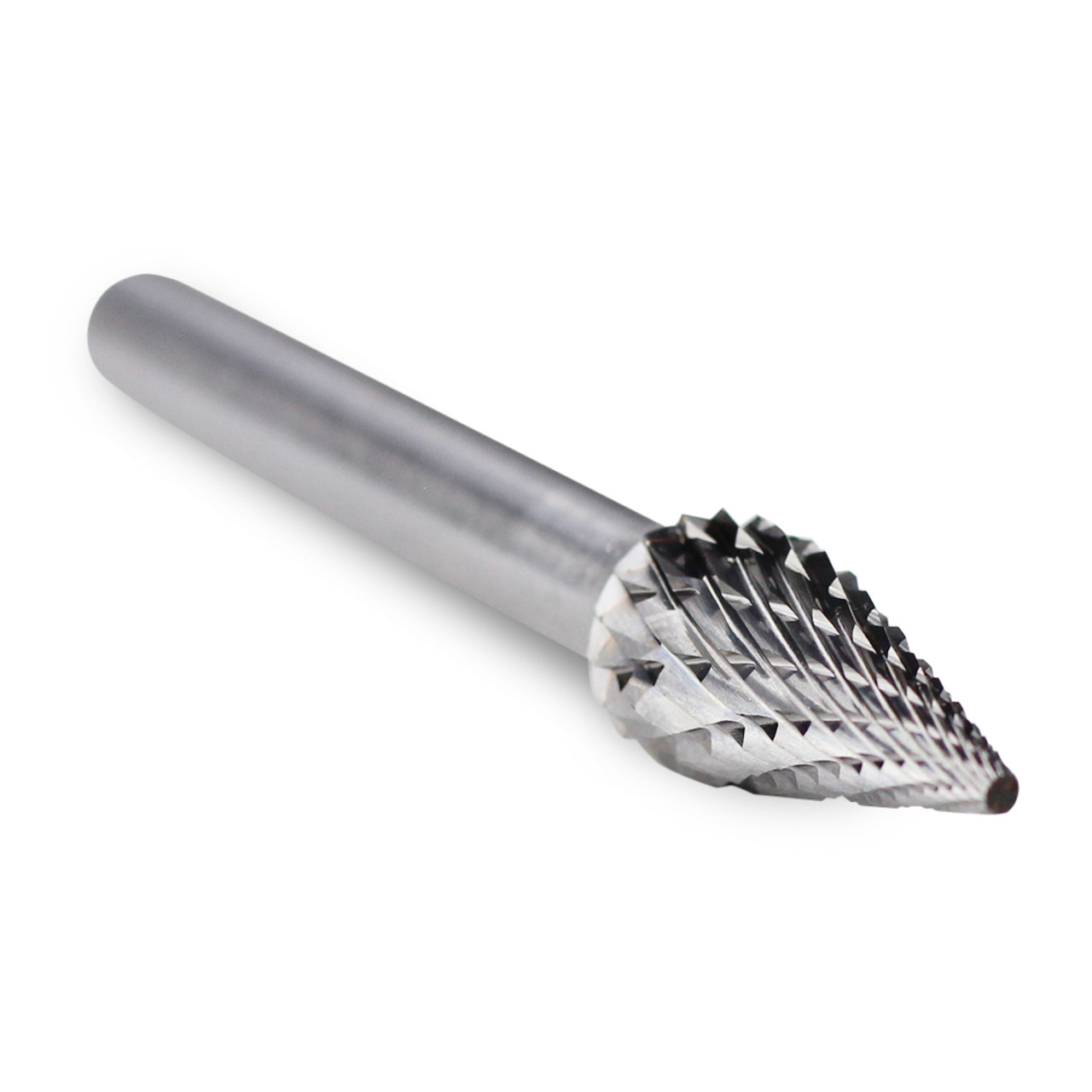
Precision Steel Machining: Eliminating Burrs at the Source with Honyo Prototype
Achieving burr-free edges on machined steel components is a critical challenge in high-integrity manufacturing. Traditional post-process deburring introduces delays, inconsistent results, and hidden costs—especially with demanding alloys like 4140, 1045, or 304 stainless steel. At Honyo Prototype, our CNC machining services are engineered to prevent burrs during the cut, not after. By leveraging optimized toolpaths, rigid workholding, and precision-ground burr-specific end mills designed for ferrous materials, we deliver net-shape steel parts ready for assembly or coating on first pass. This eliminates secondary operations, reduces scrap risk, and ensures dimensional accuracy down to ±0.0002″.
Our technical team selects and applies burr bits based on your steel grade, geometry complexity, and surface finish requirements—turning a common pain point into a competitive advantage. Whether prototyping aerospace brackets or medical device housings, Honyo’s integrated approach guarantees clean, safe edges without compromising lead times.
Accelerate your steel component development with Honyo’s Online Instant Quote system. Upload CAD files in minutes to receive a detailed manufacturability analysis and competitive pricing—no waiting for manual quotes. Start your precision steel machining project today with confidence in every edge.
| Key Capability | Honyo Prototype Advantage |
|---|---|
| Burr Prevention | CNC-optimized toolpaths + steel-specific tooling |
| Material Expertise | Proven on 1018, 4140, 303/304/316 SS, tool steels |
| Tolerance Control | ±0.0002″ consistently achieved |
| Lead Time | Prototypes in 3-5 days with instant quoting |
Technical Capabilities
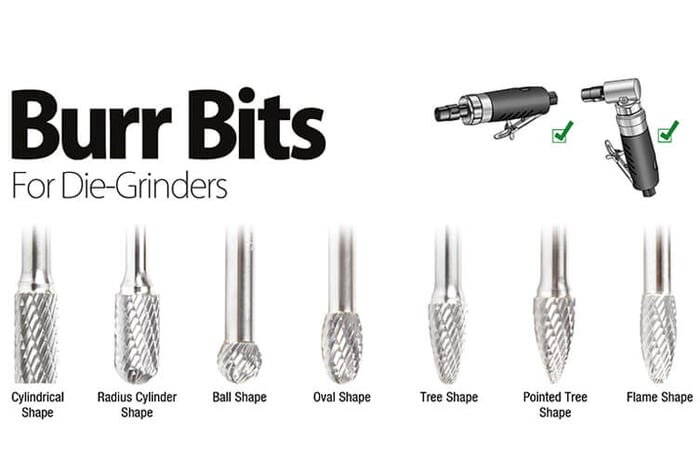
Burr bits for steel used in 3/4/5-axis milling and turning operations are engineered for high precision, tight tolerance machining across a variety of materials including aluminum, steel, ABS, and nylon. These multi-flute rotary tools are typically manufactured from advanced carbide grades or coated high-speed steel (HSS) to ensure durability, wear resistance, and dimensional stability. Their design supports complex contouring, deburring, and edge-finishing in hard-to-reach areas, making them ideal for high-accuracy CNC applications.
| Parameter | Specification Description |
|---|---|
| Tool Material | Solid carbide, micro-grain carbide with TiAlN, AlCrN, or ZrN coatings; occasionally coated HSS for lower-speed applications |
| Flute Count | 2 to 6 flutes; 4-flute common for steel and tight-tolerance finishing |
| Shank Diameter | 1/8″ (3.175 mm), 3/16″ (4.76 mm), 1/4″ (6.35 mm); precision ground for runout < 0.0002″ |
| Tip Geometry | Spherical, conical, cylindrical, or oval profiles; ground to ±0.0005″ tolerance |
| Cutting Diameter Range | 0.031″ (0.8 mm) to 0.500″ (12.7 mm), depending on application and reach |
| Overall Length | 1.5″ to 3.0″; extended reach variants available for deep cavity work |
| Application Compatibility | Optimized for steel (hardened and mild), stainless steel, aluminum alloys, engineering plastics (ABS, nylon), and composites |
| Surface Finish Capability | Achieves Ra < 16 μin (0.4 μm) when used in finishing passes with proper feed/rate |
| Max RPM Rating | 15,000–30,000 RPM depending on diameter and tool holder setup |
| Tool Holder Interface | Designed for ER collet chucks, hydraulic, or shrink-fit holders to minimize vibration and maintain concentricity |
| Use Case in 3/4/5-Axis | Complex 3D contouring, edge blending, cross-hole deburring, radius forming in multi-axis orientations |
| Tolerance Performance | Maintains ±0.001″ to ±0.0002″ dimensional accuracy in controlled thermal and spindle environments |
| Coolant Compatibility | Suitable for through-spindle coolant (TSC) to enhance chip evacuation and prolong tool life in steel and aluminum |
| Wear Resistance | High resistance to adhesive wear in aluminum and abrasive wear in steel and plastics due to PVD coatings |
These burr bits are selected based on material hardness and geometric complexity. In steel, coated carbide bits with 4 flutes provide optimal balance between chip removal and surface finish. For softer materials like aluminum, ABS, and nylon, sharper rake angles and polished flutes prevent material loading. Tight tolerance requirements demand strict process control, including thermal compensation and tool pre-setter validation, especially in 5-axis simultaneous milling.
From CAD to Part: The Process
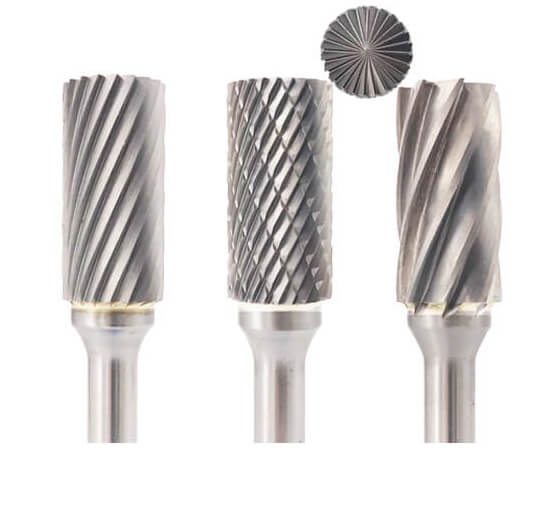
Honyo Prototype delivers precision burr bits for steel through a rigorously controlled digital manufacturing workflow designed for speed, quality, and material-specific optimization. Our end-to-end process begins with secure CAD file ingestion and concludes with validated delivery, ensuring every burr bit meets stringent steel-machining requirements.
Upon receiving your CAD file for steel burr bits, our system immediately performs automated geometry validation. This initial check confirms critical parameters like flute geometry, shank tolerances, and tip angles align with steel machining best practices before proceeding to quoting. Invalid submissions trigger instant feedback for rapid client correction, eliminating downstream delays.
The AI-powered quoting engine then analyzes the validated CAD model against real-time production data. For steel burr bits, this includes material-specific assessments: required carbide grade selection (e.g., K10-K20 for steel), optimal coating recommendations (TiAlN or AlCrN for high-heat steel applications), and machine parameter optimization for steel’s thermal conductivity and work-hardening characteristics. Quotes include steel-specific lead time estimates based on current tooling availability and thermal treatment capacity.
During Design for Manufacturability (DFM) review, our engineering team conducts material-focused analysis. Steel burr bits undergo specific scrutiny of chip evacuation geometry, flute surface finish requirements to prevent built-up edge, and stress concentration points vulnerable during steel cutting. We verify compatibility with common steel grades (e.g., 1045, 4140, 304SS) and propose modifications if geometry risks premature tool failure. Clients receive detailed DFM reports with steel-optimized recommendations.
| DFM Checkpoint for Steel Burr Bits | Standard Verification | Steel-Specific Requirement |
|---|---|---|
| Flute Geometry | Clearance angles | Chip breaker profile depth for steel swarf control |
| Surface Finish | Ra tolerance | Micro-polishing to reduce friction in steel |
| Material Specification | Carbide grade | PVD coating thickness verification (2-4µm) |
| Heat Treatment | Hardness | Post-sintering stress relief for steel applications |
| Dimensional Tolerance | Runout | Shank concentricity <0.005mm to prevent chatter |
Production leverages dedicated steel-machining cells with rigid CNC grinders operating under strict environmental controls. Burr bits for steel undergo sequential processes: precision grinding of flutes and cutting edges, multi-axis contouring, robotic deburring, and mandatory coating application. Each stage includes in-process metrology—optical comparators verify edge hone consistency while CMM checks confirm geometry within ±0.005mm tolerances critical for steel cutting performance.
Final quality assurance applies steel-specific validation protocols. Burr bits undergo simulated cutting tests on reference steel blocks (AISI 1018) with force monitoring to detect vibration signatures indicating geometry flaws. Coating adhesion is verified via scratch testing per ISO 26443, and every lot receives batch-certified hardness reports (1500-1800 HV). Non-conforming items trigger immediate root-cause analysis with corrective actions documented in our traceability system.
Delivery packages include serialized test certificates showing steel-cutting validation data, recommended speed/feed parameters for common steel alloys, and anti-corrosion packaging with desiccants. We maintain real-time shipment tracking with proactive notifications, ensuring steel burr bits arrive ready for immediate implementation in your production environment. This integrated approach reduces time-to-use by up to 40% compared to conventional prototyping while guaranteeing tool longevity in steel applications.
Start Your Project
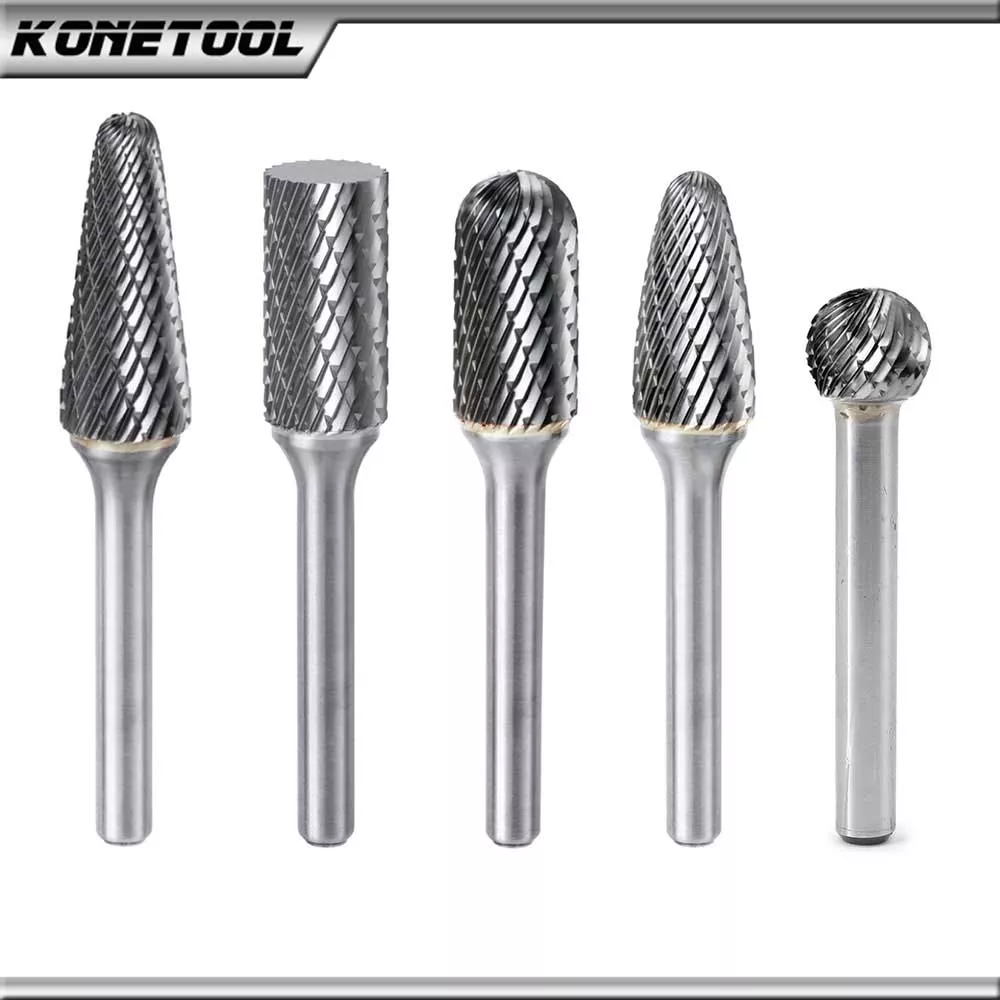
Looking for high-performance burr bits for steel? Honyo Prototype offers precision-engineered rotary burrs designed for durability and efficient metalworking. Manufactured in our Shenzhen factory, our burr bits deliver consistent results for industrial and prototyping applications.
For inquiries and bulk orders, contact Susan Leo at [email protected].
🚀 Rapid Prototyping Estimator
Estimate rough cost index based on volume.