
Contents
Manufacturing Insight: Brush Finish Stainless Steel
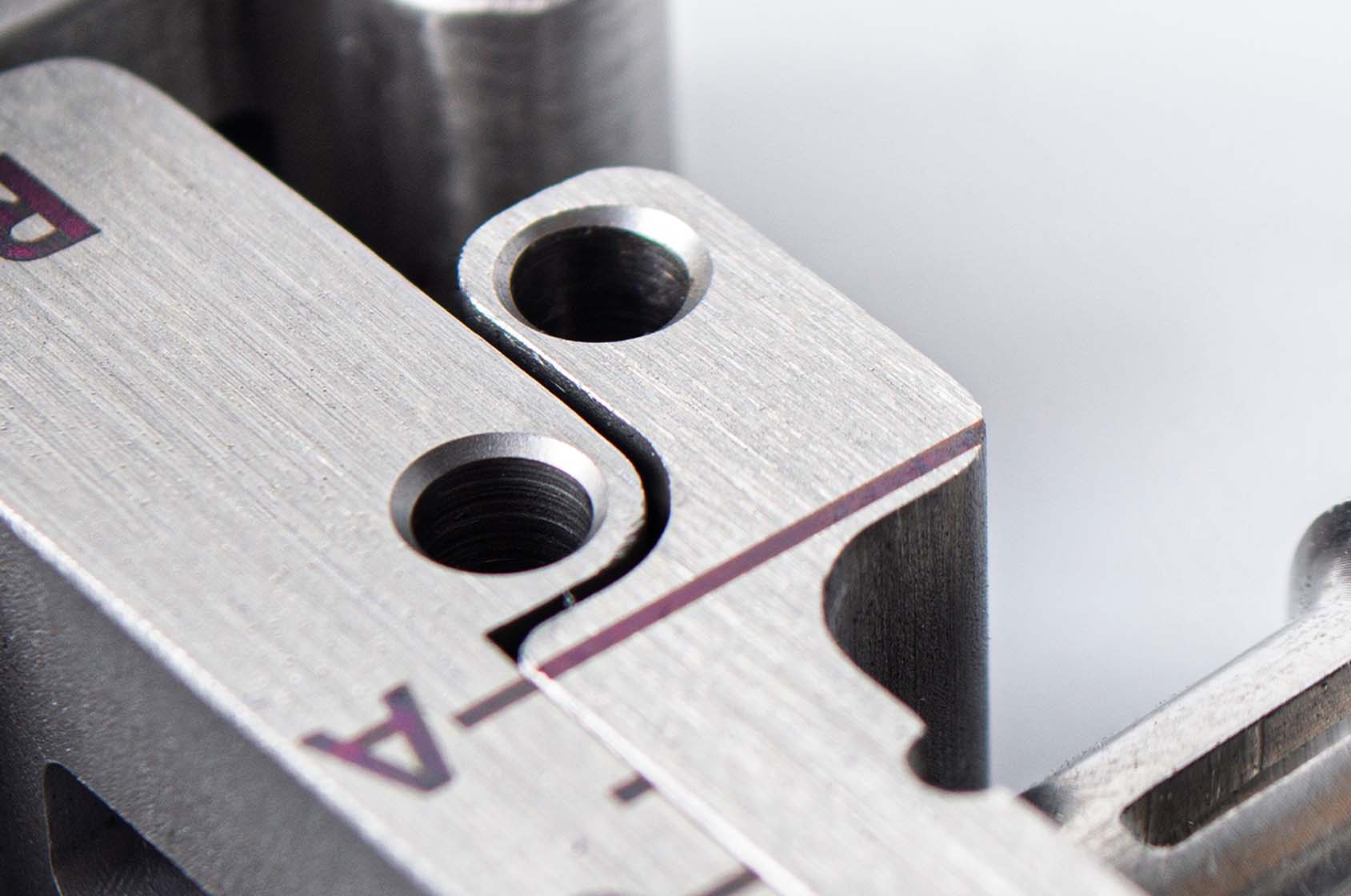
Precision Brush Finish Stainless Steel Components via Honyo CNC Machining
Honyo Prototype delivers consistently high-quality brush finish stainless steel components through our advanced CNC machining capabilities, engineered for demanding industrial applications. This controlled surface treatment provides critical functional and aesthetic benefits, including enhanced corrosion resistance for 304 and 316 stainless steel grades, reduced glare, and improved adhesion for subsequent coatings—all while maintaining the material’s structural integrity. Unlike manual brushing methods prone to inconsistency, our CNC processes ensure uniform grain direction, precise Ra surface roughness control, and repeatability across high-volume or prototype runs. This precision eliminates secondary finishing variables, reducing lead times and ensuring compliance with stringent industry standards for medical, aerospace, and architectural hardware.
Leveraging multi-axis milling and custom toolpath strategies, Honyo achieves tight tolerances alongside the desired satin texture without compromising dimensional accuracy. Our integrated workflow—from material sourcing to final inspection—guarantees metallurgical integrity and surface finish specifications are met on schedule. For rapid project initiation, utilize our Online Instant Quote platform to receive engineered pricing within hours, complete with finish recommendations and manufacturability feedback tailored to your stainless steel component requirements.
Technical Capabilities
Technical Specifications for Brush Finish Stainless Steel in Precision Machining Applications
A brush finish on stainless steel refers to a unidirectional surface texture achieved through abrasive brushing or polishing processes. When applied in high-precision CNC machining environments—particularly 3-, 4-, and 5-axis milling and turning operations—the finish must be carefully controlled to maintain both aesthetic quality and dimensional accuracy, especially in tight tolerance applications.
While the brush finish itself is typically applied post-machining, the underlying machining process must account for final surface integrity, material removal rates, toolpath strategies, and material behavior to ensure the finish adheres uniformly without compromising geometric tolerances. Below are technical considerations for achieving a brush finish on various materials, with a focus on stainless steel, aluminum, steel, ABS, and nylon.
| Parameter | Stainless Steel | Aluminum | Steel (Carbon/Alloy) | ABS | Nylon |
|---|---|---|---|---|---|
| Typical Material Grades | 304, 316, 410, 17-4 PH | 6061-T6, 7075-T6, 2024-T3 | 1018, 4140, 4340 | ABS (Standard, High-Impact) | Nylon 6, Nylon 6/6, Glass-Filled |
| Machinability Rating | Moderate (work-hardening tendency) | Excellent (high chip evacuation, low cutting forces) | Good to Moderate (higher tool wear) | Excellent (low melting point, soft) | Moderate (gummy, prone to burring) |
| Typical Tolerance Range (Machining) | ±0.0005″ to ±0.005″ | ±0.0005″ to ±0.005″ | ±0.001″ to ±0.005″ | ±0.005″ to ±0.010″ | ±0.005″ to ±0.010″ |
| Surface Finish (Pre-Brush) | Ra 32–64 μin (machined) | Ra 32–64 μin | Ra 64–125 μin | Ra 64–125 μin | Ra 64–125 μin |
| Post-Brush Surface Finish | Ra 16–32 μin (uniform grain) | Ra 16–32 μin (possible smearing) | Ra 16–32 μin | Not typically brushed (paint/texture preferred) | Rarely brushed (abrasive may embed) |
| Recommended Tooling | Carbide with sharp edges, PVD coating | Carbide, high rake angles, polished flutes | Carbide or HSS with chip breakers | Carbide, sharp cutting edges | Carbide, high clearance angles |
| 3/4/5-Axis Milling Suitability | High (complex contours with controlled toolpaths) | High (excellent for complex shapes) | High (rigid setups required) | Moderate (for enclosures, housings) | Moderate (for wear components) |
| Turning Suitability | High (bar stock, shafts, fittings) | High (fast speeds, fine finishes) | High (requires coolant) | Low (limited to specific forms) | Moderate (for bushings, rollers) |
| Post-Processing for Brush Finish | Abrasive belt/sanding (120–180 grit), linear motion | Possible but less common; risk of smearing | Achievable with care; avoid heat buildup | Not applicable | Not recommended |
| Key Challenges | Work hardening, chatter, heat buildup | Built-up edge, dimensional stability | Tool wear, thermal deformation | Melting, burring | Galling, static charge, moisture absorption |
Notes on Brush Finish Application:
The brush finish is typically applied after final machining and inspection to preserve tight tolerances. Premature finishing may lead to dimensional inaccuracies during subsequent handling or deburring.
In stainless steel and aluminum, consistent feed direction and pressure are critical to maintain uniform grain appearance across multi-axis geometries.
For 5-axis milling, toolpath planning must align with the desired grain direction, especially on contoured or freeform surfaces.
Tight tolerance features (e.g., press fits, sealing surfaces) may be masked during brushing to preserve functional integrity.
Non-metallic materials like ABS and nylon are rarely finished with a true brush texture due to material deformation risks; alternative surface treatments (e.g., matte blasting, texturing) are preferred.
This technical framework ensures that brush-finished stainless steel components meet both aesthetic and functional requirements in demanding industrial, medical, and aerospace applications.
From CAD to Part: The Process
Honyo Prototype executes brush finish stainless steel fabrication through a rigorously controlled sequence designed for precision and repeatability. Our workflow begins with CAD file submission where clients must specify surface finish requirements per ASTM A480/A480M including directional grain pattern, grit size target (e.g., 180#), and Ra value tolerances. Unannotated CAD models trigger automatic clarification requests to prevent misinterpretation.
The AI Quote engine analyzes both geometric complexity and finish specifications simultaneously. It cross-references material grade (304/316L), part geometry, and requested grit level against our production database to flag feasibility issues such as inadequate wall thickness for vibration polishing or internal cavities inaccessible to linear brushing equipment. Real-time cost implications of finish requirements are calculated before human review.
During DFM analysis, our engineers conduct specific finish-focused validations:
Grain direction continuity across seams and bends
Minimum radii verification for consistent abrasion
Material grade suitability for non-directional finish elimination
Fixture point planning to avoid witness marks in critical zones
Deburring sequence integration to prevent rework contamination
Production employs a staged abrasive process with documented parameters:
| Stage | Grit Range | Motion Type | Validation Method |
|——-|————|————-|——————-|
| Base Prep | 120# – 180# | Linear reciprocating | Visual comparison to master samples |
| Refinement | 150# – 240# | Unidirectional | Surface profilometer Ra check |
| Final Pass | Client-specified | Controlled feed rate | Cross-lighting inspection for streaks |
All brushing occurs in dedicated stainless steel cells with non-ferrous tooling to prevent carbide embedding. Post-finishing, parts undergo ultrasonic cleaning in pH-neutral solution followed by vapor degreasing. We implement fingerprint-resistant passivation per ASTM A967 Method C before non-contact packaging in anti-static VCI film.
Delivery includes certified inspection reports showing Ra measurements at 5+ locations per part, grain direction diagrams matching CAD annotations, and material test reports. Critical finish zones receive 100% optical verification under controlled 500-lux lighting. This closed-loop process ensures dimensional accuracy and aesthetic consistency meet ISO 2768-mK standards for prototype-to-production transitions.
Start Your Project

Looking for high-quality brush finish stainless steel components? Partner with Honyo Prototype for precision manufacturing and reliable delivery.
Our state-of-the-art facility in Shenzhen ensures strict quality control and fast turnaround times for prototypes and low-volume production.
Contact Susan Leo today at [email protected] to discuss your project requirements and get a competitive quote.
🚀 Rapid Prototyping Estimator
Estimate rough cost index based on volume.