
Contents
Manufacturing Insight: Brass Part Fabrication
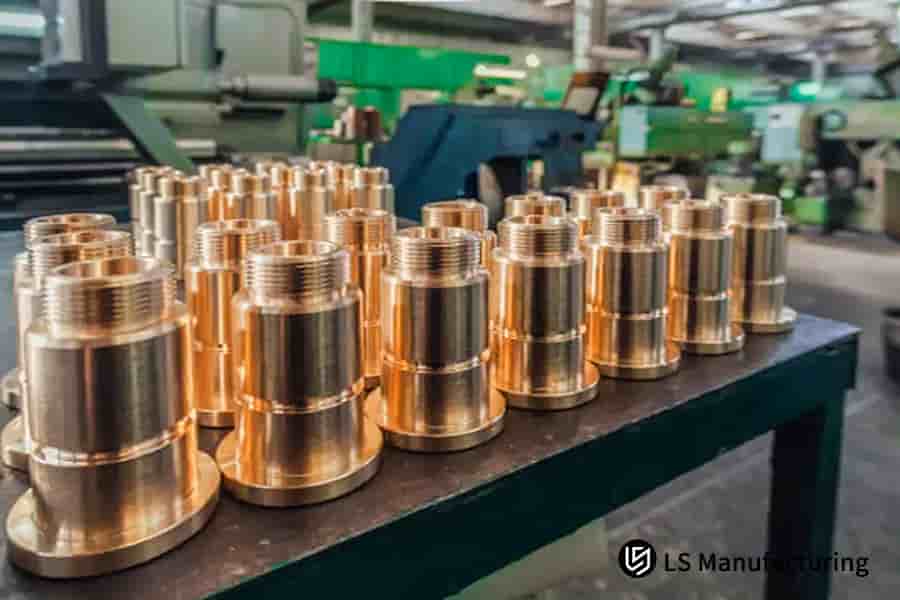
Precision Brass Part Fabrication: Engineered for Performance and Reliability
Honyo Prototype delivers exceptional brass part fabrication through advanced CNC machining services, meeting the stringent demands of industries where material integrity, conductivity, and corrosion resistance are non-negotiable. Brass, with its optimal balance of machinability, strength, and electrical properties, is critical for components in fluid handling systems, electrical connectors, automotive subsystems, and precision instrumentation. Our expertise ensures every part achieves uncompromising dimensional accuracy, superior surface finishes, and strict adherence to material specifications, directly impacting the functionality and longevity of your end product.
Leveraging state-of-the-art multi-axis CNC milling and turning centers, Honyo consistently produces complex brass geometries with tolerances down to ±0.0002 inches. Our process integrates rigorous material traceability, in-process inspection using calibrated CMMs and optical comparators, and optimized toolpath strategies specifically tailored for brass alloys like C36000, C26000, and C46400. This systematic approach minimizes burring, prevents galling, and maintains the inherent properties of the brass, resulting in components ready for immediate integration into high-performance assemblies.
Accelerate your prototyping and low-to-mid volume production timelines with Honyo’s Online Instant Quote platform. Upload your brass part CAD file directly to our secure portal and receive a detailed, transparent manufacturing quote within minutes—24 hours a day, 7 days a week. This real-time pricing and lead time estimation eliminate traditional quoting delays, providing the critical data you need to make faster, more informed sourcing decisions without sacrificing the engineering support and quality assurance expected from a leading precision manufacturer. Initiate your project with confidence by accessing the Online Instant Quote system today.
Technical Capabilities
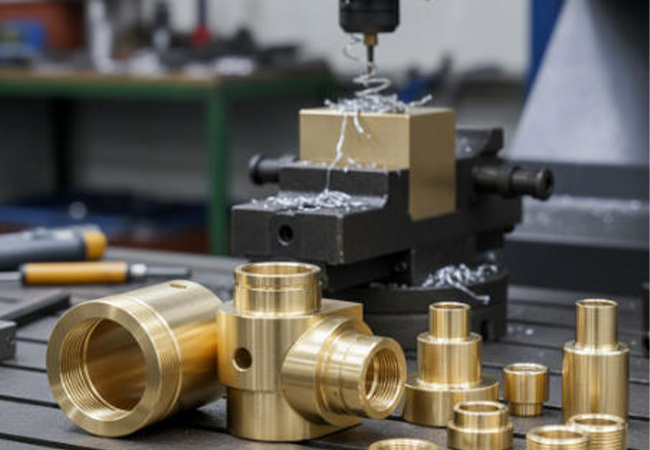
Technical specifications for brass part fabrication via 3/4/5-axis milling and turning emphasize high precision, tight tolerance capabilities, and excellent surface finish—critical for industries such as aerospace, medical, and automation. While brass is the primary focus, comparative insights are provided for Aluminum, Steel, ABS, and Nylon to support material selection in multi-material prototyping and production environments.
Key Capabilities:
Machining Processes: 3-axis, 4-axis, and 5-axis CNC milling for complex geometries; CNC turning for rotational components.
Tight Tolerances: Achievable down to ±0.0002″ (±0.005 mm) for critical dimensions, depending on part geometry and material.
Surface Finish: Typical as-machined finish of 32–63 μin Ra; optional polishing or coating available.
Secondary Operations: Deburring, tapping, threading, knurling, anodizing (Aluminum), passivation (Stainless Steel), and custom finishing.
| Material | Machinability (Relative to Brass) | Typical Tolerance (±) | Max Achievable Tolerance (±) | Common Applications | Notes |
|---|---|---|---|---|---|
| Brass (C36000) | Excellent (benchmark) | 0.0005″ (0.013 mm) | 0.0002″ (0.005 mm) | Connectors, fittings, gears, shafts | High dimensional stability, excellent chip control, ideal for high-volume precision turning |
| Aluminum (6061, 7075) | Very Good | 0.001″ (0.025 mm) | 0.0003″ (0.008 mm) | Enclosures, brackets, aerospace components | Lightweight, good strength-to-weight; prone to chatter if not fixtured properly |
| Steel (1018, 4140, 303 Stainless) | Moderate to Good | 0.001″ (0.025 mm) | 0.0004″ (0.010 mm) | Shafts, tooling, structural parts | Higher tool wear; requires robust tooling and cooling; stainless has lower thermal conductivity |
| ABS (Thermoplastic) | Good | 0.005″ (0.127 mm) | 0.002″ (0.051 mm) | Prototypes, housings, jigs | Low melting point; requires sharp tools and low feed rates to avoid melting |
| Nylon (PA6, PA66) | Fair to Good | 0.005″ (0.127 mm) | 0.003″ (0.076 mm) | Insulators, wear strips, gears | Hygroscopic; requires pre-drying; flexible, may need support during machining |
Process-Specific Notes:
3-Axis Milling: Best for prismatic parts with flat or 2D contours. Suitable for all listed materials.
4/5-Axis Milling: Enables complex, sculpted geometries with minimal setups. Ideal for brass and aluminum aerospace components requiring tight alignment and repeatable tolerances.
CNC Turning: Most efficient for cylindrical brass parts (e.g., valve bodies, pins). Capable of sub-micron surface finishes when combined with fine feed rates and polished inserts.
All parts are inspected using calibrated CMMs, optical comparators, or laser measurement systems to ensure compliance with engineering drawings and GD&T requirements. First-article inspection (FAI) and PPAP documentation available upon request.
From CAD to Part: The Process
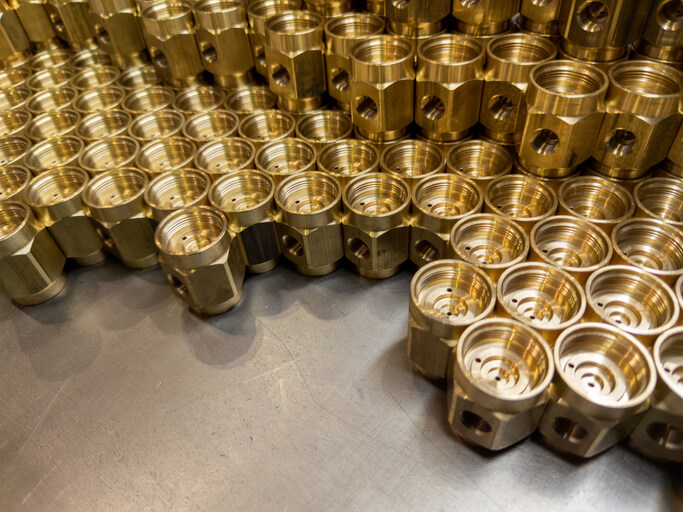
Honyo Prototype executes brass part fabrication through a rigorously defined, integrated workflow designed for precision, speed, and manufacturability assurance. Our process eliminates traditional handoffs and delays by embedding engineering validation at each critical stage.
CAD Upload and Initial Processing
Clients initiate the process by uploading native or neutral CAD files (STEP, IGES, Parasolid, or native formats including SolidWorks, Creo, NX) via our secure customer portal. Our system performs immediate geometry validation, checking for surface continuity, unit consistency, and file integrity. Invalid submissions trigger automated feedback within minutes, specifying required corrections to prevent downstream delays. Validated files proceed directly into the quoting engine without manual intervention.
AI-Powered Quoting with Embedded DFM Insights
Our proprietary AI quoting engine analyzes the CAD geometry, material specifications, and requested quantities against live machine shop data, material costs, and process capabilities. Crucially, this is not a basic cost calculator. The AI simultaneously performs a preliminary Design for Manufacturability (DFM) screen, identifying potential brass-specific issues such as inadequate wall thickness for CNC turning, problematic undercuts for milling, or features prone to burring during cutting. The generated quote includes not only price and lead time but also concise, actionable DFM observations—highlighting risks like zinc leaching susceptibility in low-zinc alloys for corrosive environments or recommendations for stress-relief annealing on complex geometries. This provides immediate technical value before formal engineering review.
Engineer-Validated DFM and Process Planning
Upon quote acceptance, certified manufacturing engineers conduct a deep-dive DFM analysis focused explicitly on brass metallurgy and machining characteristics. This phase addresses material-specific considerations: verifying alloy selection (e.g., C36000 for high-speed machining vs. C26000 for cold forming), assessing dimensional stability during machining, evaluating grain flow for critical load paths, and optimizing toolpaths to minimize work hardening. Engineers collaborate directly with the client to resolve flagged issues, proposing solutions such as feature simplification, tolerance relaxation based on brass’s thermal expansion coefficient, or strategic use of bar stock vs. plate. Approved DFM outputs feed directly into our production scheduling system.
Precision Brass Production Execution
Production leverages dedicated CNC machining centers optimized for brass alloys. Key parameters include high-speed spindles (15,000+ RPM), specialized carbide tooling with polished flutes to reduce built-up edge, and flood coolant systems formulated for non-ferrous metals. Processes may include milling, turning, drilling, and threading, with in-process inspections at critical stages using calibrated CMMs and optical comparators. Post-machining, parts undergo brass-specific finishing: vibratory tumbling with non-abrasive media for edge radiusing, precision deburring, and optional plating or passivation per ASTM B117 or client specs. All operations adhere to ISO 9001:2015 controls with full material traceability from certified mill test reports.
Quality-Controlled Delivery and Logistics
Final inspection validates conformance to print using Zeiss CMMs and surface roughness testers, with reports documenting critical dimensions and Ra values. Brass parts are packaged in anti-tarnish VCI paper within rigid containers to prevent oxidation during transit. Shipping includes real-time tracking, customs documentation for international deliveries (addressing HS code 7412.20 for brass semi-finished products), and a comprehensive digital package containing inspection reports, material certs, and as-machined 3D scan data if requested. Typical lead time from CAD upload to delivery for standard brass prototypes is 5-7 business days, with expedited options available.
This integrated approach ensures brass components meet stringent functional requirements while minimizing time-to-part through proactive metallurgical and process engineering. Honyo’s specialization in non-ferrous alloys translates to optimized parameters that prevent common brass fabrication failures like galling, chatter, or dimensional drift.
Start Your Project
Looking for precision brass part fabrication? Partner with Honyo Prototype for high-quality, custom brass components manufactured to exact specifications. With our advanced production capabilities and quality control, we deliver reliable results for prototyping and low-volume production.
Our factory is located in Shenzhen, leveraging streamlined supply chains and expert engineering support to ensure fast turnaround and consistent quality.
Contact Susan Leo today to discuss your project requirements.
Email: [email protected]
🚀 Rapid Prototyping Estimator
Estimate rough cost index based on volume.