
Contents
Manufacturing Insight: Black Oxidizing Steel
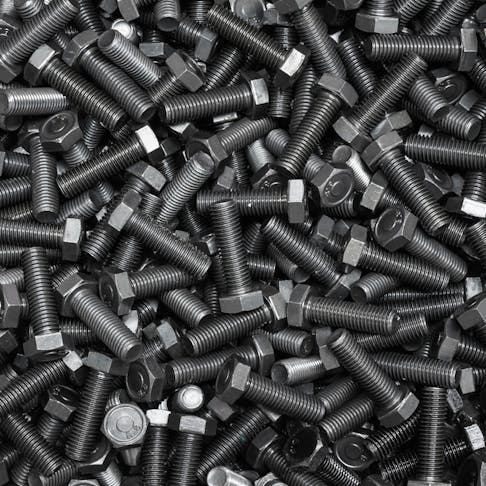
Integrated Black Oxide Finishing for Precision Steel Components
Honyo Prototype delivers end-to-end CNC machining solutions with integrated black oxidizing services for steel components, eliminating multi-vendor coordination and accelerating time-to-market. Our precision-machined parts undergo a controlled black oxide conversion process that forms a magnetite (Fe₃O₄) layer directly on the steel substrate, providing superior corrosion resistance without dimensional changes. This chemical conversion coating is ideal for aerospace, medical, and industrial applications where aesthetics, reduced light reflection, and mild environmental protection are critical.
Unlike electroplating or painting, black oxide preserves tight tolerances achieved through our high-accuracy CNC milling and turning processes. The finish penetrates microscopic surface imperfections, ensuring uniform coverage on complex geometries while maintaining the part’s functional integrity. Key properties include:
| Property | Specification |
|---|---|
| Coating Thickness | 0.00001–0.00003 in |
| Salt Spray Test | 20–30 minutes |
| Surface Hardness | Unchanged (substrate) |
By combining in-house CNC machining with black oxidizing, Honyo streamlines your supply chain, reduces handling risks, and guarantees process consistency from raw material to finished component. Accelerate your prototyping or low-volume production with our Online Instant Quote system—submit CAD files to receive a comprehensive cost and lead time estimate within hours, including finish specifications. Trust Honyo Prototype for engineered solutions where precision meets surface performance.
Technical Capabilities
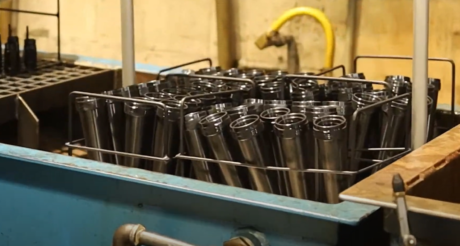
Black oxide finishing is a surface treatment commonly applied to steel components to improve corrosion resistance, minimize light reflection, and enhance aesthetic appearance. While black oxide is primarily a post-machining process, understanding its technical implications is important when manufacturing precision parts—especially those produced via 3/4/5-axis milling, turning, and tight-tolerance operations. Below is a technical overview of black oxide treatment in the context of machining, including compatibility with common engineering materials.
| Parameter | Specification / Detail |
|---|---|
| Process Type | Chemical conversion coating (hot-alkaline or mid-temperature oxidizing) |
| Base Material Compatibility | Best suited for carbon steels, alloy steels, and tool steels; limited effectiveness on stainless steel without activation. Not applicable to aluminum, ABS, or nylon—these require alternative surface treatments (e.g., anodizing for Al, painting or dyeing for plastics). |
| Typical Coating Thickness | 0.00001″ to 0.00002″ (0.25 to 0.5 µm) – negligible build-up, making it ideal for tight-tolerance components where dimensional stability is critical |
| Dimensional Impact | Minimal; no significant change to part geometry. Suitable for features with tolerances down to ±0.0005″ (12.7 µm) or tighter when process-controlled |
| Corrosion Resistance | Moderate; enhanced when paired with oil or wax post-treatment (e.g., rust-preventative oil) |
| Surface Hardness Contribution | None; does not alter substrate hardness. Does not interfere with hardened steel (e.g., HRC 40–60) used in precision tooling |
| Thermal Stability | Stable up to 550°F (288°C); suitable for most operational environments |
| Machining Process Compatibility | Ideal for parts produced via 3/4/5-axis milling and precision turning, especially where post-process finishing must avoid altering critical dimensions or surface finishes |
| Recommended for | Steel components requiring tight tolerances, minimal surface buildup, and non-reflective finish—e.g., aerospace fittings, medical instruments, firearm components, and precision jigs |
| Not Recommended for | Aluminum (use Type II or Type III anodizing), ABS (paint or chemical etching), Nylon (dyeing or coating); black oxide does not chemically form on non-ferrous or non-metallic substrates |
| Secondary Operations | Often followed by oil immersion to enhance corrosion protection. No post-coating machining required or advised |
Note on Multi-Axis Machining: In 3/4/5-axis milling and turning environments, black oxide is typically applied after final machining and inspection. Its negligible coating growth ensures that complex geometries and tight-tolerance features (e.g., bores, threads, datum surfaces) remain within specified limits. The process is fully compatible with automated finishing lines and is frequently used in high-mix, low-volume prototype and production runs at companies like Honyo Prototype.
From CAD to Part: The Process
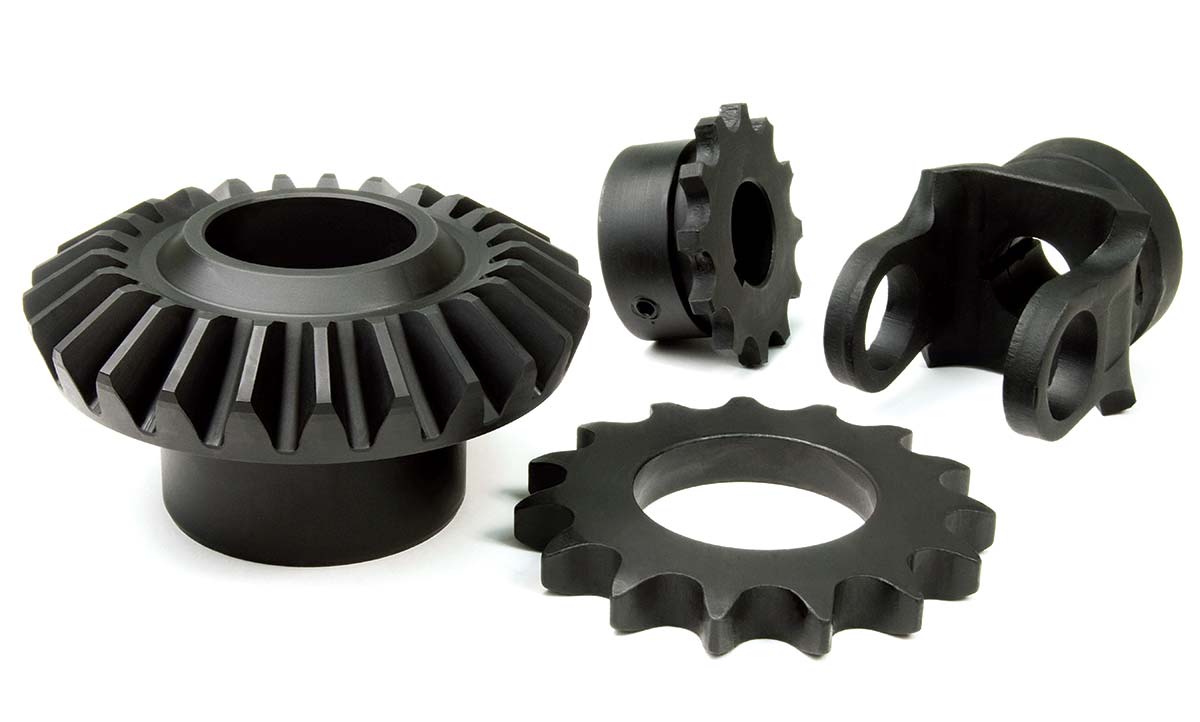
Honyo Prototype Black Oxidizing Steel Process Overview
Black oxidizing steel at Honyo Prototype is a controlled chemical conversion process that forms a magnetite (Fe₃O₄) layer on ferrous substrates, providing corrosion resistance, light absorption, and aesthetic uniformity without dimensional change. Our end-to-end workflow integrates material-specific protocols within the standard CAD-to-delivery framework to ensure process integrity. Below is the detailed sequence:
CAD Upload and Material Validation
Upon receiving the CAD file, our system validates steel grade compatibility. Black oxidizing is strictly applicable to carbon steels (e.g., 1018, 1045, 4140) and low-alloy variants; stainless steels or cast irons require alternative treatments. The AI quoting engine cross-references material specifications against our MIL-DTL-13924 Class 2/3 and ASTM D6679 databases to confirm feasibility. Non-compliant materials trigger an immediate engineering review note in the quote.
AI-Powered Quoting with Process Parameters
The AI generates a quote incorporating black oxidizing-specific variables: surface area calculations for rack spacing, alkaline bath cycle times, and post-treatment oiling requirements. Critical parameters like dimensional tolerances (±0.002″ typical for oxidized features) and hydrogen embrittlement relief for high-strength steels (>180 ksi UTS) are auto-flagged. Quotes explicitly state limitations, such as unsuitability for threaded assemblies requiring press fits due to micro-porosity.
DFM Analysis for Oxidation Integrity
Our DFM phase focuses on three oxidation-critical factors:
First, surface finish requirements—roughness averages (Ra) exceeding 125 μin impede uniform conversion, necessitating pre-plate grinding. Second, part geometry analysis to prevent solution trapping in blind holes or crevices, which causes staining. Third, compatibility verification with secondary operations; for example, welding pre-oxidation creates heat-affected zones requiring localized reprocessing. Engineers annotate CAD models with actionable feedback via secure client portals.
Controlled Production Execution
Production follows a rigorously sequenced bath regimen:
Degreasing occurs in alkaline cleaners at 60°C for 10 minutes, followed by acid activation (5-10% sulfuric acid) to remove scale. The core oxidation step immerses parts in a sodium nitrite/sodium hydroxide bath at 140°C for 20-40 minutes, monitored hourly for pH (12.5-13.5) and temperature stability. Critical rinsing stages use deionized water with <5 ppm chlorides to prevent flash rusting. Finally, a proprietary oil sealant (ASTM D130 Class 1) is applied via dip-spin for 30 seconds, achieving 48+ hours salt spray resistance per ASTM B117. All baths undergo automated replenishment to maintain chemical balance.
Delivery and Documentation
Finished parts ship in vapor-corrosion-inhibiting (VCI) packaging to prevent moisture exposure during transit. Each shipment includes a traceability report detailing bath lot numbers, immersion times, and salt spray test results from our in-house ASTM B117 chamber. Dimensional certifications confirm no tolerance excursions, while material test reports validate hydrogen embrittlement relief per AMS 2759/3 for applicable grades.
This integrated approach ensures black oxidized components meet aerospace, defense, and industrial OEM specifications while maintaining Honyo’s 99.2% first-pass yield rate for chemical finishing operations. Process deviations are mitigated through real-time bath analytics and mandatory operator certifications per NADCAP AC7108 standards.
Start Your Project
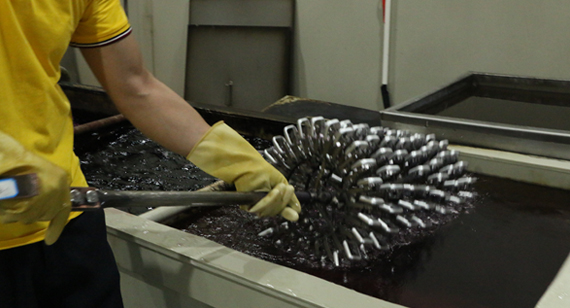
Looking to enhance your steel components with a durable, corrosion-resistant finish? Black oxidizing steel provides a professional appearance while improving wear resistance and minimizing light reflection—ideal for precision manufacturing and industrial applications.
For quotes and technical support, contact Susan Leo at [email protected]. Our production facility is located in Shenzhen, enabling fast turnaround and strict quality control for both prototypes and production runs.
Let Honyo Prototype deliver high-quality black oxide finishing tailored to your engineering requirements. Reach out today to discuss your project.
🚀 Rapid Prototyping Estimator
Estimate rough cost index based on volume.