
Contents
Manufacturing Insight: Best Way To Cut 1 8 Aluminum
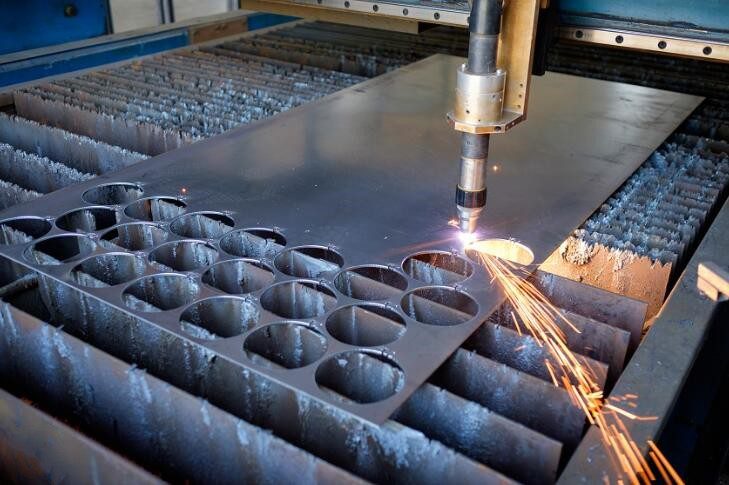
Precision Aluminum Machining: Optimizing Cuts for 1/8″ Material
Achieving clean, burr-free cuts in 1/8″ (0.125″) aluminum requires advanced methodology to overcome inherent challenges like material deflection, thermal distortion, and edge integrity issues. Conventional cutting techniques often introduce micro-deformations or inconsistent surface finishes, compromising part functionality in precision applications such as aerospace brackets, medical components, or electronic housings. At Honyo Prototype, our CNC machining services leverage high-speed spindles, rigid workholding systems, and optimized toolpath strategies specifically calibrated for thin-wall aluminum fabrication. This ensures dimensional accuracy within ±0.0005″ while eliminating secondary finishing operations.
Our proprietary process integrates adaptive feed-rate control and cryogenic cooling to maintain material stability during high-precision milling, turning, or drilling of 1/8″ aluminum stock. This approach consistently delivers superior edge quality and repeatability—critical for assemblies requiring tight tolerances or fatigue resistance. With decades of experience in low-volume, high-mix prototyping and production, Honyo transforms material constraints into engineering advantages.
Accelerate your project timeline through our Online Instant Quote platform, which provides transparent pricing and lead times for aluminum CNC machining within 60 seconds. Simply upload your STEP or IGES file to receive a detailed manufacturability analysis alongside your quote—no callbacks or manual submissions required.
Material-Specific Performance Data
| Parameter | Honyo CNC Machining | Standard Methods |
|——————–|———————|——————|
| Edge Roughness (Ra) | 16–32 μin | 64–125 μin |
| Dimensional Deviation | ±0.0005″ | ±0.002″ |
| Secondary Ops | None | Deburring/Polishing |
| Lead Time (Prototype) | 3–5 Days | 7–10+ Days |
Partner with Honyo to convert design intent into flawless aluminum components, where technical rigor meets operational efficiency.
Technical Capabilities
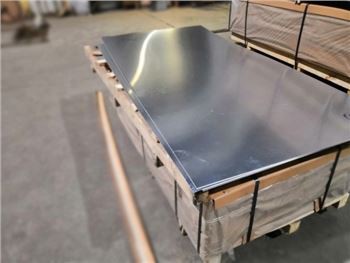
When determining the best method to cut 1/8″ (0.125″) aluminum with high precision, especially in tight tolerance applications, 3/4/5-axis CNC milling and turning are the most effective processes. These methods provide excellent control over dimensional accuracy, surface finish, and geometric complexity. The following technical specifications outline optimal parameters and capabilities for machining aluminum, with comparative notes on steel, ABS, and nylon to highlight material-specific considerations.
| Parameter | Aluminum (6061-T6 typical) | Steel (e.g., 4140) | ABS (Thermoplastic) | Nylon (PA6/PA66) |
|---|---|---|---|---|
| Recommended Cutting Process | 3/4/5-axis CNC Milling; CNC Turning for cylindrical parts | 3/4/5-axis CNC Milling; CNC Turning | 3-axis CNC Milling; limited 4/5-axis | 3/4-axis CNC Milling; CNC Turning |
| Tool Material | Carbide or CBN-coated end mills | Carbide or HSS with coolant | Carbide with polished flutes | Carbide with large chip clearance |
| Spindle Speed (RPM) | 8,000–15,000 (for 1/8″ end mill) | 2,000–5,000 | 10,000–18,000 | 6,000–10,000 |
| Feed Rate (IPM) | 100–250 | 10–40 | 150–300 | 40–100 |
| Depth of Cut (DOC) | 0.030″–0.060″ (roughing); 0.005″–0.010″ (finishing) | 0.010″–0.030″ | 0.020″–0.050″ | 0.020″–0.040″ |
| Tolerance Capability | ±0.0005″ (tight tolerance), held with thermal and fixturing control | ±0.0005″ (with rigid setup) | ±0.002″ (affected by thermal expansion) | ±0.003″ (hygroscopic; dimensional drift) |
| Surface Finish (Ra) | 16–32 μin achievable; <16 μin with high-speed finishing | 32–64 μin typical; polish for smoother | 64–125 μin; post-processing improves | 32–64 μin; abrasive finishing common |
| Coolant Requirement | Flood coolant or mist (prevents built-up edge) | Flood coolant essential | Air blast or no coolant (avoid moisture absorption) | Air blast or minimal coolant |
| Fixturing Consideration | Vacuum or mechanical; low clamping force due to softness | High rigidity required | Low force; vacuum or soft jaws | Moderate clamping; avoid deformation |
| Common Challenges | Burrs, chatter, galling | Tool wear, heat buildup | Melting, stringing, static | Swelling, stickiness, chip packing |
For cutting 1/8″ aluminum with tight tolerances, 5-axis milling is ideal when complex 3D geometries are required, as it allows tool access from multiple angles without re-fixturing. 4-axis indexing supports rotational features, while 3-axis is sufficient for 2.5D profiles and flat milled parts. CNC turning is preferred for round components like shafts or bushings.
Aluminum’s high thermal conductivity and low hardness allow aggressive material removal rates compared to steel. However, it is prone to work hardening and burr formation, so sharp, polished tools with high rake angles are recommended. In contrast, steel demands slower speeds and robust tooling due to higher hardness. ABS and nylon, being plastics, require careful thermal management to avoid melting or deformation during cutting.
For critical aerospace or medical components in aluminum, full 5-axis machining with tool length compensation, in-process probing, and environmental temperature control ensures repeatability within ±0.0005″.
From CAD to Part: The Process
Honyo Prototype Precision Aluminum Cutting Process: 1/8″ Material Workflow
Honyo Prototype employs a rigorously defined, technology-driven workflow for manufacturing components from 1/8″ aluminum alloy sheet stock. This integrated process ensures dimensional accuracy, material integrity, and on-time delivery while optimizing cost efficiency. The sequence begins with CAD upload and culminates in certified delivery, with critical engineering validation at each stage.
Upload CAD
Clients initiate the process by uploading native CAD files (STEP, IGES, or native SOLIDWORKS/Creo formats) via our secure customer portal. For 1/8″ aluminum parts, we specifically verify file units, thickness parameters, and geometric complexity. Our system automatically checks for common errors like missing features or non-manufacturable tolerances before proceeding. This upfront validation prevents downstream delays, particularly critical for thin aluminum sheets prone to warpage if geometries induce uneven stress.
AI-Powered Quoting Engine
Uploaded designs enter our proprietary AI quoting system, which analyzes geometric complexity, material utilization, and machine time requirements. For 1/8″ aluminum, the AI factors in alloy-specific considerations such as 6061-T6’s thermal conductivity during laser cutting or 5052-H32’s springback characteristics in bending. The engine cross-references real-time machine availability, material inventory, and historical process data to generate a technically feasible quote within 2 hours. Crucially, this AI stage includes preliminary manufacturability flags—e.g., identifying features below minimum bend radii for thin aluminum—that trigger immediate DFM review.
Engineering-Led DFM Analysis
Every 1/8″ aluminum project undergoes mandatory Design for Manufacturability (DFM) review by our senior engineering team. This is not a checklist but a collaborative optimization phase where we:
Validate cut method selection (laser, waterjet, or CNC milling) based on edge quality requirements, heat sensitivity, and feature density
Adjust kerf compensation and nesting patterns to minimize material waste while preventing thermal distortion in thin sheets
Recommend tolerance relaxation on non-critical features to reduce machining time without compromising function
The following table summarizes our typical DFM-driven process selection criteria for 1/8″ aluminum:
| Process | Best For | Limitations for 1/8″ Aluminum | Honyo Mitigation Strategy |
|---|---|---|---|
| Fiber Laser | High-volume parts, clean edges, <±0.005″ tol | Heat-affected zone on thin sections | Optimized pulse parameters; nitrogen assist gas |
| Waterjet | Heat-sensitive alloys, complex contours | Slightly tapered edges, slower cycle | Taper compensation software; abrasive control |
| CNC Milling | Critical flatness, integrated milled features | Higher cost for simple 2D profiles | Hybrid laser/mill sequencing for cost balance |
Precision Production Execution
Approved designs move to production on dedicated aluminum-capable equipment. For 1/8″ stock, we implement:
Material clamping protocols preventing deformation during cutting (e.g., vacuum tables for waterjet, low-force mechanical clamps for laser)
In-process metrology via integrated CMM probes on CNC mills to verify flatness within 0.002″ across the sheet
Real-time kerf monitoring with adaptive path correction to maintain dimensional stability
All 1/8″ aluminum parts undergo stress-relief baking if post-machining distortion exceeds 0.003″ per foot, documented in the quality report.
Certified Delivery
Final inspection includes first-article reporting per AS9102 standards, with critical features measured via Zeiss CMM. For 1/8″ aluminum components, we specifically certify:
Edge perpendicularity (±0.5° max)
Surface roughness (Ra ≤ 63 μin for laser-cut edges)
Flatness compliance after de-nesting
Parts ship in anti-static packaging with serialized traceability tags linking to material certs and process logs. Standard lead time for 1/8″ aluminum prototypes is 3-5 business days from DFM approval, with expedited 48-hour options available for qualified geometries.
This closed-loop process ensures 1/8″ aluminum components meet aerospace, medical, and high-end industrial requirements while minimizing cost through intelligent technology integration and engineering oversight. All process parameters are continuously refined using machine learning from over 12,000+ aluminum production runs annually.
Start Your Project
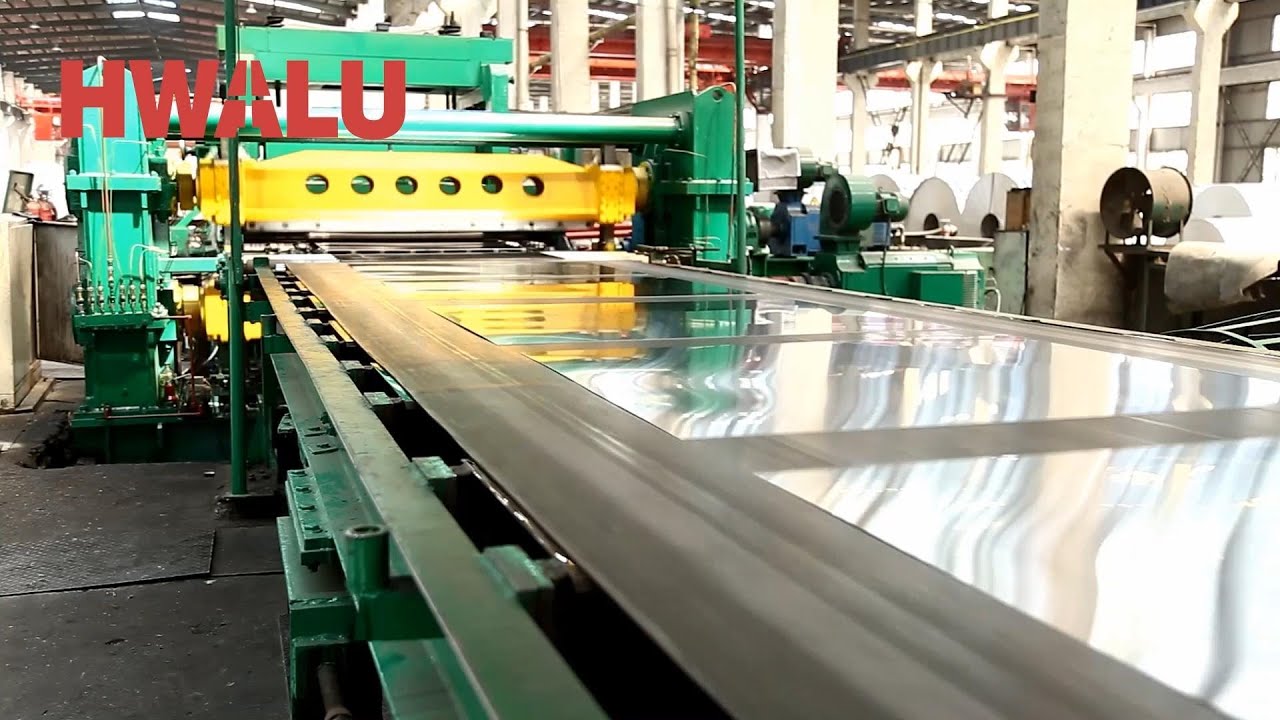
Looking for the best way to cut 1/8-inch aluminum with precision and efficiency? Honyo Prototype offers expert manufacturing solutions tailored to your specifications. With our advanced CNC machining capabilities and quality control processes, we ensure clean, accurate cuts every time.
Our factory in Shenzhen provides fast turnaround and scalable production for prototyping and low-volume manufacturing. Trust our engineering team to deliver optimal results for your aluminum fabrication needs.
Contact Susan Leo at [email protected] to discuss your project and get a competitive quote today.
🚀 Rapid Prototyping Estimator
Estimate rough cost index based on volume.