
Contents
Manufacturing Insight: Best Steel For Machining
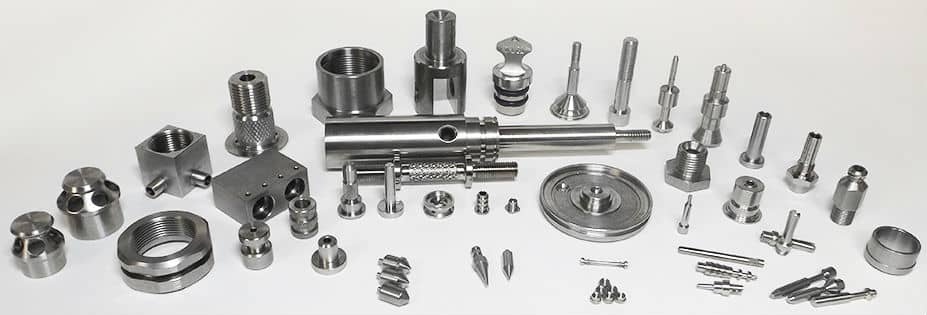
Selecting the Optimal Steel for Precision CNC Machining
Choosing the right steel alloy is a critical engineering decision that directly impacts machinability, dimensional stability, surface finish, tool life, and final part performance. At Honyo Prototype, we understand that factors like sulfur content for chip breaking, hardness for wear resistance, and alloy composition for thermal stability must align precisely with your application’s mechanical and environmental demands. Whether you require the free-machining efficiency of 12L14, the strength-to-weight ratio of 4140, or the corrosion resistance of 303 stainless steel, our senior manufacturing engineering team provides material science expertise to eliminate costly trial-and-error in your prototyping and low-volume production.
Leveraging our state-of-the-art CNC milling and turning centers—equipped with high-precision spindles, rigid tooling systems, and advanced coolant management—we transform complex steel designs into dimensionally accurate, burr-free components with tolerances down to ±0.0002″. Our process optimization ensures minimal material waste, reduced cycle times, and consistent repeatability, even for challenging geometries in hardened or exotic alloys. Partnering with Honyo means accessing deep metallurgical insights paired with agile manufacturing execution, turning material selection from a risk into a strategic advantage.
Accelerate your development cycle with Honyo’s Online Instant Quote platform. Upload your STEP or IGES file to receive a detailed, no-obligation machining assessment and competitive pricing within hours—not days—validated by our engineering team against your steel grade, tolerances, and surface finish requirements. Start optimizing your steel machining project today.
Technical Capabilities
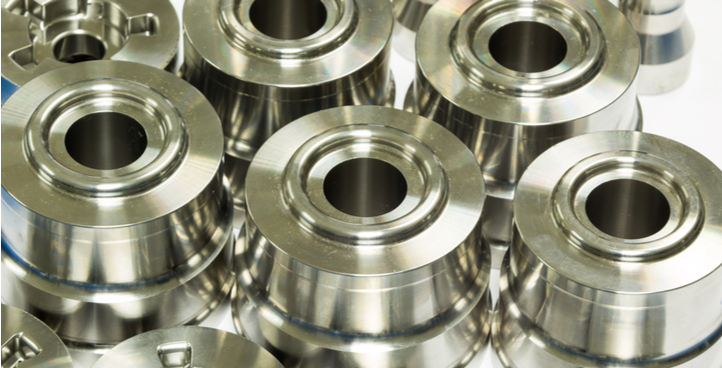
When selecting the best steel for machining in high-precision applications such as 3/4/5-axis milling and turning with tight tolerances (±0.0005″ or better), several factors must be considered: machinability, dimensional stability, hardness, wear resistance, and thermal stability. While the term “best steel” is application-dependent, certain alloy steels are widely recognized for their balance of performance in precision machining environments.
Below is a comparison of common materials used in precision CNC machining, with a focus on machinability and suitability for tight-tolerance components. The table includes both steels and non-ferrous/engineering plastic alternatives often used in prototyping and production at Honyo Prototype.
| Material | Type / Grade | Hardness (HRC) | Machinability Rating (%) | Typical Applications | Suitability for Tight Tolerance | Notes on Machining Performance |
|---|---|---|---|---|---|---|
| 12L14 Steel | Free-Machining Carbon Steel | 50–60 (annealed) | 170% | Shafts, pins, fasteners, fittings | High | Excellent chip-breaking, high sulfur content improves machinability; ideal for high-volume turning |
| 4140 Steel | Chromium-Molybdenum Alloy | 28–32 (annealed) | 65% | Aerospace components, tooling, structural parts | Moderate to High | Good strength and toughness; requires sharp tools and controlled feeds/speeds for precision work |
| 4340 Steel | Nickel-Chromium-Molybdenum | 30–36 (annealed) | 55% | High-stress aerospace, gears, shafts | Moderate | High strength but tougher to machine; prone to work hardening |
| A2 Tool Steel | Cold Work Tool Steel | 58–60 (hardened) | 40% | Precision dies, jigs, fixtures | High (after finish machining) | Excellent dimensional stability; typically machined pre-hard, then hardened; limited for high-speed milling |
| 303 Stainless Steel | Austenitic Stainless | 70–80 (annealed) | 70% | Valves, fittings, fasteners | High | Free-machining variant of 304; sulfur inclusion aids machining but reduces corrosion resistance |
| 6061-T6 Aluminum | Aluminum Alloy | 30–35 | 90% | Enclosures, brackets, aerospace frames | Very High | Excellent for high-speed 3/5-axis milling; low tool wear, high feed rates |
| 7075-T6 Aluminum | High-Strength Aluminum | 45–50 | 60% | Aerospace structures, high-load components | High | Harder to machine than 6061; requires rigid setups due to high cutting forces |
| ABS (Acrylonitrile Butadiene Styrene) | Thermoplastic Polymer | 100–110 (Shore D) | ~120% (relative) | Prototypes, housings, jigs | High | Low melting point; requires sharp tools, high RPM, light cuts; minimal clamping force |
| Nylon 6/6 | Polyamide | 80–85 (Shore D) | ~100% (relative) | Wear strips, insulators, low-friction parts | Moderate | Prone to swelling with moisture; needs dry machining; excellent wear resistance post-machining |
Key Insights for Precision Machining:
12L14 steel is often considered the “best” among steels for high-speed turning and milling when tight tolerances and excellent surface finish are required, due to its superior machinability and consistent chip formation. However, for applications requiring higher strength or corrosion resistance, 303 stainless or pre-hardened tool steels like A2 may be preferred despite slower machining rates.
For non-steel materials, 6061-T6 aluminum offers the best combination of machinability, dimensional stability, and strength for complex 5-axis components. ABS and nylon are favorable for non-structural, tight-tolerance prototypes where weight and electrical insulation are critical.
At Honyo Prototype, material selection is optimized based on part function, production volume, and environmental exposure, ensuring maximum precision and repeatability across all CNC platforms.
From CAD to Part: The Process
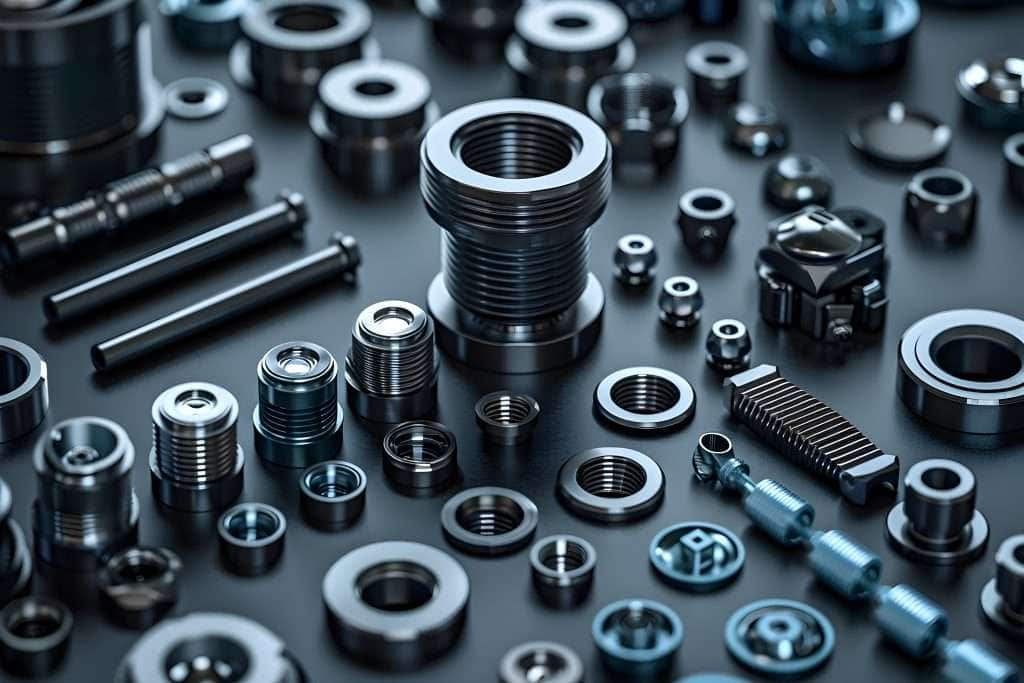
Honyo Prototype employs a rigorous, integrated methodology to determine the optimal steel alloy for machining within our accelerated prototyping workflow. This process ensures material selection directly aligns with functional requirements, manufacturability, and cost efficiency from initial design through delivery. The sequence begins with the client uploading a CAD model to our secure portal. Our system immediately analyzes geometric complexity, critical tolerances, surface finish specifications, and intended application environment embedded within the model metadata. This initial assessment triggers parametric filtering against our extensive material database, prioritizing steels with proven performance for the specific feature set and dimensional constraints identified.
The AI-powered quoting engine then generates a preliminary material recommendation alongside cost and lead time estimates. This is not a simplistic lookup but a dynamic analysis weighing machinability indices, thermal stability requirements, required mechanical properties, and supply chain availability. Crucially, the AI cross-references historical machining data from thousands of prior projects, evaluating factors like expected tool wear rates for specific feature geometries (e.g., deep cavities, thin walls) and the impact of steel grade on secondary operations. The output provides a ranked shortlist of candidate alloys, such as 4140 for high-strength structural components requiring heat treatment or 303 stainless for complex, high-volume parts needing superior chip control.
During the mandatory Design for Manufacturability (DFM) review conducted by our senior engineering team, the AI’s steel recommendations undergo expert validation and refinement. Engineers scrutinize the proposed material against the part’s functional demands, assessing corrosion resistance needs, fatigue life requirements, and weldability if applicable. We simulate machining sequences to identify potential issues like vibration in long overhangs with lower-stiffness alloys or distortion risks during heat treatment of high-carbon grades. This phase often involves collaborative dialogue with the client to clarify performance priorities; for instance, confirming whether ultimate tensile strength or minimal post-machining grinding dictates the choice between 4340 and 17-4PH stainless. Material substitution suggestions may arise here if the initial CAD specification presents unnecessary cost or lead time burdens without functional benefit.
Upon DFM approval and client sign-off, production commences using the finalized steel grade. Our CNC machining centers leverage grade-specific optimized toolpaths and parameters stored in our manufacturing execution system. Cutting speeds, feed rates, coolant strategies, and tool geometries are automatically adjusted based on the selected alloy’s known properties. In-process inspections verify dimensional stability, particularly critical for steels prone to work hardening like 304 stainless. Throughout production, our quality management system tracks material traceability, ensuring full certification from the mill to the finished component.
Delivery includes comprehensive material certifications (e.g., Mill Test Reports conforming to ASTM/AMS standards), final inspection reports validating all critical dimensions against the CAD model, and documented process parameters used during machining. This end-to-end integration—from CAD-driven material intelligence in quoting through DFM-validated selection and production execution—guarantees the “best steel” is defined by the intersection of technical performance, manufacturability, and project economics, not merely generic specifications. The table below summarizes key steel selection criteria evaluated at each stage:
| Process Phase | Key Steel Evaluation Criteria | Outcome |
|---|---|---|
| CAD Upload | Geometric complexity, tolerance stringency, feature types (thin walls, deep pockets), metadata application hints | Initial material suitability screening based on part topology |
| AI Quote | Machinability index, thermal stability vs. tolerances, supply chain lead time, cost/kg, historical tool wear data | Ranked alloy shortlist with cost/lead time impact analysis |
| DFM Review | Functional performance validation (corrosion, fatigue), heat treat distortion risk, weldability, secondary operation impact | Final material confirmation or optimized substitution proposal |
| Production | Real-time parameter adjustment (speeds/feeds), in-process stability monitoring, traceability chain enforcement | Machined part meeting specifications with full material documentation |
Start Your Project
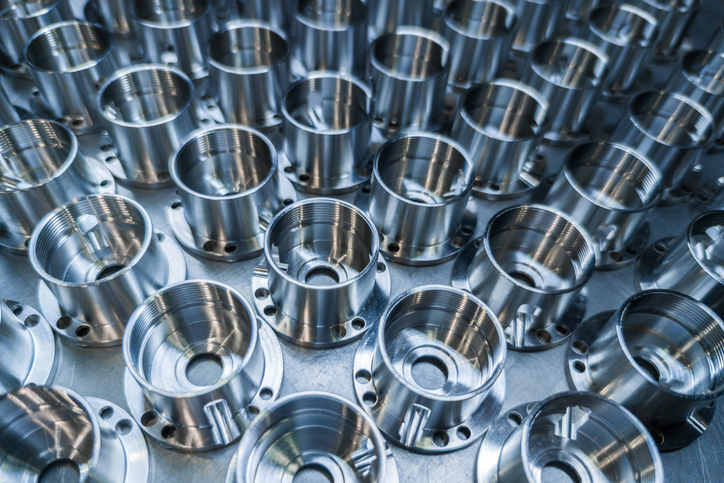
Looking for the best steel for your machining projects? At Honyo Prototype, we specialize in high-performance steel materials optimized for precision machining, ensuring superior finish, durability, and efficiency. Our expertise covers a wide range of grades including 4140, 4340, H13, and tool steels tailored to meet your production needs.
With our advanced manufacturing facility located in Shenzhen, we deliver fast turnaround times without compromising on quality. Whether you’re prototyping or scaling to high-volume production, we provide material certification, heat treatment documentation, and full traceability.
Contact Susan Leo today at [email protected] to discuss your project requirements and receive expert guidance on selecting the optimal steel for your machining application.
🚀 Rapid Prototyping Estimator
Estimate rough cost index based on volume.