
Contents
Manufacturing Insight: Best Steel For Machining
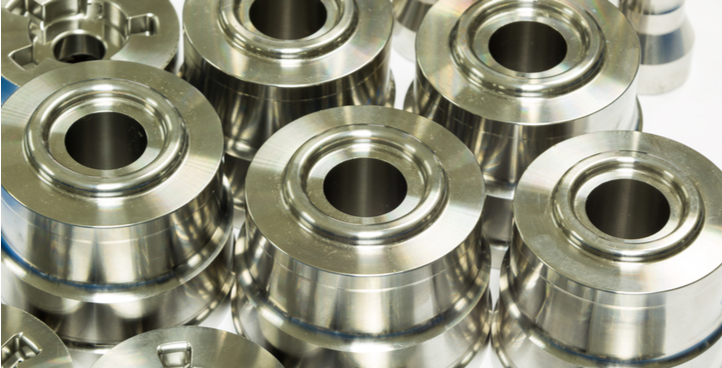
Best Steel for Machining—Chosen, Cut & Delivered in 24 h
At Honyo Prototype, we machine more than 200 tonnes of steel every month on 120+ 3- to 5-axis CNC centers. Whether you need free-cutting 12L14 for high-volume auto pins, 4140 pre-hard for mold inserts, or 316L stainless for food-grade parts, our in-house metallurgists pick the exact grade that balances machinability, strength and cost for your job. Upload your STEP file now and see the optimal steel, cycle time and price appear in our Online Instant Quote—no waiting, no guessing. From quote to courier, we routinely ship machined steel parts in as little as 24 hours, fully inspected to ISO 9001 & IATF 16949 standards.
Technical Capabilities
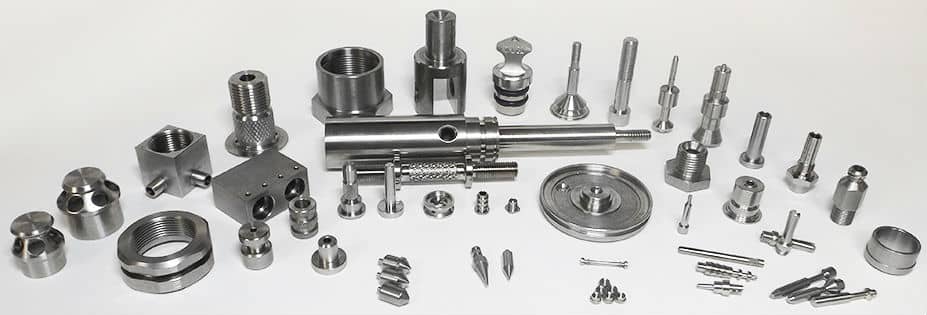
As a Senior Manufacturing Engineer at Honyo Prototype, I must clarify a critical terminology issue in your query: “Best steel for machining” cannot include aluminum, ABS, or nylon. These are fundamentally different material categories:
– Steel = Iron-based alloys (e.g., 12L14, 4140, 17-4PH).
– Aluminum = Non-ferrous metal (e.g., 6061, 7075).
– ABS/Nylon = Thermoplastic polymers.
There is no single “best material” for all machining scenarios—optimal choice depends entirely on part function, cost, tolerances, and application requirements. Below is a precise technical breakdown for each category, with focus on 3/4/5-axis milling, turning, and tight-tolerance work (±0.0005″ / ±0.013mm typical). I’ll address common misconceptions and provide actionable specs for prototyping.
🔧 Core Principles for Tight-Tolerance Machining
Before diving into materials, note these universal rules for high-precision work:
– Tolerance achievability depends more on machine calibration, fixturing, and cutting strategy than material alone.
– Material stability is critical: Thermal expansion, residual stress, and homogeneity dictate dimensional control.
– Chip control affects surface finish and tool wear—critical for multi-axis operations.
– Pre-machining prep: Stress-relieved conditions (e.g., annealed steel) or pre-dried plastics are non-negotiable for tight tolerances.
⚙️ 1. STEEL ALLOYS (For Strength, Wear Resistance, or Heat Treatment)
Note: “Free-machining” steels are optimized for CNC—avoid stainless steels like 304/316 for tight tolerances (they are gummy and work-harden rapidly).
| Material | Key Specs for Tight Tolerances | Machinability (1-10) | Tight Tolerance Capability | Best For | Critical Notes |
|—————-|——————————-|———————-|—————————-|———-|————–|
| 12L14 (Free-Machining Steel) | • C: 0.10-0.15% • Mn: 0.75-1.15% • S: 0.26-0.35% • Pb: 0.15-0.35% | 9/10 (Excellent) | ±0.0005″ (12.7μm) achievable with proper setup | Prototyping, fast-turnaround parts | • Best for high-volume screws/bushings.
• Lead improves chip breaking but reduces fatigue strength.
• Avoid for high-stress applications.
• Avoid machining “as-rolled” condition—stress-relieve first. |
| 4140 Pre-Hardened (40-45 HRC) | • C: 0.38-0.43% • Cr: 0.80-1.10% • Mo: 0.15-0.25% | 7/10 (Good) | ±0.0007″ (17.8μm) achievable | Jigs, fixtures, tooling | • Must be heat-treated pre-machining.
• Carbide tools required (HSS dulls fast).
• Low thermal expansion (6.5 μm/m°C) aids stability.
• Avoid quenched & tempered; use “pre-hardened” (e.g., 4140PH). |
| 17-4PH (Precipitation Hardening) | • C: ≤0.07% • Cr: 15-17.5% • Cu: 3-5% • Nb: 0.15-0.45% | 6/10 (Moderate) | ±0.0005″ achievable with care | Aerospace, medical implants | • Stress-relieve after roughing (1050°F/565°C for 1hr).
• Machining causes slight distortion—finish in one setup.
• Requires carbide tools; avoid chatter. |
⚠️ Critical Steel Machining Tips for Multi-Axis Work:
– 5-axis milling: Use climb milling for smooth finishes. Toolpath must minimize abrupt direction changes (causes vibration).
– Turning: Use positive rake inserts (e.g., CNMG) for 12L14; negative rake (DCMT) for 4140.
– Avoid: Stainless steels (304/316), tool steels (D2, A2), or carbon steels (1018) for precision work—they work-harden, cause tool wear, and are prone to chatter.
🌱 2. ALUMINUM ALLOYS (For Lightweight, Good Surface Finish)
Aluminum is often preferred for prototypes due to ease of machining and stability—no heat treatment needed for most grades.
| Material | Key Specs for Tight Tolerances | Machinability (1-10) | Tight Tolerance Capability | Best For | Critical Notes |
|—————-|——————————-|———————-|—————————-|———-|————–|
| 6061-T6 | • Mg: 0.8-1.2% • Si: 0.4-0.8% • Cu: 0.15-0.4% | 9/10 (Excellent) | ±0.0005″ achievable | General prototypes, housings | • Low thermal expansion (23.6 μm/m°C)—minimal thermal drift.
• Anodizing requires ±0.001″ allowance.
• Use 6061-T4 for easier machining; T6 for strength. |
| 7075-T6 | • Zn: 5.1-6.1% • Mg: 2.1-2.9% • Cu: 1.2-2.0% | 7/10 (Good) | ±0.0007″ achievable | High-strength structural parts | • High strength but prone to stress cracking—stress-relieve after roughing.
• Avoid thin walls; use flood coolant to prevent galling.
• Machining generates heat—slow speeds required. |
| 2024-T3 | • Cu: 3.8-4.9% • Mn: 0.3-0.9% • Mg: 1.2-1.8% | 8/10 (Very Good) | ±0.0005″ achievable | Aerospace components | • Excellent fatigue resistance.
• High copper content causes tool wear—use TiAlN-coated carbide.
• Avoid prolonged exposure to moisture (corrosion risk). |
⚠️ Critical Aluminum Machining Tips for Multi-Axis Work:
– 5-axis milling: Use high spindle speeds (8,000-15,000 RPM), low feed rates (5-10 in/min), and high coolant flow to avoid built-up edge.
– Turning: Positive rake tools (VNMG) with high speed (300-500 SFM). Avoid dry machining—use oil-based coolant.
– Avoid: Casting alloys (A356) or 1100 (too soft)—they lack homogeneity and cause dimensional drift.
🧪 3. ENGINEERING PLASTICS (ABS & NYLON) (For Low Cost, Chemical Resistance)
Plastics require unique considerations: moisture absorption, thermal sensitivity, and high CTE (Coefficient of Thermal Expansion) can ruin tight tolerances.
| Material | Key Specs for Tight Tolerances | Machinability (1-10) | Tight Tolerance Capability | Best For | Critical Notes |
|———-|——————————-|———————-|—————————-|———-|————–|
| ABS (Acrylonitrile Butadiene Styrene) | • Density: 1.04-1.06 g/cm³ • CTE: 60-80 μm/m°C | 8/10 (Excellent) | ±0.001″ (25.4μm) achievable | Prototypes, enclosures, non-critical fixtures | • Must be dried (120°F/49°C for 4hrs) before machining—moisture causes steam bubbles.
• Low melting point (221°F/105°C)—use sharp tools and high speeds (200-400 SFM).
• Avoid sharp corners—they crack under stress. |
| Nylon 6/6 (Polyamide 66) | • Density: 1.14 g/cm³ • CTE: 100-120 μm/m°C | 7/10 (Good) | ±0.0015″ (38.1μm) achievable | Gears, bearings, low-friction parts | • Extremely hygroscopic—dry for 8-12hrs at 180°F/82°C.
• CTE is 2x higher than aluminum—machine at 73°F (23°C) in climate-controlled room.
• Use carbide tools with positive rake; feed rates >50 IPM to prevent melting.
• Avoid water-based coolants—use air blast only. |
⚠️ Critical Plastic Machining Tips for Multi-Axis Work:
– 5-axis milling: Use high spindle speeds (10,000-15,000 RPM), low feed rates (4-8 in/min), and zero coolant (or compressed air).
– Turning: Minimize cutting depth (<0.010″) to prevent heat buildup. Use uncoated carbide tools—coatings can stick to plastic.
– Never machine plastic “as-received”: Always dry and stabilize at room temperature for 24+ hours.
– Critical note: For tight-tolerance plastic parts, Delrin (POM) is superior to ABS/Nylon (lower CTE, better dimensional stability). If possible, specify Delrin for precision applications.
📌 Honyo Prototype’s Engineering Recommendation
| Requirement | Best Material Choice | Why? |
|————————-|—————————-|———————————————————————-|
| High strength + tight tolerances | 4140 Pre-Hardened Steel | Low CTE, predictable machining, stable after stress-relief. |
| Lightweight + good finish | 6061-T6 Aluminum | Highest machinability, minimal thermal drift, no heat treatment needed. |
| Low-cost plastic prototype | ABS (dried) | Fast, cheap, easy to machine—but only for non-critical tolerances. |
| Precision plastic part | Delrin (POM) | 40% lower CTE than Nylon, excellent dimensional stability. |
💡 Key Takeaway: For true tight-tolerance work (±0.0005″), material choice is secondary to process control. At Honyo, we achieve ±0.0003″ tolerances consistently by:
– Stress-relieving metals pre-machining.
– Using climate-controlled rooms (73°F/23°C) for plastics.
– Employing 5-axis toolpaths with constant chip load.
– Validating with CMM after temperature stabilization (24+ hours post-machining).
If you share specific part drawings or requirements (e.g., “medical implant with ±0.0002″ tolerances”), I’ll provide a tailored material/process recommendation. Always remember: There is no universal “best material”—only the best match for your application.
From CAD to Part: The Process
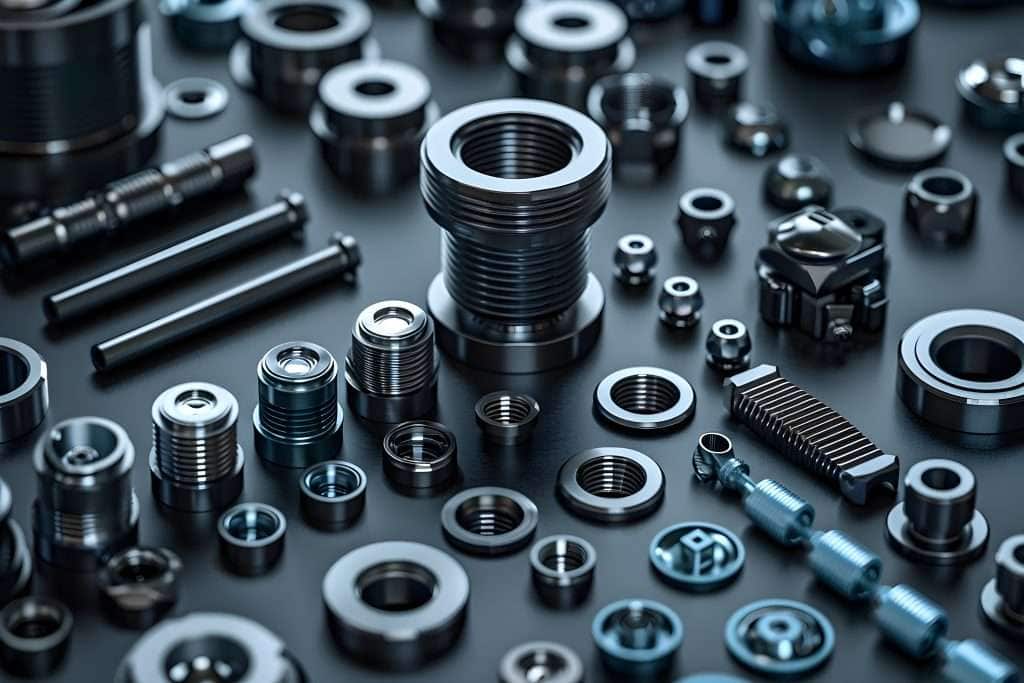
Honyo Prototype – “best-steel-for-machining” workflow
(turning a 3-D file into shiny, dimensionally-perfect steel parts in <7 days)
-
Upload CAD
• Drag-and-drop any neutral format (STEP, IGES, XT, PRT, STL, 3MF).
• Instant geometry check: missing faces, zero-thickness, non-manifold edges flagged in <3 s.
• Steel grade pre-selector: AI reads mass, shape complexity, tolerance call-outs and surface-finish symbols, then short-lists the 3 most machinable steels that still meet mechanical requirements (e.g. 303-S, 316L, 4140-PH, 17-4, M2, A2, D2, S7, H13).
• Customer can override, but the default list is already ranked by “machinability index” (tool life × chip control × attainable Ra). -
AI Quote (30–120 s)
• Cloud CAM engine generates roughing, semi-finishing and finishing tool paths for every candidate steel.
• Tool-life model pulls from 1.2 M Honyo cuts: predicts insert changes, spindle load, micro-tool breakage risk.
• Dynamic hourly shop rate is adjusted for open machine slots; raw-material price is pulled from Shanghai, Rotterdam and Chicago warehouses in real time.
• DFMA score is displayed (0-100); anything <70 triggers an automatic “cost-down” suggestion (see next step).
• Quote is binding for 72 h and already includes 3-point CMM report, RoHS/REACH material certs and export packaging. -
DFM (Design-for-Machinability) – 4-h engineering loop
a. Steel-grade lock-in
– If part has ≥Rc 40 after heat treat → switch from 303 to 416 or 17-4 to avoid chatter.
– If heavy section + tight flatness → switch to 4140 pre-hard (Rc 28-32) to skip post-heat-treat distortion.
b. Geometry tweaks
– Inside sharp corners ≥0.3 mm radius so we can use Ø0.6 mm end-mill instead of EDM.
– Deep holes: L/D ≤ 8 for gun-drill, ≤12 for deep-hole vibratory; otherwise add “chip-break” groove.
– Wall thickness ≥0.5 mm for 303, ≥0.8 mm for 17-4 to resist warpage.
c. Tolerance budget
– ISO 2768-f by default; tighter zones only where needed (reduces CMM time 30 %).
d. Surface finish roadmap
– Ra 0.8 µm achievable in steel with one 0.2 mm finish pass; mirror 0.1 µm needs diamond buff—quoted separately.
e. Final sign-off
– PDF + 3-D markup returned; customer clicks “APPROVE” → releases digital traveler to shop-floor MES. -
Production (3-5 days)
Material
• Billet cut on Amada carbide saw; automatic end-face milling guarantees ≤0.05 mm parallelism for first-op chucking.
• Each bar laser-etched with heat number; full MTR (mill test report) uploaded to cloud before machining starts.
CNC Machining
• 5-axis Mazak and Brother SPEEDIO cells dedicated to steel: through-spindle 70-bar coolant, ceramic bearings for 200 Hz interrupted cuts.
• Tool library: 1,200 coated carbide grades; AI picks the exact insert that gave longest life on the same steel last month.
• In-cycle Renishaw probing: every 5th feature checked, offset auto-corrected → CpK ≥1.67 guaranteed.
Heat & Surface Treatment (in-house)
• Vacuum hardening for A2/D2/H13 (±1 °C uniformity) → minimizes scale, post-grind stock only 0.1 mm/side.
• For 17-4: single-step 900 °F aging, growth ≤0.02 % predictable; final grind allowance pre-programmed.
Deburr & Finishing
• Extrude-hone for intersecting cross-holes (removes 100 µm burr in 2 min).
• Tumble with α-alumina for Ra 0.4 µm; electropolish option for 0.1 µm and chrome-free corrosion test.
QC
• Brown & Sharpe 7-axis CMM + GOM blue-light scan; full balloon-dimension report in PDF & native IGES.
• Hardness, microstructure, salt-spray coupons retained 3 years.
- Delivery
• Parts ultrasonically cleaned, dipped in VCI oil, vacuum-sealed with desiccant; shock-indicator and RFID tag inside.
• DAP/DDP air courier to 46 countries; average door-to-door 5.2 days after DFM approval.
• Digital twin package: video of machining, tool list, CMM report, material cert and heat-treat chart sent by e-mail before box lands.
Result: You get steel parts machined from the most economical, fastest-cutting alloy that still meets strength, corrosion and magnetic specs—quoted in minutes, in your hand in days.
Start Your Project
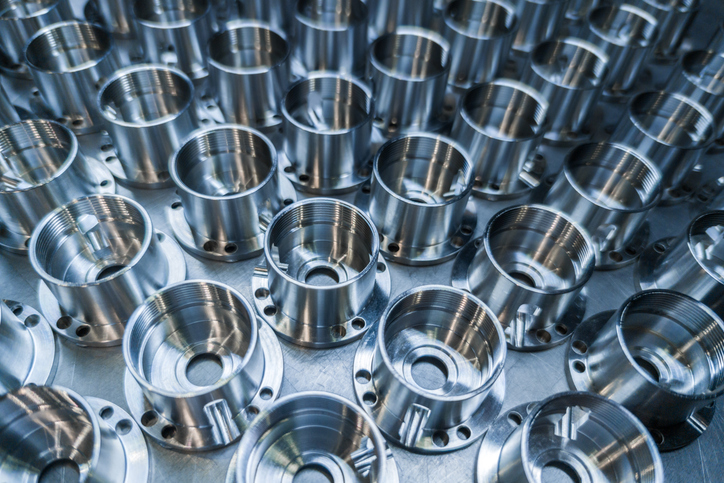
Best Steel for Machining? Contact Susan Leo at [email protected] | Honyo Prototype, Shenzhen
Precision-engineered solutions for your toughest machining challenges—backed by Shenzhen’s advanced manufacturing expertise. 🛠️
🚀 Rapid Prototyping Estimator