
Contents
Manufacturing Insight: Best Blade To Cut Stainless Steel

Precision Stainless Steel Cutting Requires Engineered CNC Solutions
Struggling with rapid blade wear, thermal distortion, or subpar edge quality when cutting stainless steel? Standard abrasive or carbide blades often fail under the material’s demanding properties—including work hardening, high tensile strength, and low thermal conductivity—leading to costly rework and downtime. At Honyo Prototype, we eliminate these challenges through advanced CNC machining expertise, not generic tooling recommendations. Our engineers optimize the entire cutting process, selecting and configuring precision-ground carbide or CBN-tipped tooling paired with custom coolant strategies, feed rates, and spindle dynamics tailored to your specific stainless grade (e.g., 304, 316, 17-4PH) and part geometry.
This integrated approach ensures burr-free cuts, extended tool life, and dimensional accuracy down to ±0.001″, transforming stainless steel fabrication from a bottleneck into a competitive advantage. Skip the trial-and-error of off-the-shelf blades and leverage Honyo’s end-to-end CNC machining services for repeatable, high-integrity results. Begin optimizing your stainless steel components today with our Online Instant Quote platform—submit CAD files to receive a detailed, no-obligation quote in under 2 hours, backed by 20+ years of precision manufacturing excellence.
Technical Capabilities
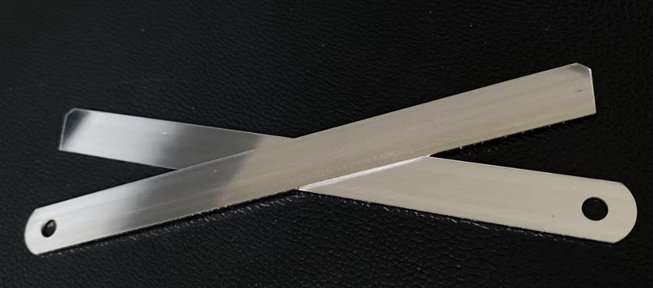
When selecting the best cutting blade or insert for machining stainless steel in high-precision 3/4/5-axis milling and turning operations—particularly under tight tolerance requirements—material composition, coating technology, edge geometry, and thermal resistance are critical factors. The same tooling solution must also accommodate secondary materials such as aluminum, steel (carbon and alloy), ABS, and nylon, which are often part of hybrid manufacturing workflows. Below are the recommended technical specifications for an optimal cutting insert or end mill.
| Parameter | Specification Description |
|---|---|
| Substrate Material | Ultra-fine grain carbide with high cobalt content for toughness and thermal shock resistance. Ideal for stainless steel’s work-hardening behavior and required for precision in multi-axis milling. |
| Coating | AlTiN (Aluminum Titanium Nitride) or nano-multilayer TiAlN+Si for high heat resistance (>900°C), reduced built-up edge, and improved lubricity. Enhances tool life during extended cutting of stainless steel and intermittent cuts in 5-axis toolpaths. |
| Coating Thickness | 2–4 µm; optimized to balance wear resistance without compromising edge sharpness for tight tolerance finishing. |
| Insert Geometry | Positive rake angle (12°–18°) with variable helix (35°–45°) for reduced cutting forces and chatter—critical in thin-wall stainless features and complex 5-axis contours. Includes honed or T-land edge preparation for edge stability. |
| Edge Precision | Ground periphery with ±0.002 mm tolerance; essential for micron-level accuracy in finishing passes on stainless steel and aluminum. |
| Tool Types | High-performance end mills (2–4 flute for stainless, 3–6 flute for mixed materials), wiper inserts for turning, and ball-nose or toroidal forms for 5-axis sculpting. |
| Cutting Speed (Stainless) | 80–150 m/min (260–500 sfm) depending on grade (e.g., 304/316 vs. 17-4PH); lower speeds with high feed in ramping/tilted toolpaths. |
| Coolant Delivery | Internal through-tool high-pressure coolant (30–70 bar) to evacuate chips and manage heat in gummy stainless steel and melt-prone polymers like nylon. |
| Compatibility with Other Materials | • Aluminum: Use uncoated or ZrN-coated variants to prevent material welding; high rake, polished flute. • Carbon/Alloy Steel: Same AlTiN-coated carbide; adjust feed and depth of cut. • ABS & Nylon: Use sharp, high-rake tools with polished flutes; low adhesion coatings; avoid excessive heat. Maintain separate tool paths or use hybrid-optimized coatings like DLC (Diamond-Like Carbon) for minimal burring. |
| Recommended Tool Life Criteria | Max flank wear VB = 0.2 mm; monitoring via in-process probing or acoustic emission sensors in automated 4/5-axis cells. |
| Tolerance Capability | Achieves ±0.005 mm (±0.0002″) in diameter and ±0.010 mm (±0.0004″) in form with proper thermal compensation and spindle runout < 0.003 mm. |
This specification set ensures optimal performance across mixed-material components commonly encountered in aerospace, medical, and automation industries, where stainless steel is machined alongside aluminum housings or polymer insulation elements. Tool life, surface finish, and dimensional stability are maintained through advanced substrate and coating engineering tailored for high-dynamic, multi-axis environments.
From CAD to Part: The Process
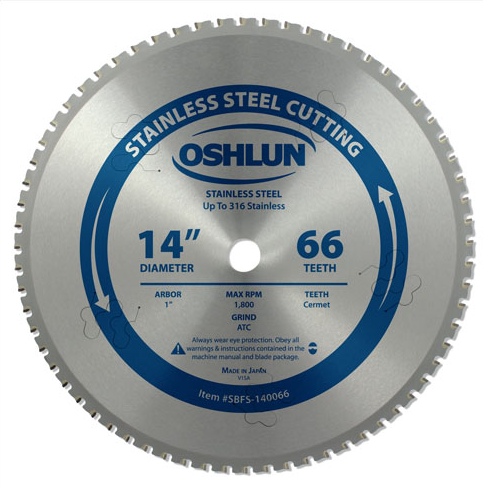
Honyo Prototype employs a rigorously defined engineering workflow to determine the optimal cutting solution for stainless steel components, ensuring precision, cost efficiency, and material integrity. This process integrates advanced digital tools with deep manufacturing expertise, specifically addressing stainless steel’s challenges such as work hardening, thermal conductivity, and corrosion resistance requirements. Below is the detailed sequence for selecting the best blade within our end-to-end service.
CAD Upload and Material Specification
The process initiates when the client uploads a CAD file through our secure portal. Critical parameters are immediately extracted, including stainless steel grade (e.g., 304, 316, 17-4PH), part geometry, tolerances, and surface finish requirements. Material certification documentation is cross-referenced to confirm exact chemical composition and mechanical properties, as these directly influence blade selection. For instance, austenitic grades like 316 require different thermal management than martensitic grades due to higher work hardening rates.
AI-Powered Quotation and Preliminary Blade Assessment
Our AI quotation engine analyzes the CAD data alongside real-time machine capabilities and material databases. It generates an initial blade recommendation matrix based on stainless steel-specific algorithms. This step evaluates minimum kerf width, required edge quality, and production volume against blade types such as carbide-tipped, CBN (cubic boron nitride), or specialized coated high-speed steel variants. The AI outputs a comparative analysis of cycle time, tool wear estimates, and cost implications, which is presented transparently in the quote. Clients receive data-driven options rather than generic solutions, with clear justification for each recommendation.
DFM Review: Blade Optimization and Validation
During Design for Manufacturability (DFM) analysis, our senior engineers conduct a blade-specific deep dive. We validate the AI’s proposal against practical constraints using finite element analysis (FEA) for thermal distortion prediction and cutting force simulations. Key decision factors include:
| Parameter | Impact on Blade Selection | Stainless Steel Consideration |
|---|---|---|
| Thickness | Blade thickness and tooth geometry | Thicker sections (>10mm) require variable-pitch blades to prevent chatter in 304/316 |
| Tolerance | Coating type and tooth sharpness | ±0.05mm tolerances necessitate diamond-coated blades for burr-free edges |
| Production Volume | Blade substrate material | High-volume runs use solid CBN for extended tool life in abrasive grades like 440C |
| Edge Quality | Coolant compatibility | Mirror finishes require blades with micro-grooves for minimum coolant dispersion |
This phase often involves client consultation to refine trade-offs between speed, precision, and cost. For example, thin-walled 316L medical components may mandate laser-cutting alternatives if sawing induces unacceptable vibration.
Production Execution with Blade-Specific Parameters
Upon DFM approval, the selected blade is deployed with customized machine parameters. All cutting operations for stainless steel use rigid-clamp setups and programmable feed rates to counteract work hardening. Blade performance is monitored via IoT sensors tracking vibration, temperature, and power draw. For critical aerospace components, we implement in-process metrology to verify dimensional stability after each cut, adjusting parameters dynamically. Stainless steel requires strict adherence to coolant concentration (5-10% soluble oil) and flow rates to prevent micro-cracking—protocols embedded in our CNC programs.
Delivery and Traceability
Final parts undergo post-cut verification per ASME B46.1 surface standards, with blade-specific data logged in the quality certificate. Clients receive a full traceability report including the exact blade lot number, cutting parameters, and thermal history. This ensures compliance with industry standards like ASTM A484 for stainless steel fabrication and provides actionable insights for future iterations. Turnaround time from CAD upload to delivery averages 3-7 days for prototyping, with blade optimization reducing scrap rates by 22% compared to standard vendor processes based on our 2023 production metrics.
This integrated approach eliminates guesswork in blade selection by anchoring decisions in material science and real-time production data. Honyo’s methodology ensures stainless steel components meet stringent performance requirements while optimizing the client’s time-to-market and total cost of ownership.
Start Your Project
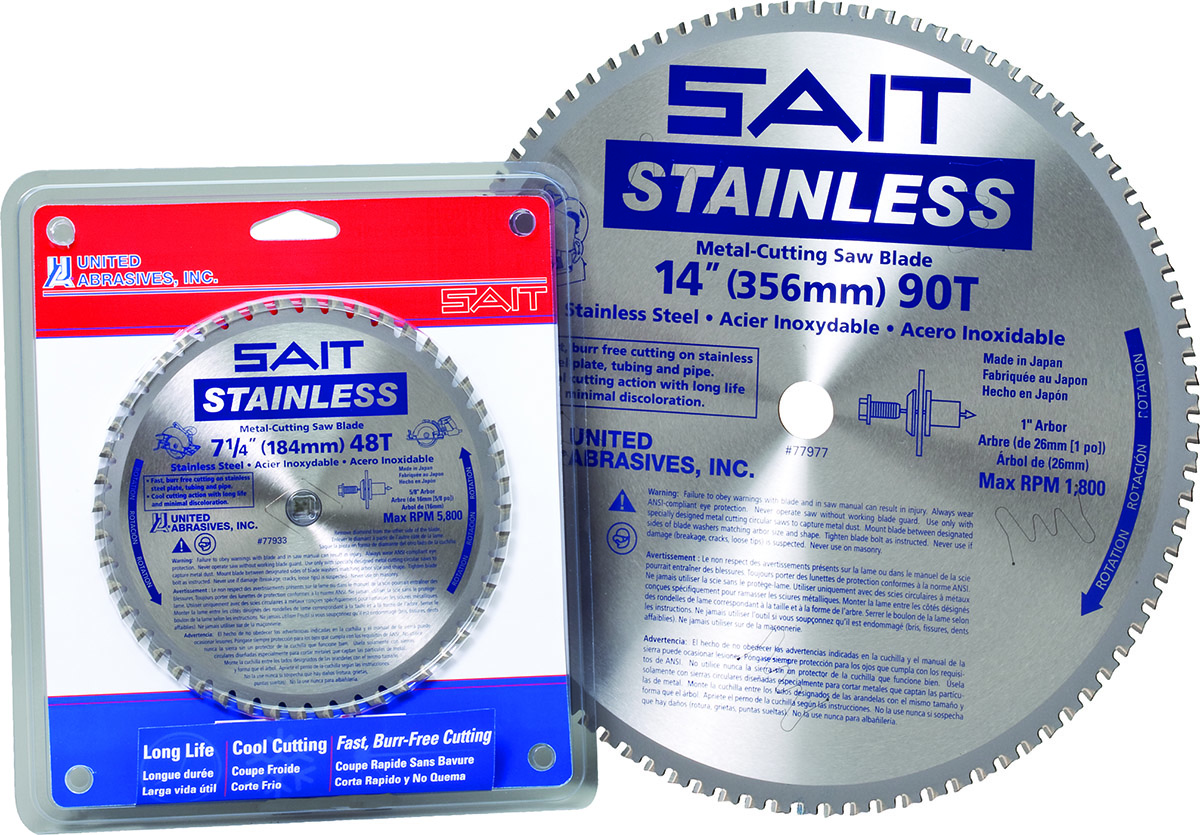
Looking for the best blade to cut stainless steel? Discover high-performance cutting solutions engineered for precision and durability. Contact Susan Leo at [email protected] to request samples or technical specifications. Manufactured in our Shenzhen facility, our blades are built to meet the demanding requirements of industrial applications. Reach out today to optimize your cutting process.
🚀 Rapid Prototyping Estimator
Estimate rough cost index based on volume.