
Contents
Manufacturing Insight: Best Blade For Cutting Stainless Steel
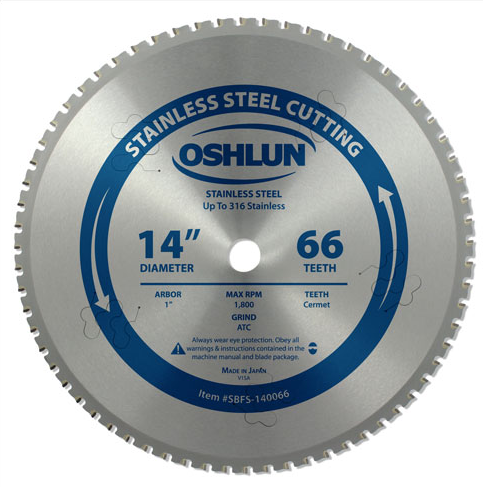
Selecting the optimal blade for cutting stainless steel is a critical engineering challenge impacting prototype quality, production timelines, and tooling costs. Stainless steel alloys like 304 and 316 present significant hurdles due to work hardening, high thermal conductivity, and abrasive wear, demanding precise blade geometry, coating selection, and cutting parameters to avoid burring, heat discoloration, or premature tool failure. At Honyo Prototype, our Senior Manufacturing Engineering team leverages deep expertise in CNC machining processes specifically tailored for demanding materials. We don’t just recommend blades; we integrate optimal toolpath strategies, spindle dynamics, and coolant management within our precision CNC milling and turning operations to ensure clean, efficient cuts on even the most challenging stainless grades, directly translating to reduced scrap and faster time-to-part for your critical prototypes.
Our commitment to solving complex manufacturing problems extends to streamlining your procurement process. Experience the efficiency of our Online Instant Quote platform, designed for engineering professionals. Submit your stainless steel prototype CAD files and requirements directly through our portal to receive a detailed, accurate machining quote within hours—not days—enabling faster project initiation and informed decision-making for your next demanding application.
Technical Capabilities
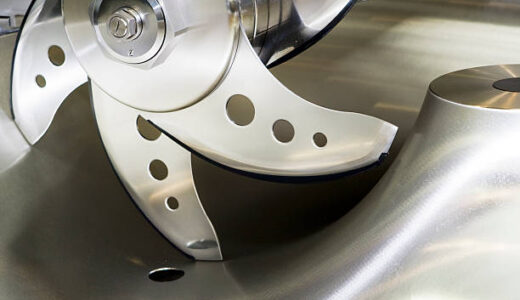
Technical Specifications for Optimal Cutting Blades in 3/4/5-Axis Milling and Turning Applications
For high-precision 3/4/5-axis milling and turning operations involving tight tolerances (±0.0002″ or better), the selection of cutting blades must balance hardness, thermal resistance, edge retention, and substrate compatibility. Below are the recommended blade specifications based on workpiece material, with a focus on stainless steel as the primary challenge material.
| Feature | Recommended Specification for Stainless Steel | Compatibility Notes for Aluminum, Steel, ABS, Nylon |
|---|---|---|
| Blade Material | Fine-grain carbide (WC-Co) with TiAlN or AlCrN PVD coating | TiAlN suitable for steel; uncoated carbide or diamond-coated for aluminum and polymers to prevent built-up edge |
| Hardness (HV) | 1,800–2,200 HV at room temperature | Lower hardness acceptable for softer materials like aluminum (1,500–1,800 HV) and polymers (no abrasion concerns) |
| Edge Geometry | Honed and T-land edge with positive rake angle (8°–15°) | Positive rake ideal for aluminum and ABS; neutral rake preferred for hardened steel and nylon |
| Coating Thickness | 2–4 µm (PVD) to maintain edge sharpness and reduce chipping | Thinner coatings (<2 µm) recommended for aluminum to avoid adhesion; avoid coatings on nylon/ABS |
| Flute Count | 3–5 flutes for milling stainless steel (balance of chip evacuation and rigidity) | 2-flute for aluminum and ABS (improved chip removal); 4–6 flutes for hardened steel finishing |
| Helix Angle | 35°–40° for efficient chip flow and reduced work hardening in stainless | 30°–35° for steel; 40°–45° for aluminum; polymers perform well with 40° helix for clean shearing |
| Surface Finish (Ra) | < 0.2 µm Ra (polished flutes to reduce friction and built-up edge) | Polished finishes critical for aluminum and nylon; less critical for ABS and general steel |
| Thermal Resistance | Up to 900°C (AlCrN coating) to withstand high-temp machining of stainless | Lower thermal resistance acceptable for aluminum (≤500°C) and polymers (≤200°C) |
| Recommended Coolant Use | High-pressure through-tool coolant (70–100 bar) to manage heat and evacuate chips | Air blast or mist cooling sufficient for aluminum and thermoplastics; flood coolant preferred for steel |
| Tool Life (Stainless) | 30–60 minutes at optimal Vc = 80–120 m/min, f = 0.05–0.15 mm/tooth | Significantly extended life in aluminum (2+ hours) and polymers (wear negligible under proper parameters) |
Application Notes:
For 3/4/5-axis milling and turning of stainless steel, precision-ground carbide inserts or end mills with advanced multilayer coatings deliver optimal performance. When switching between materials such as aluminum, mild steel, ABS, or nylon, tooling should be dedicated per material family to prevent contamination and edge degradation. For tight-tolerance work, thermal stability and minimal tool deflection (< 0.0001″ at max load) are critical—ensure tool holders with < 0.0002″ TIR and use shrink-fit or hydraulic tooling systems.
From CAD to Part: The Process
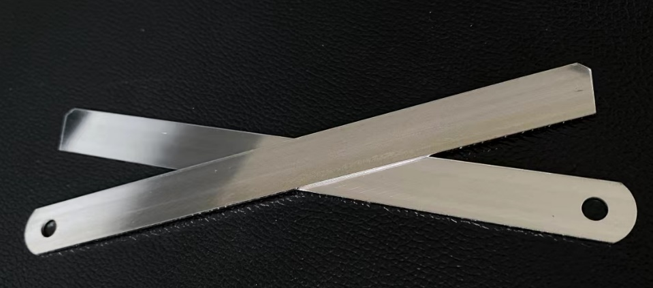
Honyo Prototype’s Stainless Steel Cutting Blade Optimization Process
Honyo Prototype employs a rigorous, integrated workflow to determine the optimal cutting blade for stainless steel components, ensuring precision, cost-efficiency, and material integrity. This process addresses stainless steel’s unique challenges—including work hardening, thermal conductivity, and corrosion resistance—through material-specific engineering. Below is the end-to-end methodology:
CAD Upload & Material Specification
Clients submit detailed CAD files with explicit material grade (e.g., 304, 316, 17-4 PH) and critical tolerances. Our system immediately flags stainless steel properties in the metadata, triggering stainless-specific processing protocols. This step ensures all subsequent stages account for chromium/nickel content, hardness ranges, and thermal expansion coefficients unique to the alloy.
AI-Powered Quoting Engine
Our proprietary AI analyzes the CAD geometry against a dynamic database of 12,000+ stainless steel cutting scenarios. The algorithm evaluates blade compatibility by cross-referencing:
Material thickness vs. blade kerf width
Required edge quality (e.g., burr tolerance <0.1mm)
Thermal sensitivity thresholds to prevent HAZ (Heat-Affected Zone) issues
Historical performance data from similar stainless grades
The output is a real-time quote specifying the exact blade type (e.g., fine-pitch carbide for thin 304L, abrasive waterjet for thick 316) with estimated cycle time and cost impact.
DFM Validation with Stainless Steel Expertise
During Design for Manufacturability (DFM), Honyo engineers conduct material-specific optimizations:
| Parameter | Standard Steel Adjustment | Stainless Steel Adjustment |
|---|---|---|
| Kerf Compensation | +0.15mm | +0.22mm (accounts for work hardening) |
| Feed Rate | 1500 mm/min | 900 mm/min (reduces thermal stress) |
| Blade Type | General-purpose carbide | Cryogenically treated CBN-coated |
Critical checks include verifying no section exceeds 12.7mm without multi-pass strategies (to avoid warping) and confirming coolant compatibility with stainless alloys to prevent chloride-induced pitting. All recommendations align with ASTM A484 standards for stainless fabrication.
Production Execution
Blade selection transitions to controlled production:
Blades are calibrated using in-situ sensors measuring real-time spindle load and thermal drift specific to stainless conductivity (15–17 W/m·K vs. mild steel’s 50 W/m·K)
First-article inspection includes metallographic analysis to confirm no micro-cracking or sigma phase formation
Process parameters auto-adjust mid-cut if thermal imaging detects >200°C surface temperature (critical for austenitic grades)
Delivery & Verification
Final components undergo stringent validation:
Dimensional reports with CMM data focused on stainless-sensitive features (e.g., hole roundness within ±0.05mm)
Surface roughness certification (Ra ≤1.6μm) via profilometry to ensure corrosion resistance
Optional material test reports (MTRs) verifying post-cut mechanical properties
All deliverables include a blade performance dossier documenting cutting parameters, wear metrics, and recommendations for future runs of identical alloys.
This closed-loop process guarantees the selected blade minimizes total cost per part while maintaining stainless steel’s functional integrity—eliminating guesswork through material science-driven automation and engineering oversight. Clients receive not just a cut part, but a validated solution optimized for their specific stainless alloy and application requirements.
Start Your Project
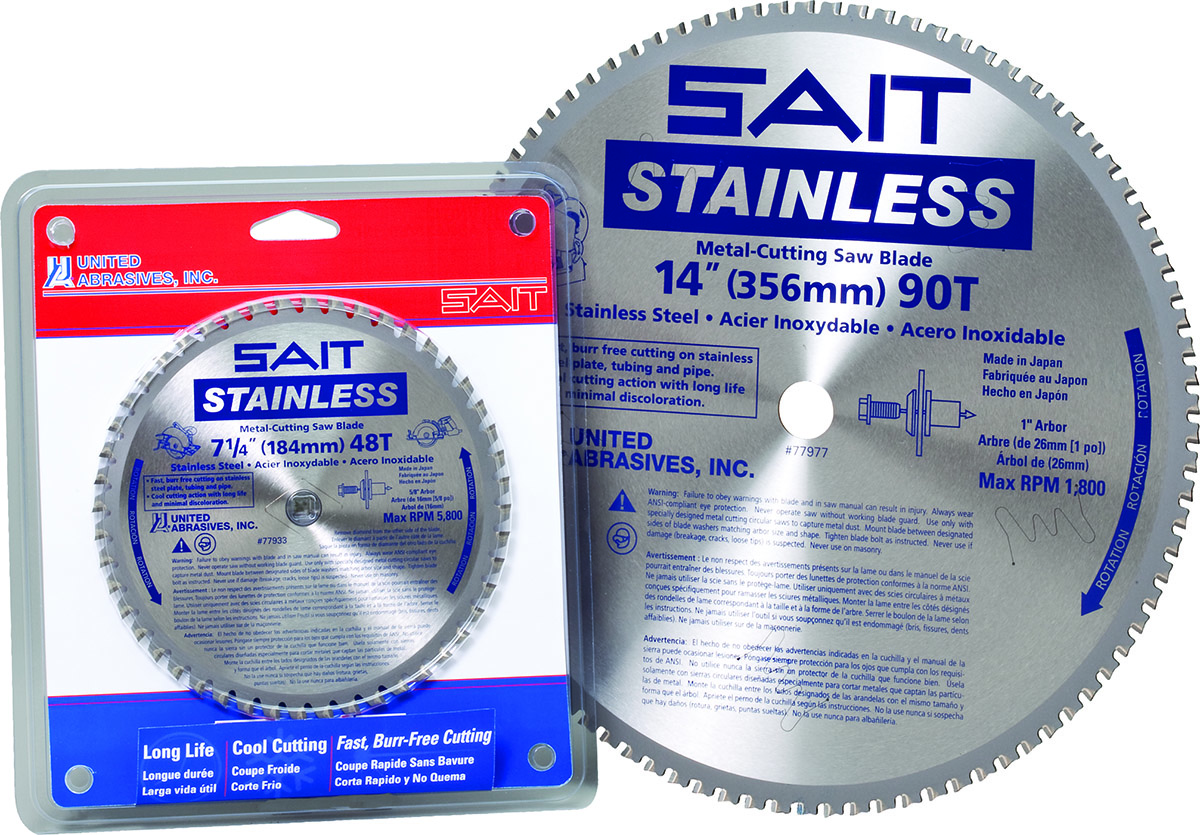
Looking for the best blade for cutting stainless steel? Our high-performance cutting blades are engineered for precision, durability, and extended tool life—ideal for demanding stainless steel applications. Manufactured in our Shenzhen facility with strict quality control, these blades deliver clean cuts with minimal burr and reduced work hardening.
For product specifications, samples, or technical support, contact Susan Leo at [email protected]. Let us provide the optimal cutting solution for your production needs.
🚀 Rapid Prototyping Estimator
Estimate rough cost index based on volume.