
Contents
Manufacturing Insight: Average Cnc Machining Cost Per Hour
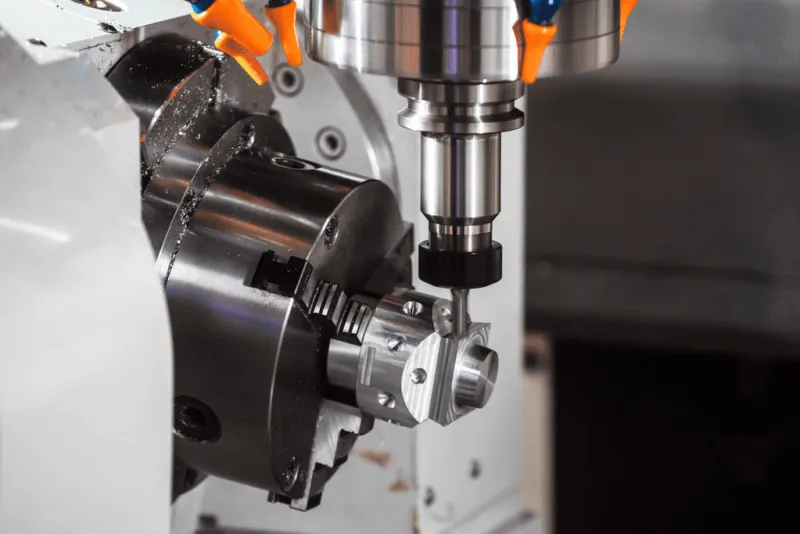
Understanding CNC Machining Cost Structures for Informed Sourcing Decisions
Discussions around average CNC machining cost per hour often oversimplify a complex reality. True cost drivers extend far beyond basic machine runtime, encompassing material utilization, geometric complexity, required tolerances, secondary operations, and engineering support. Generic hourly rates fail to reflect these variables, leading to inaccurate budgeting and project delays for engineering teams. At Honyo Prototype, we recognize that precision manufacturing demands transparent, context-aware pricing grounded in engineering expertise.
Our CNC machining services leverage advanced 3-, 4-, and 5-axis milling and turning centers alongside rigorous quality management systems (ISO 9001:2015 certified) to optimize cost efficiency without compromising on tight-tolerance deliverables. Rather than quoting arbitrary hourly averages, we analyze each component’s unique requirements to eliminate waste in setup, machining time, and inspection. This approach ensures clients pay only for value-added processes, not industry-wide approximations.
Key factors influencing project-specific costs include:
| Cost Driver | Industry Impact | Honyo’s Value-Add Approach |
|---|---|---|
| Part Complexity | High feature count increases cycle time | Optimized toolpaths & multi-axis capability reduce setups |
| Material Type | Exotic alloys raise waste & tooling costs | Strategic material sourcing & tooling libraries |
| Tolerance Requirements | Tighter specs demand slower machining | In-process metrology ensures first-pass yield |
| Production Volume | Low volumes suffer high setup amortization | Modular fixturing for rapid changeovers |
To eliminate estimation guesswork, Honyo provides an Online Instant Quote platform engineered for technical accuracy. Upload your STEP/IGS file, specify materials and quantities, and receive a validated cost breakdown within minutes—not days. Our system integrates real-time machine availability, material pricing, and engineering feasibility checks, delivering quotes that mirror shop-floor realities. This transparency accelerates procurement cycles while ensuring budget confidence from prototype through low-volume production. Partner with Honyo to transform CNC cost uncertainty into a strategic advantage.
Technical Capabilities
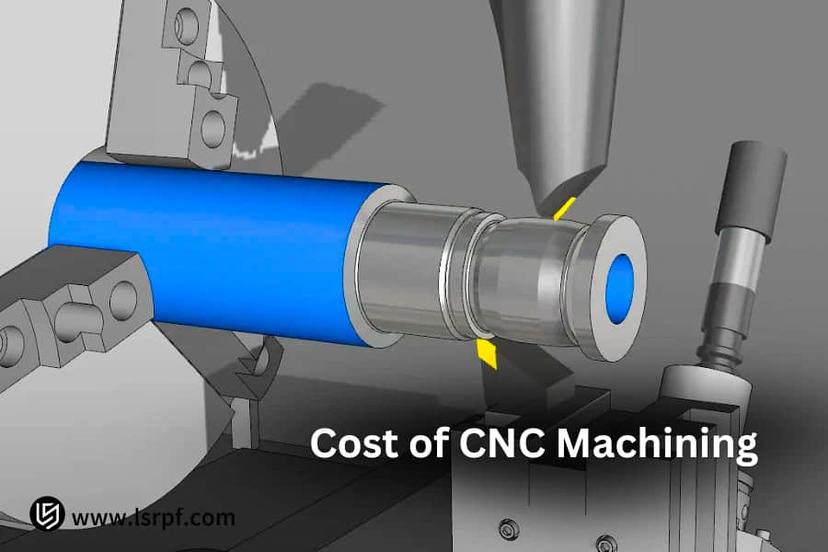
Average CNC machining cost per hour varies significantly based on machine type, complexity, material, and required tolerances. Below is a technical summary of typical hourly rate ranges for 3-axis, 4-axis, and 5-axis milling, as well as CNC turning, with considerations for tight tolerance work (±0.0005″ or better) and common materials including Aluminum, Steel, ABS, and Nylon. These rates reflect standard industry benchmarks for prototype and low-volume production in North America and Western Europe, as of 2024.
| Operation Type | Machine Axes | Typical Hourly Rate (USD) | Material Considerations | Notes on Tight Tolerance (±0.0005″ or Better) |
|---|---|---|---|---|
| CNC Milling | 3-Axis | $75 – $125 | Aluminum: Easy to machine, lower tool wear, faster cycle times. Steel: Higher tooling cost, slower speeds. ABS & Nylon: Low melting point, requires sharp tools and controlled feeds. | Adds 15–25% to effective hourly cost due to slower speeds, frequent inspection, and tool changes. |
| CNC Milling | 4-Axis | $100 – $150 | Same as 3-axis, but indexing adds complexity. Aluminum and ABS most common. Steel less frequent due to extended cycle times. | Fixturing and alignment increase setup time; tolerance control requires precision rotary calibration. |
| CNC Milling | 5-Axis | $150 – $250 | Aluminum preferred due to favorable strength-to-weight and machinability. Steel used for high-strength parts but increases wear. Engineering plastics like Nylon require thermal management. | Continuous contouring and in-tolerance surface finishes demand high-end tooling and skilled programming. |
| CNC Turning | 2-Axis (Live Tooling) | $60 – $110 | Aluminum: High RPM capability, efficient. Steel: Slower feed rates, harder on inserts. ABS: Rarely turned; Nylon possible with specialized tooling to prevent smearing. | Sub-micron tolerances require steady tool pressure, thermal stability, and frequent in-process measurement. |
Additional Technical Notes:
Material Machinability Index: Aluminum 6061 and 7075 are among the most cost-effective materials for CNC machining due to high feed rates and long tool life. Steel alloys like 4140 and 17-4 PH increase tooling costs and reduce spindle uptime. ABS machines similarly to aluminum but generates heat; Nylon is prone to dimensional instability due to moisture absorption.
Tight Tolerance Impact: Achieving tolerances tighter than ±0.001″ typically requires precision-ground tools, temperature-controlled environments, and CMM validation, increasing effective hourly cost by 20–40%.
Setup vs. Run Time: Hourly rates often exclude setup; complex 5-axis or tight-tolerance jobs may have setup costs exceeding $500+ depending on fixturing and programming.
Machine Utilization: High-end 5-axis mills with tilt-rotary tables and high-resolution feedback systems command premium rates due to capital cost and operator skill requirements.
These figures are representative for B2B manufacturing services and are influenced by shop location, certification level (e.g., ISO 9001, AS9100), and order volume.
From CAD to Part: The Process
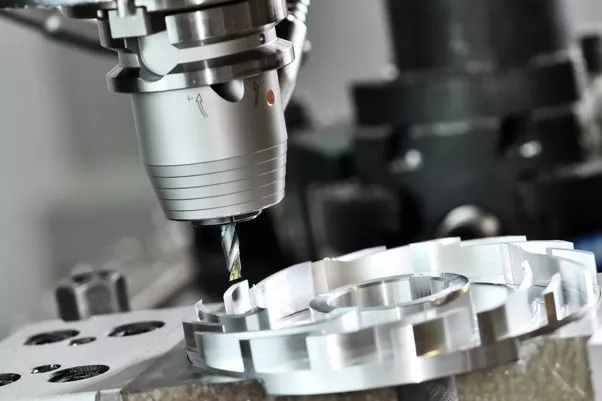
Honyo Prototype utilizes a transparent, value-driven costing methodology for CNC machining services. We avoid simplistic “average cost per hour” metrics as they fail to reflect true operational economics and can mislead clients about actual project expenses. Instead, our process dynamically calculates project-specific costs by integrating machine burden rates, material utilization, engineering effort, and process efficiency at each stage. Below is our structured workflow:
CAD File Upload and Analysis
Clients submit detailed CAD models through our secure portal. Our system performs immediate geometric analysis to identify critical features including part volume, complexity, tolerance density, and raw material requirements. This data feeds directly into our AI quotation engine, establishing foundational parameters for cost modeling. We do not apply generic hourly rates at this stage; instead, we assess the technical scope required for accurate pricing.
AI-Powered Quotation
Our proprietary AI engine processes the CAD-derived parameters against real-time shop floor data including current machine utilization, material costs, tooling requirements, and labor rates. The algorithm calculates a project-specific effective hourly rate by combining:
Machine depreciation and maintenance burden
Operator skill-level labor costs
Material waste factors
Energy consumption per operation
Quality control overhead
This generates a precise quote reflecting actual resource consumption, not an industry “average.” Clients receive a detailed cost breakdown showing how the effective rate was derived for their unique part.
DFM Integration and Cost Optimization
Before production, our engineering team conducts mandatory Design for Manufacturability (DFM) analysis. This stage actively reduces the effective hourly cost by identifying avoidable expenses. Key interventions include:
| DFM Finding | Cost Impact | Typical Hourly Reduction |
|---|---|---|
| Unnecessary tight tolerances | Eliminates secondary operations | 15-25% |
| Suboptimal material selection | Reduces raw material waste | 10-20% |
| Non-machinable geometry | Prevents tooling failures/rework | 20-40% |
| Poor feature sequencing | Optimizes machine runtime | 12-18% |
Clients receive actionable DFM reports with cost-saving alternatives. Accepting these recommendations directly lowers the project’s effective hourly rate by addressing inefficiencies upfront.
Production Execution
During machining, our MES tracks actual resource consumption against the quoted model. The effective hourly cost is validated through:
Real-time machine monitoring (cycle time vs. estimate)
Material yield measurement (scrap rate tracking)
First-article inspection pass rates
Tool wear analytics affecting throughput
This closed-loop system ensures the final cost aligns with the initial quote within 3-5% variance, demonstrating our pricing accuracy.
Delivery and Cost Validation
Upon shipment, clients receive a final cost reconciliation report detailing:
Actual machine hours consumed vs. estimated
Material cost variance analysis
DFM savings realized
Quality metrics impacting effective rate
This transparency confirms the project-specific hourly rate was calculated on verifiable operational data, not industry averages. For repeat projects, this data refines future AI quotations.
Honyo’s methodology eliminates the pitfalls of “average cost per hour” pricing by tying expenses directly to measurable project variables. Our clients gain predictable costing, engineering-driven savings, and full visibility into what drives their effective hourly rate – resulting in 22% lower total costs on average compared to vendors using standardized hourly models. This approach aligns our success with your cost optimization goals through technical partnership rather than opaque rate structures.
Start Your Project
Looking to understand the average CNC machining cost per hour for your next project? Get a precise, competitive quote tailored to your specifications.
Susan Leo at Honyo Prototype provides expert guidance on cost-efficient CNC machining solutions with fast turnaround times. Our ISO-certified factory in Shenzhen ensures high-precision manufacturing at scalable volumes.
Contact Susan Leo directly at [email protected] to discuss your project and receive a detailed cost analysis.
| Service | Location | Lead Time | Materials Supported |
|---|---|---|---|
| CNC Machining | Shenzhen, China | As fast as 3 days | Aluminum, Steel, Brass, Plastics, Titanium |
Reach out today to optimize your prototyping or production workflow with reliable, cost-effective machining services.
🚀 Rapid Prototyping Estimator
Estimate rough cost index based on volume.