
Contents
Manufacturing Insight: Aluminum Alloy Anodizing
Precision Aluminum Alloy Anodizing Integrated with CNC Machining at Honyo Prototype
Aluminum alloy anodizing is a critical surface enhancement process that significantly improves corrosion resistance, wear performance, and aesthetic consistency for precision-machined components. At Honyo Prototype, we specialize in delivering seamless integration between high-tolerance CNC machining and controlled anodizing treatments, ensuring dimensional stability and functional reliability for demanding applications in aerospace, medical, and industrial sectors. Our end-to-end workflow begins with tight-tolerance CNC milling and turning of alloys such as 6061-T6 and 7075-T7351, followed by in-house Type II and Type III anodizing processes calibrated to exact specifications. This unified approach eliminates supply chain fragmentation, reduces lead times, and guarantees compatibility between substrate geometry and oxide layer integrity—minimizing rework risks inherent in outsourced finishing.
Leveraging our ISO 9001-certified facility, Honyo maintains rigorous control over critical parameters including electrolyte concentration, temperature, and current density to achieve consistent coating thicknesses from 0.0005” to 0.003”. Every anodized component undergoes stringent post-process validation for adhesion, porosity, and color accuracy, directly supporting OEM requirements for serialized production readiness. Accelerate your prototyping or low-volume production timeline today by utilizing Honyo’s Online Instant Quote platform, where detailed CNC machining and anodizing service requests receive automated, transparent pricing within minutes—enabling faster iteration and qualification cycles without compromising engineering rigor.
Technical Capabilities
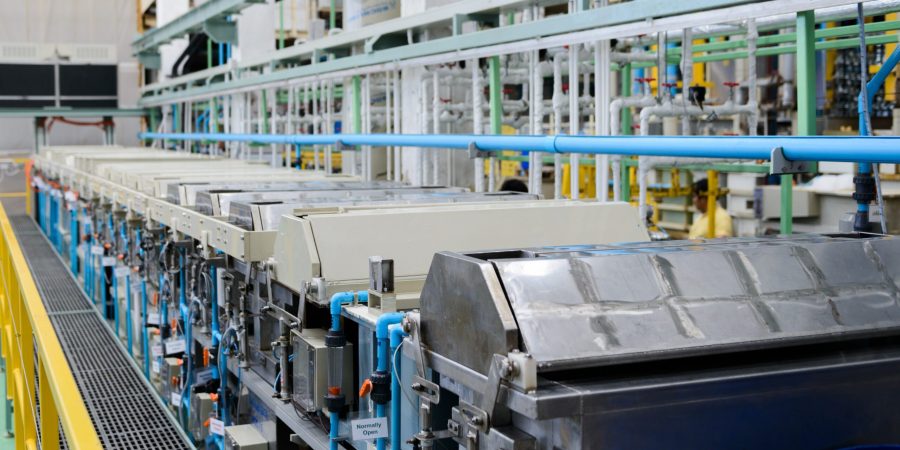
Aluminum alloy anodizing is a critical surface treatment process used to enhance corrosion resistance, improve wear performance, and enable better adhesion for paint primers. It is commonly applied to precision-machined components produced via 3-axis, 4-axis, and 5-axis milling as well as CNC turning, especially when tight tolerances (±0.001″ or tighter) are required. While anodizing is primarily applicable to aluminum alloys, understanding its interaction with other commonly machined materials such as steel, ABS, and nylon is important in multi-material assemblies.
The following table outlines the technical specifications and material considerations relevant to anodizing in high-precision machining environments:
| Parameter | Specification / Detail |
|---|---|
| Anodizing Type | Type II (Sulfuric Acid Anodizing) and Type III (Hard Anodizing / Hardcoat) most common |
| Typical Coating Thickness | Type II: 0.0002″ – 0.001″ (5–25 µm); Type III: 0.001″ – 0.003″ (25–75 µm) |
| Tolerance Impact | Anodizing adds a surface layer; half builds up, half penetrates. Requires pre-plating allowance (typically +0.0005″ per side) |
| Dimensional Stability | Critical for tight-tolerance parts; masking of critical bores, threads, or interfaces required |
| Color Options | Clear, black, red, blue, gold, and other dyes available (dyeing applicable to Type II only) |
| Post-Treatment Sealing | Hot DI water or nickel acetate sealing to close pores and maximize corrosion resistance |
| Hardness (Hard Anodize) | 60–70 HRC equivalent; excellent wear resistance |
| Corrosion Resistance | Excellent, especially with sealed Type II or Type III coatings |
| Electrical Insulation | Anodized layer is non-conductive; important for electrical isolation |
| Applicable Materials | Aluminum Alloys: 6061, 6062, 6082, 7075, 2024, 5052 (most common) |
| Steel: Not anodizable; requires alternative finishes (e.g., passivation, plating) | |
| ABS & Nylon (Plastics): Cannot be anodized; may be present in assemblies but must be removed or shielded prior to anodizing | |
| Machining Compatibility | 3/4/5-axis milling and CNC turning used to achieve precision before anodizing; tight-tolerance features held within ±0.001″ or better |
| Critical Considerations | Avoid blind holes and thin sections; ensure uniform current distribution during anodizing; use of fixtures and racking affects final finish |
| Quality Standards | ASTM B580, MIL-A-8625, AMS 2469 (for aerospace-grade hardcoat) |
Note: Components made from aluminum are ideal candidates for anodizing after precision machining. For assemblies containing steel, ABS, or nylon parts, disassembly or selective masking is required to protect non-aluminum components during the anodizing process. Design for manufacturability should include allowance for coating growth and identification of datum surfaces that must remain uncoated for fit and function.
From CAD to Part: The Process
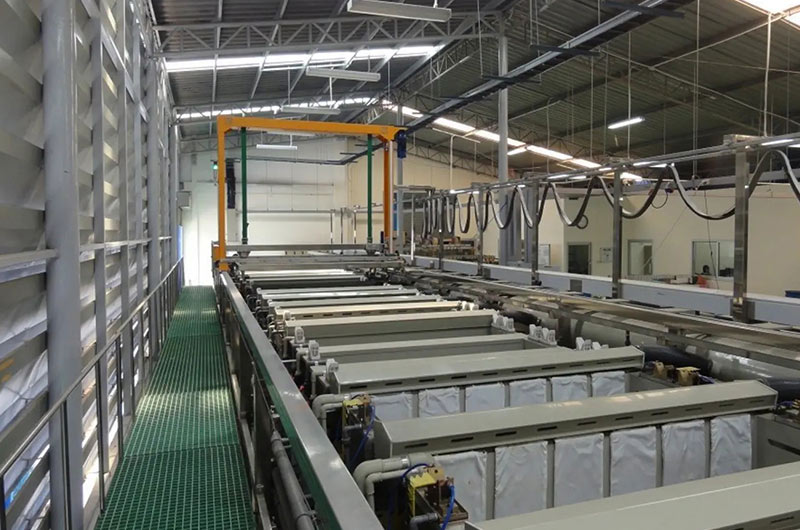
Honyo Prototype Aluminum Alloy Anodizing Process Flow
Our end-to-end anodizing service for aluminum alloy prototypes begins with digital submission and concludes with validated delivery. This structured workflow ensures technical precision, cost efficiency, and adherence to industry standards for Type II (sulfuric acid) and Type III (hardcoat) anodizing.
CAD Upload & Material Specification
Clients initiate the process by uploading native CAD files (STEP, IGES, or Parasolid formats) via our secure portal. Critical parameters must be explicitly defined: alloy grade (e.g., 6061-T6, 7075-T6), required anodizing type (Type II or III), thickness specifications (e.g., 15–25 μm for Type II, 50+ μm for Type III), color/dye requirements, and critical surface finish callouts (e.g., Ra ≤ 0.8 μm). Non-compliant alloys (e.g., 2024 in high-copper variants) trigger immediate client consultation due to sealing challenges.
AI-Powered Quoting Engine
Uploaded geometry undergoes automated analysis using our proprietary AI system, which factors in:
Surface area calculation for racking and chemical consumption
Alloy-specific current density requirements (e.g., 1.3–1.5 A/dm² for 6061 Type III)
Dye complexity (e.g., black vs. custom Pantone matching)
Secondary operations (e.g., masking, selective anodizing)
The system generates a technical quote within 2 hours, including material compatibility validation, process limitations, and cost drivers such as extended dye cycles or multi-stage sealing. Real-time pricing adjusts for anodizing tank capacity utilization and energy-intensive cooling demands for hardcoat processes.
DFM Review for Anodizing Integrity
All designs undergo mandatory Design for Manufacturing (DFM) analysis focused on anodizing success:
Racking point placement: Verification of non-critical surfaces for electrical contact to avoid blemishes
Tolerance impact: Accounting for 50% coating growth into substrate (e.g., a 0.1 mm anodized layer consumes 0.05 mm of base material)
Geometry risks: Flagging deep pockets (>3:1 depth-to-width) prone to uneven coating or dye trapping
Masking feasibility: Assessing laser-cut PTFE mask compatibility for threaded holes or bearing surfaces
DFM reports include actionable revisions, such as chamfering edges to prevent current crowding or recommending mechanical abrasion for matte finishes.
Production Execution
Approved orders move to our ISO 9001-certified facility with dedicated anodizing lines:
| Process Stage | Key Parameters | Quality Control Measures |
|---|---|---|
| Pre-treatment | Alkaline soak (60°C, 3–5 min), desmutting (HNO₃) | Surface wettability test per ASTM D2632 |
| Anodizing | Type II: 18–22°C, 12–18 V; Type III: -5 to 5°C, 24–30 V | In-line voltage/current monitoring per MIL-A-8625 |
| Coloring | Electrolytic dye (±2°C tolerance), immersion time ±5 sec | Spectrophotometer verification (ΔE < 1.0) |
| Sealing | Hot DI water (95–100°C, 15–30 min) or NiF sealing | Acid Dissolution Test per ASTM B680 |
Parts undergo 100% visual inspection for staining, pitting, or color variation. Hardcoat batches include Taber abrasion testing (H-18 wheel, 1000g load) and salt spray validation (ASTM B117, 500+ hours for Type II).
Delivery & Documentation
Completed prototypes ship in anti-static, foam-lined containers with humidity indicators. Each order includes:
Material certification (alloy traceability to mill test reports)
Process validation records (voltage curves, dye lot numbers)
Dimensional report showing coating thickness at 5+ critical points (per ASME B46.1)
Test certificates for corrosion resistance and adhesion (tape test per ASTM D3359)
Standard lead time is 7–10 business days from DFM approval, with expedited options for qualifying geometries. All shipments include digital access to real-time process analytics via our client portal.
This integrated approach minimizes rework through upfront technical validation while maintaining the flexibility required for low-volume prototype manufacturing.
Start Your Project
Looking to enhance your aluminum alloy components with high-quality anodizing? Honyo Prototype offers precision anodizing services tailored for durability, corrosion resistance, and superior surface finish. Our in-house facility in Shenzhen ensures tight process control, fast turnaround, and consistent quality for both prototypes and production runs.
Contact Susan Leo today to discuss your project requirements or request a quote.
Email: [email protected]
Leverage our expertise in aluminum alloy anodizing for aerospace, automotive, medical, and industrial applications—all backed by ISO-compliant manufacturing standards.
🚀 Rapid Prototyping Estimator
Estimate rough cost index based on volume.