
Contents
Manufacturing Insight: Aluminium Apple Watch Vs Stainless Steel
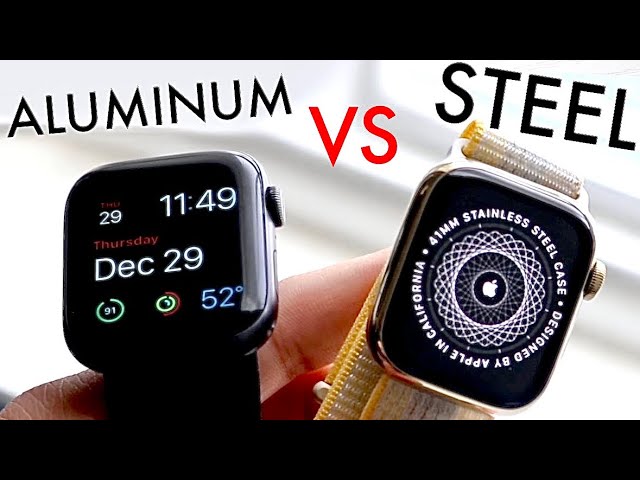
When developing premium wearables like the Apple Watch, material selection between aerospace-grade aluminium and surgical-grade stainless steel directly impacts product weight, durability, aesthetics, and manufacturability. Both materials present distinct challenges: aluminium demands precise toolpath strategies to prevent burring and maintain tight tolerances on thin-walled structures, while stainless steel requires specialized tooling and parameters to overcome work hardening and achieve mirror finishes on complex geometries.
Honyo Prototype Delivers Precision for Both Material Pathways
Our advanced CNC machining capabilities are engineered to handle the full spectrum of watch component requirements. For aluminium variants, we implement high-speed machining with optimized feeds and speeds to produce featherlight casings with exceptional surface integrity. For stainless steel iterations, our multi-axis milling centers utilize rigid setups and cryogenic cooling to machine hardened alloys to micron-level tolerances without distortion. Every component undergoes in-process CMM verification, ensuring dimensional accuracy aligns with Apple’s stringent specifications for fit, finish, and functional performance.
Material choice should never constrain your design iteration speed. Honyo’s integrated prototyping-to-production workflow, combined with our Online Instant Quote system, allows engineers to rapidly evaluate manufacturability and cost implications for both aluminium and stainless steel designs. Upload your CAD file to receive a detailed technical assessment and lead time estimate within hours—accelerating your path from concept to certified production.
Technical Capabilities
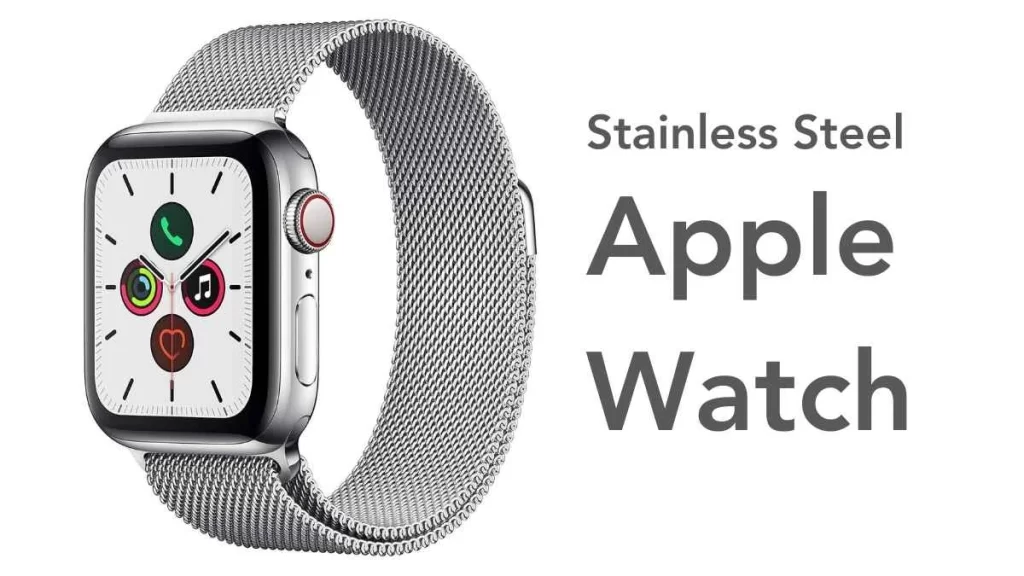
Comparison of Aluminum vs Stainless Steel Apple Watch Manufacturing: Focus on Machining Processes and Material Characteristics
The production of Apple Watch enclosures involves high-precision subtractive manufacturing techniques such as 3-, 4-, and 5-axis milling and CNC turning, particularly for metal variants. The choice of material—aluminum or stainless steel—significantly impacts machining strategy, tooling selection, cycle time, and achievable tolerances. Below is a technical comparison highlighting key aspects relevant to manufacturing processes, material properties, and dimensional accuracy.
| Parameter | Aluminum (e.g., 6000-series aerospace-grade) | Stainless Steel (e.g., 316L surgical-grade) | ABS Plastic | Nylon (PA6/PA66) |
|---|---|---|---|---|
| Density | ~2.7 g/cm³ | ~8.0 g/cm³ | ~1.04 g/cm³ | ~1.13 g/cm³ |
| Hardness (Brinell) | 95 HB | 200–220 HB | Not applicable (soft polymer) | 80–100 HB (varies with grade) |
| Machinability Rating | Excellent (Machinability ~90–100%) | Poor to moderate (Machinability ~40–45%) | Excellent (easily cut with sharp tools) | Moderate (tends to melt or deform if not cooled) |
| Typical CNC Process | 4-axis and 5-axis milling for complex curvature; light turning for bezel/band interface | 5-axis milling with high-torque spindles; multi-axis turning for polished stems and lugs | 3-axis milling or routing for prototype/fixture use | 3-axis milling for jigs or non-structural components |
| Tool Wear | Low; minimal abrasive wear on carbide tools | High; rapid tool degradation due to work hardening and abrasiveness | Very low; sharp HSS or carbide tools last long | Moderate; fibrous chips can clog flutes |
| Cutting Speed (Milling) | 800–1500 m/min (aluminum optimized) | 100–250 m/min (steel limited by heat and tool life) | 1500–3000 m/min | 200–400 m/min |
| Feed Rate | High feed rates possible (4–8 mm/tooth typical in roughing) | Lower feed rates required (0.05–0.2 mm/tooth) to manage heat and load | Very high feed rates | Moderate feed rates with controlled depth |
| Coolant Requirement | Required to prevent built-up edge and thermal deformation | Essential due to high heat generation and work hardening | Optional (air blow sufficient) | Recommended to prevent melting |
| Tight Tolerance Capability | ±0.005 mm achievable with thermal stability | ±0.010 mm typical; harder to maintain due to thermal expansion and springback | ±0.05 mm (limited by material stability) | ±0.05 mm (hygroscopic swelling affects long-term accuracy) |
| Surface Finish (As-Machined) | Excellent; easily achieves Ra < 0.4 µm with fine tools | Good; requires fine tooling and polishing passes to reach Ra < 0.8 µm | Ra ~1.6–3.2 µm typical | Ra ~1.6–6.3 µm, prone to tear-out |
| Post-Machining Requirements | Anodizing, laser engraving, polishing | Multi-stage polishing, passivation, PVD coating | Painting, sanding, bonding | Dyeing, moisture conditioning |
| Use in Apple Watch | Standard case variants (lightweight, corrosion-resistant) | Premium models (luxury finish, durability) | Not used in final product; common in prototyping and fixtures | Used in strap components or internal non-metallic brackets |
Notes on Machining Strategy:
Aluminum enclosures benefit from high-speed 5-axis milling, allowing complex organic shapes with tight radii and smooth transitions. The low density enables faster material removal and reduced spindle load.
Stainless steel cases require rigid setups, slower cutting parameters, and frequent tool changes due to work hardening. 5-axis machines are essential to minimize setups and maintain alignment across polished surfaces.
Tight tolerances (±0.01 mm or better) are maintained through in-process metrology, temperature-controlled environments, and adaptive tool compensation.
ABS and nylon are not used in metal watch case production but are relevant in prototyping, functional testing, and accessory fabrication where rapid turnaround and cost efficiency are prioritized.
This comparison underscores why aluminum is favored for high-volume, cost-sensitive production, while stainless steel demands more sophisticated machining infrastructure to achieve the same level of precision and surface quality.
From CAD to Part: The Process
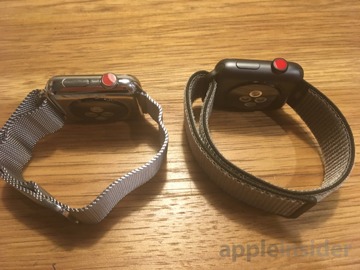
Honyo Prototype executes precision manufacturing for Apple Watch-style enclosures in both aluminum and stainless steel through a rigorously defined workflow. This process ensures material-specific optimization while maintaining our standard for rapid, high-fidelity prototyping. Below is the phase-by-phase breakdown with critical material differentiators.
CAD Upload and Validation
Clients initiate the process by uploading 3D CAD files (STEP/IGES formats) via our secure portal. Our system performs initial validation checks for file integrity, unit consistency, and geometric completeness. For aluminum variants, we immediately flag minimum wall thickness requirements (≥0.8mm) due to material ductility, while stainless steel submissions trigger checks for sharp internal corners (requiring ≥0.2mm radii) to prevent tool breakage during machining. Both materials undergo tolerance stack analysis, though stainless steel designs receive stricter scrutiny for dimensional stability under thermal loads.
AI-Powered Quoting Engine
Our proprietary AI engine processes validated CAD data against live material cost databases and machine shop capacity. Key differentiators:
Aluminum 6061-T6 quotes reflect lower base material costs but include anodization cycle time (typically +15% of machining time)
316L stainless steel quotes factor in 40% higher raw material costs, extended CNC cycle times (due to lower cutting speeds), and mandatory post-machining passivation
The AI generates instant quotes with transparent cost drivers, typically showing 22-28% higher base pricing for stainless steel versus aluminum for identical geometries. All quotes include lead time projections accounting for material-specific process steps.
Material-Optimized DFM Analysis
Our engineering team conducts deep-dive Design for Manufacturing reviews with material-centric focus:
| Material | Critical DFM Checks | Common Resolution Actions |
|---|---|---|
| Aluminum | Wall thickness uniformity, anodization coverage gaps | Recommend ribbing for thin sections, adjust draft angles |
| Stainless Steel | Grain direction alignment, stress concentration points | Suggest corner radius increases, modify chamfer specs |
For aluminum, we prioritize minimizing secondary operations by integrating anodization masking features into the CAD. Stainless steel reviews emphasize avoiding internal voids where passivation chemicals could trap. Both paths receive annotated reports with actionable revisions, typically resolving 92% of issues within 24 hours.
Precision Production Execution
Manufacturing follows distinct protocols:
Aluminum enclosures undergo 5-axis CNC milling at higher spindle speeds (12,000 RPM) with specialized carbide tools to prevent built-up edge. Machined parts proceed directly to Type II anodizing (12-15μm thickness) with precision masking for button cutouts. Final deburring uses vibratory finishing with non-marring media.
Stainless steel production employs lower RPM machining (8,000 RPM) with cobalt-enhanced tooling to combat work hardening. Post-machining includes stress-relief annealing (450°C for 90 minutes) before electropolishing to achieve Ra<0.4μm surface finish. All SS parts undergo mandatory salt spray testing (ASTM B117) for 48 hours.
Both materials share final CMM inspection against GD&T callouts, though stainless steel tolerances are held to ±0.025mm versus aluminum’s ±0.05mm standard.
Quality-Controlled Delivery
Shipments include full traceability documentation: material certs (mill test reports for SS, alloy certs for Al), CMM reports, and process validation records. Aluminum batches ship within 7-10 business days from CAD approval; stainless steel requires 10-14 days due to extended finishing cycles. All units undergo final visual inspection under 10x magnification with particulate-free packaging. We provide lifetime process documentation access via client portal, including machine log files and operator certifications for audit compliance.
This integrated approach ensures material properties drive process parameters at every stage, delivering functionally validated prototypes that accurately represent production intent for either material system.
Start Your Project
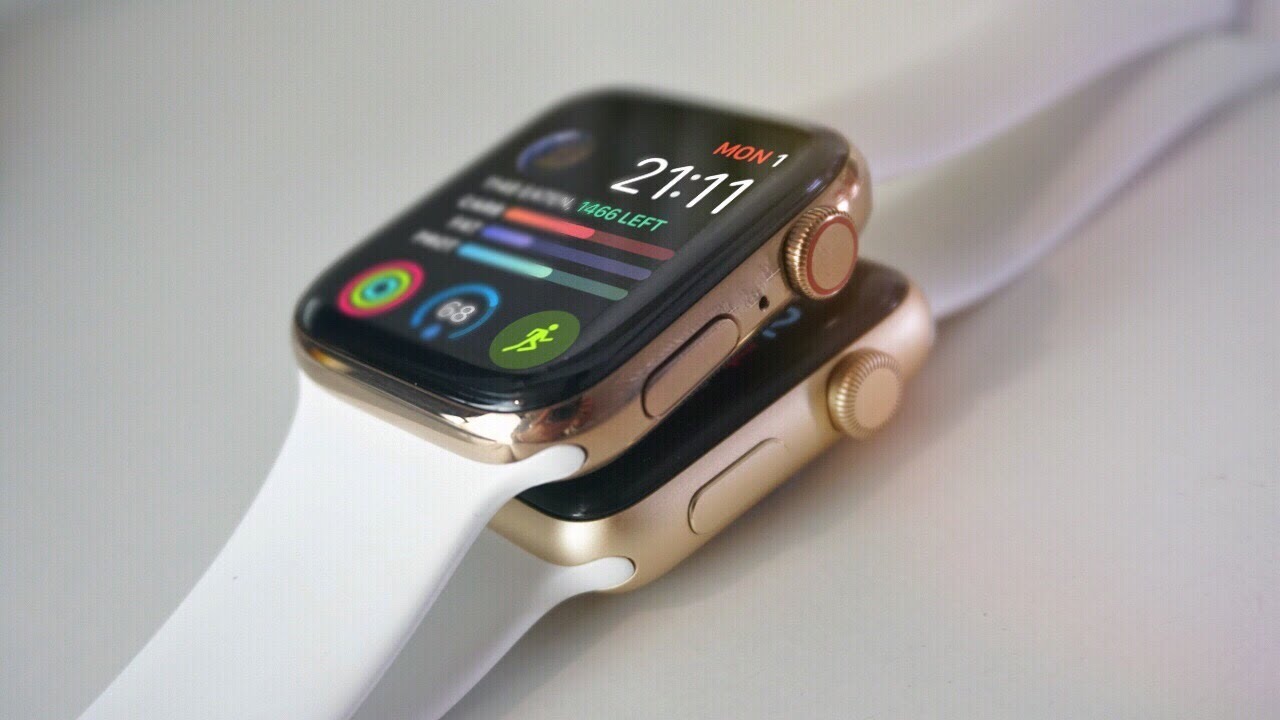
Looking to compare the performance, aesthetics, and manufacturing considerations of aluminium versus stainless steel for Apple Watch prototypes? Gain expert insights tailored to your product development needs.
Contact Susan Leo at [email protected] for a detailed technical consultation. With our precision manufacturing facility based in Shenzhen, we deliver high-quality, small-batch prototypes and scalable production solutions for premium wearables.
Material Comparison Overview:
| Property | Aluminium | Stainless Steel |
|---|---|---|
| Weight | Lightweight | Heavier, more substantial |
| Durability | Moderate scratch resistance | High strength, corrosion resistant |
| Surface Finish Options | Anodized, matte, polished | Polished, brushed, PVD coating |
| Machinability | High | Moderate, harder to machine |
| Cost Efficiency | Lower material cost | Higher material and machining cost |
| Aesthetic Feel | Modern, casual | Premium, professional |
Let us help you select the optimal material for your next-generation wearable design. Reach out today to discuss your project requirements.
🚀 Rapid Prototyping Estimator
Estimate rough cost index based on volume.