
Contents
Manufacturing Insight: Alloy Steel Strength

Alloy Steel Strength: Precision Machining for Demanding Applications
Alloy steels such as 4140, 4340, and 8620 deliver exceptional strength-to-weight ratios, fatigue resistance, and hardenability, making them indispensable for mission-critical components in aerospace, defense, and industrial machinery. Achieving tight tolerances and surface finishes in these high-strength materials demands advanced CNC machining capabilities to prevent work hardening, maintain dimensional stability, and ensure structural integrity under extreme loads.
At Honyo Prototype, our CNC machining services are engineered specifically for the complexities of alloy steel fabrication. Utilizing multi-axis milling and turning centers with rigid tooling systems, we consistently produce parts with tolerances down to ±0.0002″ while optimizing chip evacuation and thermal management. Our process expertise spans heat-treated alloys up to 45 HRC, ensuring components meet stringent performance requirements without compromising on repeatability or lead time.
Online Instant Quote Accelerates Your Procurement
Reduce sourcing delays with Honyo’s Online Instant Quote platform. Upload CAD files to receive detailed machining cost analyses and lead time estimates for alloy steel components within hours—not days—enabling faster design validation and production scheduling.
Leverage our precision manufacturing ecosystem to transform high-strength alloy steel designs into field-ready solutions, backed by rigorous in-process inspection and material traceability.
Technical Capabilities
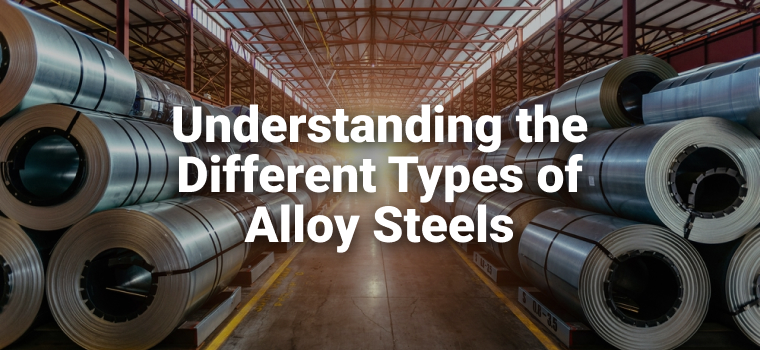
Alloy steel strength refers to the mechanical properties of steel alloys engineered for enhanced performance in demanding manufacturing applications such as 3-axis, 4-axis, and 5-axis milling and turning operations. These processes require materials with high tensile strength, wear resistance, and dimensional stability—especially when producing tight-tolerance components (typically ±0.005 mm to ±0.025 mm). While alloy steels are commonly used for tooling, fixtures, and high-stress components, other materials like aluminum, steel (non-alloy), ABS, and nylon are also frequently machined depending on application requirements.
Below is a comparative technical specification table highlighting key mechanical properties relevant to machining performance in multi-axis CNC environments:
| Material | Tensile Strength (MPa) | Yield Strength (MPa) | Hardness (HB) | Machinability Rating (%) | Thermal Conductivity (W/m·K) | Typical Use in CNC Machining | Tight Tolerance Suitability |
|---|---|---|---|---|---|---|---|
| Alloy Steel (e.g., 4140) | 655–965 | 415–815 | 180–250 | 65 | 42.6 | High-strength components, tooling, aerospace parts | Excellent |
| Carbon Steel (e.g., 1045) | 570–700 | 360–510 | 170–200 | 72 | 51.9 | Shafts, gears, industrial parts | Good |
| Aluminum (6061-T6) | 310 | 276 | 95 | 90 | 167 | Lightweight enclosures, aerospace, prototypes | Excellent |
| ABS (Thermoplastic) | 40–50 | 40–50 | 80–100 (Shore D) | 80 | 0.19 | Prototypes, jigs, low-stress components | Moderate |
| Nylon (PA6/PA66) | 70–85 | 60–75 | 85–100 (Shore D) | 70 | 0.25 | Insulating parts, gears, wear strips | Moderate to Good |
Notes:
Alloy Steels (e.g., 4140, 4340) offer superior strength and fatigue resistance, making them ideal for high-precision tooling and load-bearing components. They require robust tooling (carbide or ceramic inserts) and controlled feeds/speeds due to work hardening tendencies.
Aluminum 6061-T6 is highly machinable and dimensionally stable, frequently used in 5-axis milling for complex geometries with tight tolerances.
Carbon Steel (1045) balances strength and machinability but may require post-machining treatments for optimal stability.
ABS and Nylon are thermoplastics with lower strength but are easily machined for functional prototypes and non-structural parts. Moisture absorption (especially in nylon) can affect dimensional stability.
Tight Tolerance Suitability considers thermal stability, creep resistance, and ability to maintain dimensional accuracy after machining.
In high-precision 3/4/5-axis milling and turning, material selection must align with the functional requirements, environmental exposure, and geometric complexity of the part. Alloy steels remain the benchmark for strength-critical applications, while aluminum and engineering plastics serve roles where weight, cost, or electrical insulation are priorities.
From CAD to Part: The Process
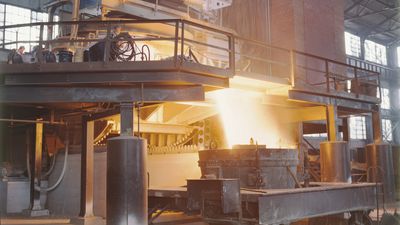
Honyo Prototype executes a rigorous, integrated process to ensure alloy steel components meet specified strength requirements from initial design through final delivery. This workflow is engineered for precision and traceability, critical for applications demanding structural integrity.
CAD Upload and Material Specification Validation
Upon receiving the customer’s CAD file, our system performs immediate metadata analysis to identify declared alloy steel grades (e.g., 4140, 4340) and associated strength targets such as yield strength (Rp0.2), tensile strength (Rm), or hardness (HRC). If strength parameters are undefined in the model’s PMI or notes, the AI Quote engine triggers an automated request for clarification. Unspecified requirements halt progression until confirmed, preventing downstream non-conformance.
AI-Powered Quoting with Material Feasibility Assessment
Our proprietary AI engine cross-references the CAD geometry against Honyo’s validated material database, which maps alloy grades to achievable strength ranges based on section thickness, heat treatment capabilities, and industry standards (e.g., ASTM A29, ISO 683-18). For example:
| Alloy Steel Grade | Typical Strength Range (After QT*) | Max Section Thickness for Uniform Hardness |
|---|---|---|
| 4140 | 1000–1400 MPa | 75 mm |
| 4340 | 1200–1600 MPa | 50 mm |
| 8620 | 700–900 MPa | 40 mm |
| *Quench and Temper |
The quote includes explicit confirmation of achievable strength parameters and flags geometries exceeding material capability limits (e.g., thin walls in high-strength grades prone to distortion).
DFM Analysis: Strength-Critical Feature Validation
During Design for Manufacturing (DFM) review, our engineers scrutinize features directly impacting mechanical performance:
Section Transitions: Verifying fillet radii to mitigate stress concentration in high-load areas per ASME BTH-1 guidelines.
Heat Treatment Viability: Assessing cross-sectional uniformity to ensure consistent hardness through the core (e.g., avoiding >50 mm sections in 4340 without specialized quenching).
Residual Stress Risks: Identifying sharp notches or abrupt geometry changes that could initiate cracks under cyclic loading.
DFM reports detail required process adjustments, such as recommending stress-relief annealing prior to final heat treatment for complex geometries.
Production: Controlled Processing for Strength Assurance
Alloy steel production follows a closed-loop protocol:
Material Traceability: Each batch uses certified mill test reports (MTRs) with chemical composition and base mechanical properties.
Heat Treatment Control: Parts undergo quenching in calibrated agitated oil baths (±5°C tolerance) followed by tempering in forced-convection ovens. Time-temperature profiles are logged per AMS 2750.
In-Process Verification: Hardness testing per ASTM E18 at multiple points on sacrificial coupons from the same heat treatment load. Non-conforming batches trigger immediate corrective action.
Final Testing: Tensile and Charpy impact tests per ASTM E8/E23 on customer-requested samples, with results documented against purchase order requirements.
Delivery: Comprehensive Strength Documentation
All shipments include a Honyo Quality Dossier containing:
Certified MTRs from the steel supplier
Heat treatment process logs with time-temperature curves
Hardness mapping reports for critical zones
Third-party test certificates for tensile/impact properties (if specified)
Conformance statement against the original strength requirements
This documentation provides full traceability from raw material to finished part, satisfying AS9100 and ISO 9001 audit requirements for critical applications.
Honyo’s process eliminates assumptions in alloy steel strength validation by embedding material science expertise at every phase. We treat strength not as a nominal specification but as an engineered outcome verified through data-driven controls, ensuring parts perform reliably in demanding operational environments.
Start Your Project
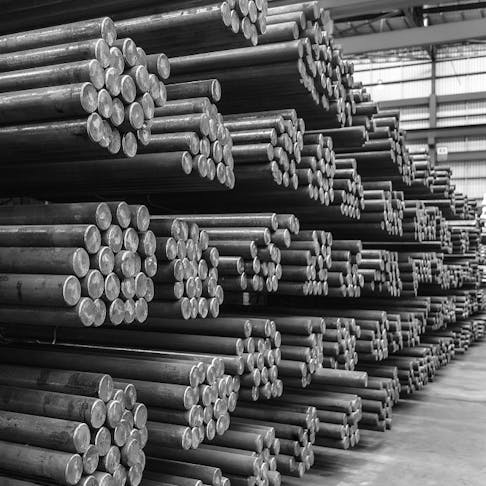
For high-performance alloy steel solutions, trust Honyo Prototype’s precision manufacturing expertise. Our advanced production capabilities in Shenzhen ensure consistent material strength, tight tolerances, and fast turnaround for your critical applications.
Contact Susan Leo today to discuss your alloy steel requirements. We provide detailed material certifications, mechanical property testing, and custom fabrication to meet your engineering standards.
Email Susan Leo at [email protected] for a technical consultation and project quote.
🚀 Rapid Prototyping Estimator
Estimate rough cost index based on volume.