
Contents
Manufacturing Insight: Alloy Steel Castings
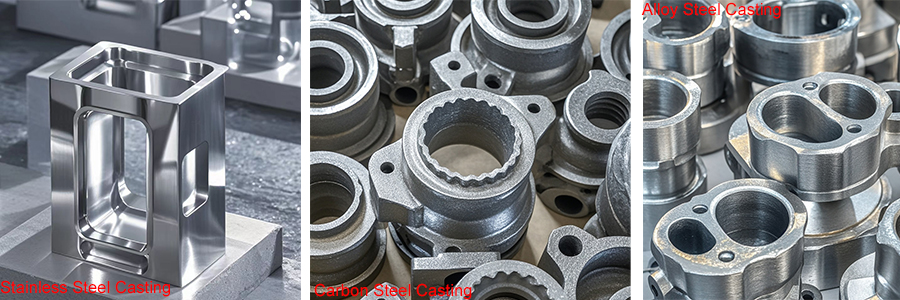
Precision Alloy Steel Castings: Engineered for Performance
Achieving dimensional accuracy and surface integrity in alloy steel castings presents significant manufacturing challenges due to inherent material variability and complex geometries. These components—critical in aerospace, energy, and heavy machinery—demand rigorous post-casting refinement to meet stringent industry tolerances and functional requirements. At Honyo Prototype, we specialize in transforming raw alloy steel castings into mission-critical finished parts through advanced CNC machining processes, ensuring compliance with ASTM, SAE, and customer-specific material standards.
Integrated CNC Machining for Cast-to-Print Excellence
Our technical expertise bridges the gap between casting imperfections and precision engineering. Utilizing multi-axis CNC centers with sub-micron repeatability, we address porosity, dimensional drift, and surface finish issues common in alloy steel castings. Capabilities include tight-tolerance milling, turning, drilling, and grinding for materials such as 4140, 4340, and 8620 steels, all supported by in-process metrology and heat-treatment validation. This integrated approach eliminates secondary supplier dependencies, reduces lead times by up to 35%, and guarantees final parts meet AS9100 and ISO 9001 quality benchmarks.
Accelerate Your Sourcing Cycle with Instant Quoting
Streamline procurement for alloy steel casting projects with Honyo’s Online Instant Quote platform. Upload CAD files and specifications to receive detailed machining cost estimates, lead time projections, and material optimization recommendations within minutes—not days. This transparent, data-driven tool empowers engineering and procurement teams to validate designs early, forecast budgets accurately, and fast-track production without compromising on precision or compliance.
Partner with Honyo Prototype to convert demanding alloy steel casting requirements into reliable, high-performance components, backed by engineering rigor and responsive digital sourcing.
Technical Capabilities
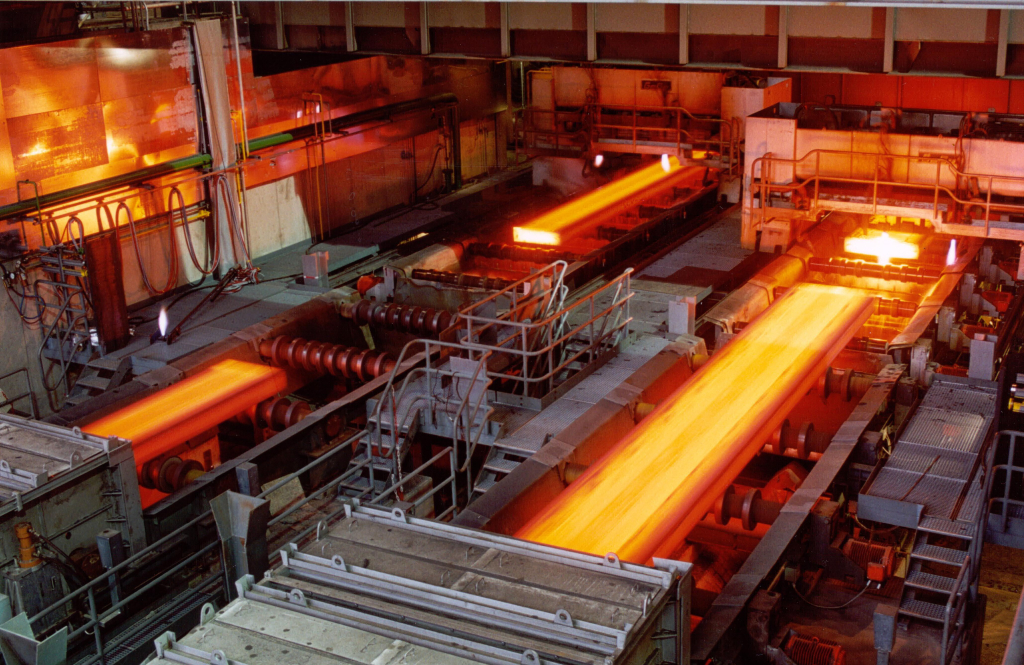
Alloy steel castings are commonly used in high-performance applications requiring strength, wear resistance, and dimensional stability. When post-processed using 3, 4, or 5-axis CNC milling and turning operations, these components can achieve tight tolerances and complex geometries. While the base material is typically alloy steel (e.g., 4140, 4340), other materials such as aluminum, carbon steel, stainless steel, ABS, and nylon may also be machined to similar precision for prototype or functional part applications.
Below is a technical comparison of materials commonly associated with precision-machined castings and components, with focus on CNC milling (3/4/5-axis), turning, and tight-tolerance capabilities:
| Material | Typical Form | Machinability | Max Tolerance (Milling) | Max Tolerance (Turning) | Common Applications | Notes on 3/4/5-Axis Machining |
|---|---|---|---|---|---|---|
| Alloy Steel (e.g., 4140, 4340) | Steel Casting or Forging | Moderate | ±0.0005″ (12.7 µm) | ±0.0004″ (10.2 µm) | Aerospace, defense, automotive, heavy equipment | Requires rigid setups; high tool wear; ideal for 5-axis for complex contours |
| Aluminum (e.g., 6061, 7075) | Billet or Cast | Excellent | ±0.0005″ (12.7 µm) | ±0.0003″ (7.6 µm) | Aerospace, robotics, enclosures, prototypes | High material removal rates; excellent for 4/5-axis complex shapes |
| Carbon Steel (e.g., 1018, 1045) | Billet or Casting | Good | ±0.0006″ (15.2 µm) | ±0.0005″ (12.7 µm) | Industrial machinery, shafts, structural parts | Generates heat; benefits from high-precision turning centers |
| Stainless Steel (e.g., 304, 17-4 PH) | Casting or Forging | Fair | ±0.0005″ (12.7 µm) | ±0.0004″ (10.2 µm) | Medical, food processing, marine | Work hardening; requires sharp tooling and stable 5-axis platforms |
| ABS (Thermoplastic) | Injection Molded or Cast | Excellent | ±0.001″ (25.4 µm) | ±0.001″ (25.4 µm) | Prototypes, jigs, fixtures, enclosures | Low melting point; suitable for high-speed 3-axis; minimal clamping force |
| Nylon (Polyamide) | Cast or Extruded | Good | ±0.001″ (25.4 µm) | ±0.001″ (25.4 µm) | Wear strips, gears, insulating components | Dimensionally sensitive to humidity; requires dry machining environment |
Notes on Tight Tolerance Machining:
5-axis CNC milling enables single-setup machining of complex alloy steel castings, reducing cumulative error and improving geometric accuracy.
Thermal stability and machine calibration are critical when holding tolerances below ±0.001″.
In-process metrology (e.g., touch probes) and post-process CMM inspection are standard for verifying tight-tolerance features.
Material homogeneity in castings affects machinability; pre-machining stress relief is often required for alloy steels.
Honyo Prototype specializes in precision CNC machining of alloy steel castings and alternative materials, supporting tight-tolerance requirements across aerospace, industrial, and medical sectors.
From CAD to Part: The Process
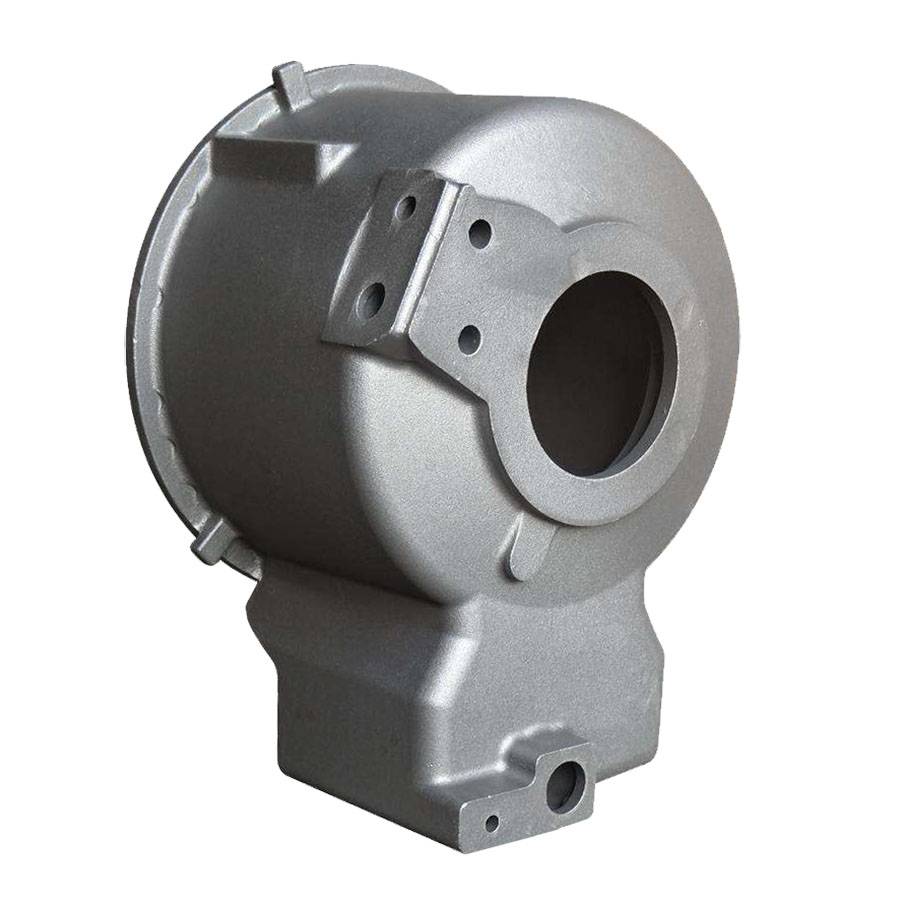
Honyo Prototype Alloy Steel Casting Process Overview
Honyo Prototype executes a streamlined, quality-focused workflow for alloy steel castings, integrating digital tools with metallurgical expertise to ensure precision and cost efficiency. The process begins with client-provided CAD data and concludes with certified delivery, adhering strictly to aerospace, automotive, and industrial standards (e.g., ASTM A216, A757). Below is a detailed technical breakdown of each phase.
CAD Upload and Validation
Clients submit 3D models in STEP, IGES, or native CAD formats via our secure portal. Our system immediately performs geometric validation checks for watertightness, unit consistency, and minimum feature resolution (≥0.5mm). Non-conforming files trigger automated feedback detailing required corrections, reducing pre-production delays. All data is encrypted per ISO 27001 standards, with version control maintained throughout the project lifecycle.
AI-Powered Quoting Engine
Uploaded geometry feeds our proprietary AI quoting system, which analyzes part volume, complexity factors (e.g., undercuts, thin walls), and draft angles against historical foundry data. The algorithm calculates material yield, gating/risering requirements, and machining allowances specific to alloy steel grades (e.g., 4140, 4340, 8620). Within 2 hours, clients receive a preliminary quote including:
| Cost Component | Technical Basis |
|---|---|
| Material Cost | Current LME steel scrap rates + 15% premium for alloying elements |
| Processing Cost | Simulated solidification time × energy consumption metrics |
| Finishing Cost | Predicted surface roughness (Ra) driving grind time |
| Quality Assurance | Mandatory NDT scope based on criticality zones |
This AI output is rigorously reviewed by senior foundry engineers to adjust for real-world variables like section thickness transitions or residual stress risks.
Metallurgical DFM Analysis
Our Design for Manufacturability phase is where Honyo adds critical value. A dedicated engineer conducts:
Finite Element Analysis for thermal gradients to prevent shrinkage porosity in heavy sections. Microstructure simulation predicting hardenability per Jominy curves for the specified steel grade. Gating system optimization using MAGMA5® to minimize turbulence and oxide entrainment. Tolerance stack-up verification against ASME Y14.5, with recommendations for cast vs. machined features. Clients receive a formal DFM report with annotated CAD markups, typically within 72 hours, resolving 95% of producibility issues before tooling.
Production Execution
Approved designs move to our ISO 9001:2015-certified foundry with full material traceability:
Pattern production uses CNC-machined tooling for dimensional stability. Melting occurs in vacuum induction furnaces with OES chemical verification to ±0.05% for critical elements (Cr, Mo, Ni). Pouring follows strict superheat protocols (1580–1620°C for low-alloy steels) with real-time temperature logging. Post-solidification, parts undergo stress-relief annealing per AMS 2750, followed by MPI/UT per ASTM E709/E164. Final machining uses CMM-verified fixtures to hold ±0.1mm tolerances on critical datums.
Certified Delivery
All shipments include:
Material test reports with actual chemistry and mechanical properties (tensile, impact)
NDT documentation showing inspection coverage and acceptance criteria
Dimensional inspection reports against client-specified GD&T
Compliance certificates for REACH/RoHS where applicable
Parts are packaged in custom anti-corrosion VCI films with humidity indicators, with delivery timelines tracked via our client portal from shipment to dock. Typical lead time from CAD approval to delivery is 12–18 weeks, depending on complexity and heat treatment requirements.
This integrated approach ensures alloy steel castings meet stringent performance demands while minimizing time-to-market. For grade-specific process parameters or DFM collaboration, contact our metallurgy team directly.
Start Your Project
Looking for high-quality alloy steel castings manufactured to precise specifications? Honyo Prototype delivers durable, precision-engineered cast components from our state-of-the-art factory in Shenzhen, China. Ideal for demanding industrial, automotive, and aerospace applications.
Contact Susan Leo today to discuss your project requirements and receive a competitive quote.
Email: [email protected]
Leverage our advanced casting capabilities and fast turnaround times for your next production run.
🚀 Rapid Prototyping Estimator
Estimate rough cost index based on volume.