
Contents
Manufacturing Insight: All Type Sheet Metal
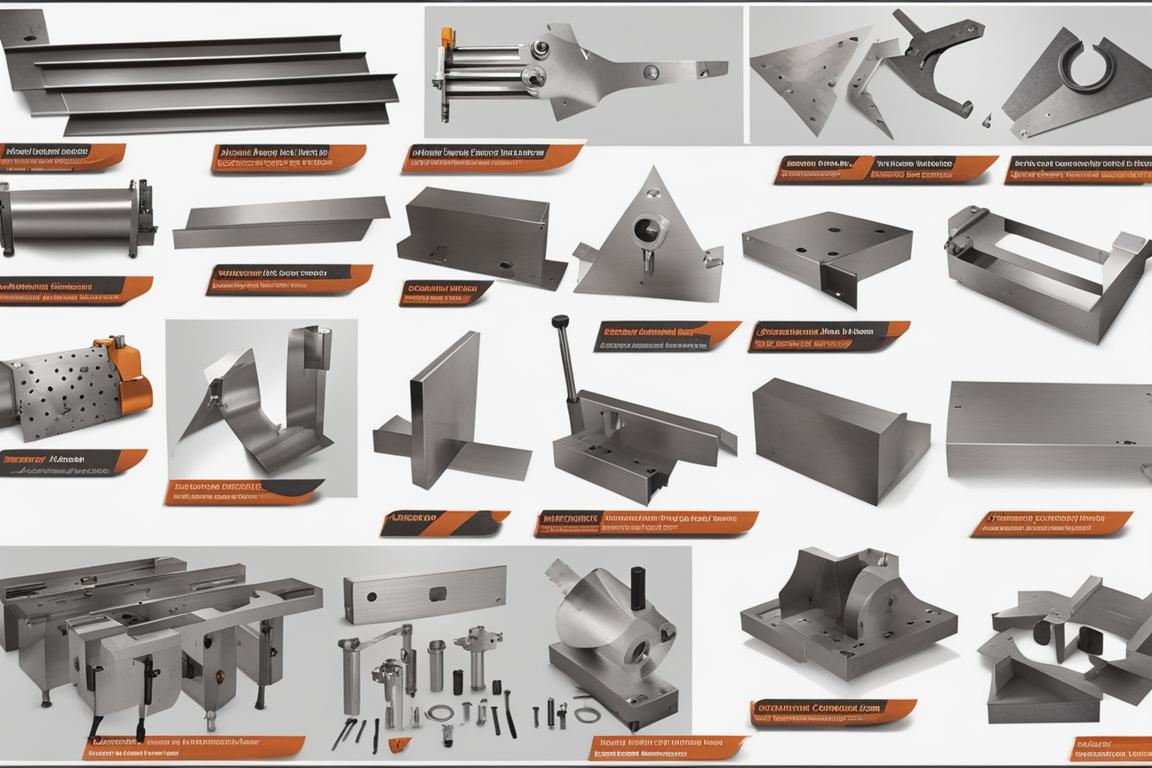
All-Type Sheet Metal—One Shop, One Quote, Zero Waiting
From a single prototype bracket to a 10,000-part enclosure, Honyo Prototype turns every sheet-metal idea into precision hardware in days, not weeks. Our 20-station in-house line—fiber-laser cutting, 8-axis CNC press brakes, robotic welding, PEM & rivet insertion, silk-screen & powder coat—handles aluminum, steel, stainless, copper, and titanium from 0.1 mm to 12 mm thick. Upload any STEP, DXF, or DWG and get an online instant quote with DFM feedback, blank development, and nested costing in under 60 seconds. Whether you need a micro-tab shield for electronics, a seamless architectural panel, or a welded chassis for EV battery packs, Honyo’s all-type sheet-metal service ships globally in as fast as 3 days.
Technical Capabilities
Critical Clarification First:
⚠️ “All type sheet metal” is a misnomer. ABS and Nylon are thermoplastics – not sheet metal. Sheet metal refers exclusively to thin, flat pieces of metal (e.g., steel, aluminum, copper). ABS/Nylon are plastic sheets and cannot be processed like metal. Combining them under “sheet metal” is technically incorrect and dangerous – laser-cutting ABS/Nylon produces toxic fumes (e.g., hydrogen cyanide from ABS) and poses fire risks.
Below is a corrected technical specification guide for:
– True Sheet Metal (Steel, Aluminum)
– Separate Specifications for ABS/Nylon Plastic Sheets (clearly labeled)
⚙️ I. TRUE SHEET METAL SPECIFICATIONS
(Materials: Steel, Aluminum only. ABS/Nylon are NOT included here.)
🔦 Laser Cutting
| Parameter | Steel (Mild/Carbon) | Aluminum (6000/5000 Series) | Notes |
|——————–|—————————|—————————–|———————————————————————–|
| Thickness Range | 0.5 mm – 25 mm | 0.5 mm – 20 mm | Thicker materials require higher laser power (e.g., 6kW+ for 25mm steel). |
| Kerf Width | 0.15–0.3 mm | 0.15–0.3 mm | Narrower for thinner materials; affects precision tolerances. |
| Edge Quality | Smooth, minimal dross | Oxidized (requires nitrogen assist gas) | Aluminum edges often need post-processing (e.g., deburring). |
| Max Speed | Up to 15 m/min (1mm thick)| Up to 10 m/min (1mm thick) | Aluminum reflects laser light, requiring higher power density. |
| Critical Notes | Low reflectivity; safe for standard lasers. | High reflectivity risk – requires specialized optics and safety protocols. |
📐 Bending (Press Brake)
| Parameter | Steel | Aluminum | Notes |
|——————–|—————————|—————————–|———————————————————————–|
| Min. Bend Radius | 0.5× material thickness | 1.0× material thickness | Aluminum has higher springback (10–15° vs. steel’s 5–8°). |
| Max. Bend Height| 150 mm (standard tools) | 150 mm (standard tools) | Limited by tooling; custom dies for taller bends. |
| Tolerances | ±0.1° angle, ±0.1 mm length | ±0.2° angle, ±0.15 mm length | Aluminum requires compensation for springback during programming. |
| Critical Notes | Hardened steels may crack at sharp bends. | Aluminum work-hardens; avoid repeated bends in same location. |
🔥 Welding
| Process | Steel (MIG/TIG) | Aluminum (TIG/MIG) | Notes |
|——————–|—————————|—————————–|———————————————————————–|
| Thickness Range | 1.0 mm – 12 mm (MIG) | 1.0 mm – 10 mm (MIG) | Aluminum thinner than 1mm requires precision TIG. |
| Joint Design | Butt, lap, fillet | Butt, lap, fillet | Aluminum needs clean, oxide-free surfaces (brushed with stainless steel brush). |
| Weld Quality | AWS D1.1 compliant | AWS D1.2 compliant | Aluminum requires argon gas shielding; steel uses CO₂/argon mix. |
| Critical Notes | Preheating for thick/high-carbon steel. | Never weld aluminum without argon – oxidation ruins weld integrity. |
⚠️ II. ABS & NYLON PLASTIC SHEETS
(These are NOT sheet metal. They are thermoplastics with entirely different processing rules.)
🔦 Laser Cutting
| Parameter | ABS | Nylon | Critical Safety Warnings |
|——————–|—————————|—————————–|—————————-|
| Thickness Range | 1 mm – 10 mm | 1 mm – 8 mm | ⚠️ ABS emits hydrogen cyanide (HCN) gas when laser-cut. Requires industrial-grade ventilation and HCN sensors. |
| Edge Quality | Melting, rough edges | Charring, uneven edges | ⚠️ Nylon melts unpredictably; often causes fires. Not recommended for laser cutting. |
| Max Speed | 0.5 m/min (2mm thick) | 0.3 m/min (2mm thick) | ⚠️ Both materials release toxic fumes – never cut without professional exhaust systems. |
| Critical Notes | Avoid laser cutting ABS for production parts – use CNC routing or waterjet instead. | Nylon is highly flammable under laser; use mechanical cutting only. |
📐 Bending
| Parameter | ABS | Nylon | Notes |
|——————–|—————————|—————————–|———————————————————————–|
| Method | Heat bending (hot air gun or oven) | Heat bending (hot air gun) | No mechanical bending – plastics deform under pressure without heat. |
| Min. Bend Radius | 2× material thickness | 3× material thickness | ABS becomes flexible at 80–100°C; Nylon at 150–180°C. |
| Tolerances | ±0.5° angle, ±0.3 mm length | ±0.5° angle, ±0.3 mm length | High thermal expansion – cooling causes warpage. |
| Critical Notes | Overheating causes bubbling. | Nylon absorbs moisture – must be dried before bending. |
🔥 Welding
| Process | ABS | Nylon | Notes |
|——————–|—————————|—————————–|———————————————————————–|
| Method | Solvent welding (e.g., acetone) or ultrasonic | Solvent welding or heat gun | No fusion welding like metal – plastics melt, not fuse. |
| Joint Strength | 60–80% of base material | 50–70% of base material | Solvents weaken nylon; ultrasonic welding preferred for structural parts. |
| Critical Notes | Solvents create brittle joints. | Nylon is hygroscopic – welding must occur in dry environment. |
✅ Key Recommendations for Production
- Never mix ABS/Nylon with “sheet metal” specifications – they require completely different tooling, safety protocols, and processes.
- Laser-cutting ABS/Nylon is high-risk:
- ABS: Requires HCN monitoring and exhaust (OSHA limits: 4.7 ppm).
- Nylon: Not suitable for laser cutting – use waterjet or CNC milling.
- For mixed-material projects:
- Design metal and plastic components separately.
- Use mechanical fasteners (screws, rivets) or adhesive bonding for assembly – do not weld plastics to metals.
- Material selection:
- For structural parts: Use steel/aluminum sheet metal.
- For non-structural, low-heat parts: Use ABS/Nylon plastic sheets.
💡 Honyo Prototype Best Practice: Always confirm material type (metal vs. plastic) before quoting or processing. Provide material certifications (e.g., ASTM for metals, UL for plastics) to avoid safety hazards and production failures.
For true sheet metal work (steel/aluminum), we adhere to ISO 2768 (general tolerances), AWS D1.1/D1.2 welding standards, and EN 1090 (structural steel). For plastics, we follow ISO 15025 (plastic welding) and industry-specific safety guidelines.
Let us know if you need specs for a specific material – we’ll provide accurate, safe details immediately. 🛡️
From CAD to Part: The Process
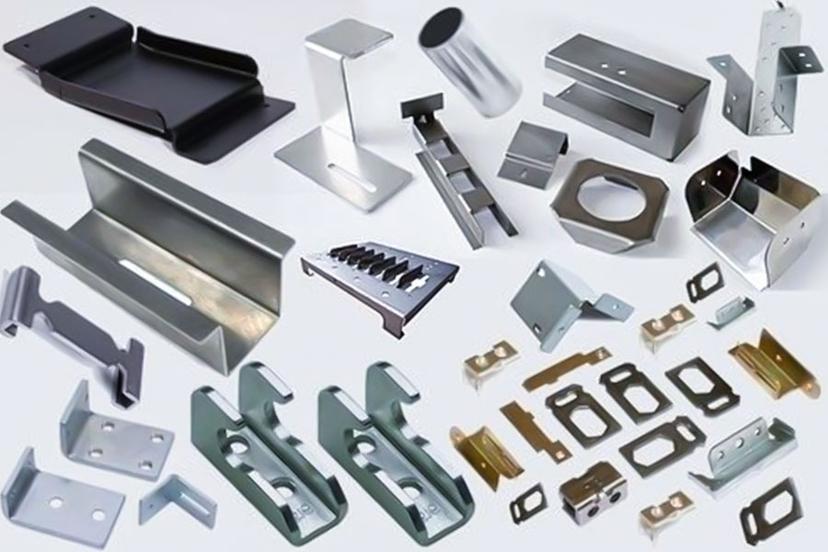
Honyo Prototype – “ALL-TYPE SHEET-METAL” WORKFLOW
(what really happens once you push “Upload CAD”)
-
Upload CAD
• Portal accepts any 3-D format (STEP, IGES, SolidWorks, Creo, Inventor, CATIA, DXF for flat patterns).
• Auto-checker verifies file integrity, sheet-metal rules, smallest bend relief, hole-to-edge, minimum flange, etc.
• In < 30 s you receive a pass / fail report and—if pass—an instant AI quotation. -
AI Quote
• Neural network trained on 400 k+ historical jobs selects the cheapest cell (fiber laser + punch, punch + right-angle, panel bender, press-brake, stamping, spinning, or combination).
• Real-time nesting on cloud GPUs gives true sheet yield and cycle time.
• Raw material, hardware, finish (plating, e-coat, powder, anodize, chromate, silk-screen, PEM®, rivet, weld, etc.) and logistics are priced in < 60 s.
• You see three tiers: “Prototype (1–5)”, “Pilot (10–100)”, “Production (500+)” with lead-time and unit price sliders. -
DFM (Design-for-Manufacture)
• Order is locked → file drops to our DFM engine.
• Automatic flat-pattern generation with k-factor / bend deduction library for every alloy (5052, 6061, SUS304, 316L, SECC, SGCC, Ti, Cu, brass, even 1 mm CFRP).
• Collision check: punch hits, forming tools, panel-bender blades, robot gripper clearances.
• Weld & hardware simulation: spike detection for distortion, heat input, and fixture needs.
• Human application engineer reviews AI flags, adds call-outs (e.g., “add 0.4 mm back-relief” or “change to 0.8 mm radius for panel bender”).
• 3-D PDF + color-coded DFM report e-mailed to customer for approval; one-click “Accept & Release” triggers production. -
Production
a. Nesting & Programming
– SigmaNEST / TruTops / AP100US create NC codes for laser, punch, panel bender, press brake, roll form, spinning, or stamping die.
b. Material Prep
– Sheets laser-scribed with QR; automatic tower loads correct gauge and cert.
c. Cutting / Punching
– 12 kW fiber laser (±0.05 mm) or 30-t turret punch (forming, louver, thread, emboss).
d. Bending
– Robot-tended panel bender (Salvagnini P4) for high-mix, or 8-axis Trumpf & Amada press brakes with dynamic crowning and angle sensors.
e. Hardware & Joining
– 6-axis robots install 400+ PEM® types; SPR (self-pierce rivet), laser weld, TIG, MIG, spot, projection, and micro-TIG for 0.1 mm foils.
f. Finishing
– In-line 7-tank zinc phosphate + e-coat, powder line (class A texture), hard-anodize, alodine, chem-film, passivation, silk-screen, digital UV print, laser mark.
g. QC
– 100 % dimensional on 5-axis CMM + laser scanner; cosmetic under 500 lux; weld penetration via X-ray or UT when required; statistical process data attached to QR code on every part. -
Delivery
• Parts vacuum-sealed + VCI paper; ESD foam for conductive coatings.
• Automatic logistic partner selection (DHL, FedEx, UPS, truck, sea) based on customer SLA and AI cost optimizer.
• Tracking link pushes to customer portal; digital twin package includes PDF inspection report, material certs, ROHS/REACH, and a STEP of “as-built” geometry if critical tolerances were measured.
End-to-end lead time
Prototype: 24–72 h
Pilot: 3–5 days
Production: 1–2 weeks (kanban / blanket orders available)
That is the entire “all-type sheet-metal” path at Honyo—from your CAD upload to packed parts on the courier truck—fully traceable, fully digital.
Start Your Project
Honyo Prototype | All Sheet Metal Solutions | Contact Susan Leo: [email protected] | Shenzhen Factory
✅ Precision fabrication for any sheet metal project—trusted quality, fast turnaround, and expert support from our Shenzhen facility.
📩 Ready to start? Email Susan Leo today for a custom quote!
🚀 Rapid Prototyping Estimator