
Contents
Manufacturing Insight: Advantages Of Cnc Machining
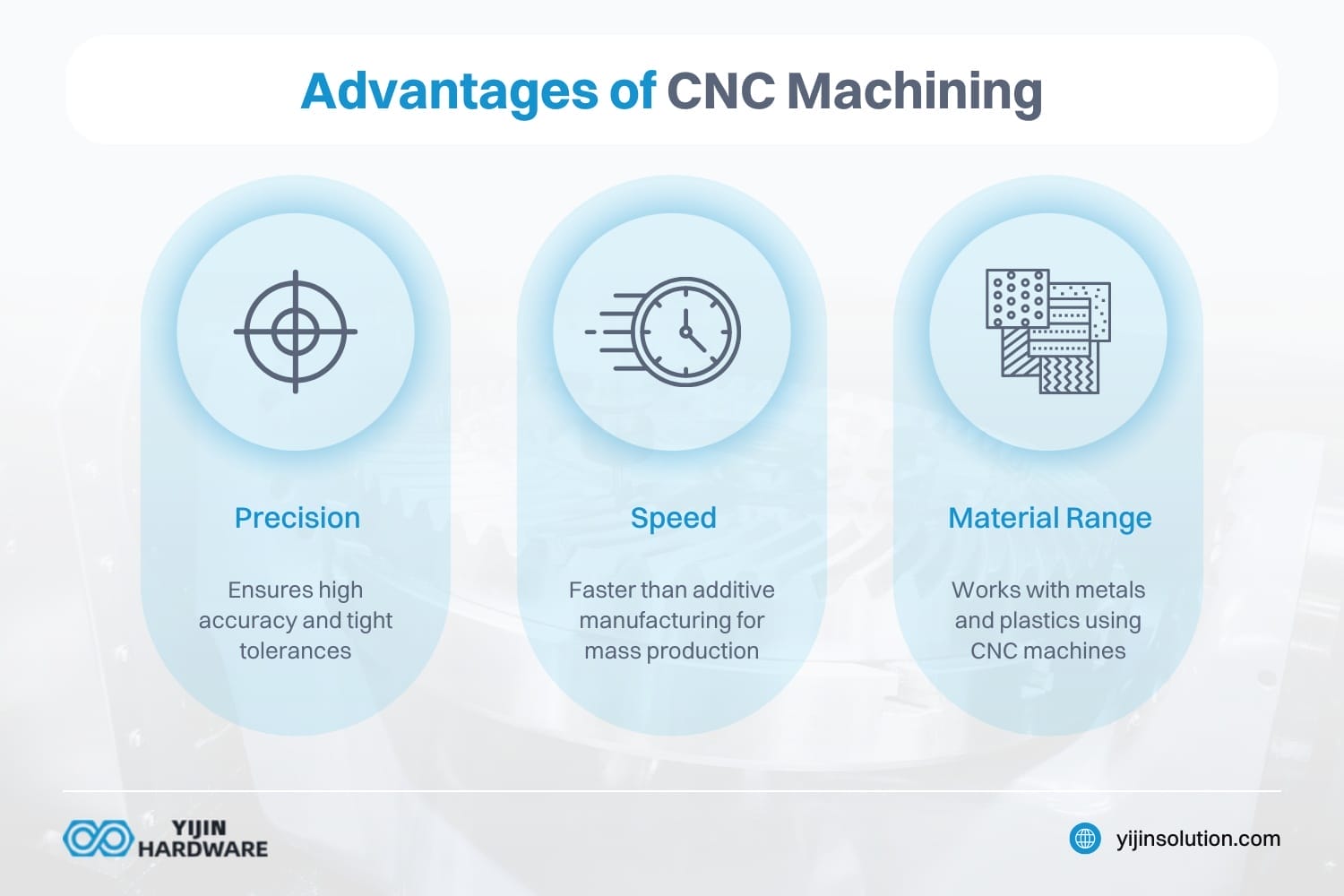
Precision Engineering Excellence Through Advanced CNC Machining
At Honyo Prototype, we leverage state-of-the-art CNC machining to transform complex designs into high-integrity production-ready components with unmatched accuracy and repeatability. Our multi-axis milling and turning capabilities consistently achieve tolerances as tight as ±0.005 mm across diverse materials—from aerospace-grade aluminum and titanium to engineered plastics and exotic alloys—ensuring your critical parts meet stringent functional and regulatory requirements. This precision minimizes assembly errors, reduces scrap rates, and accelerates validation cycles for demanding industries like medical devices, automotive, and industrial automation.
Beyond technical capability, Honyo integrates seamless digital workflows to eliminate traditional prototyping bottlenecks. Our proprietary Online Instant Quote system provides transparent, real-time cost and lead time estimates within seconds, empowering engineering teams to make informed design and sourcing decisions without procurement delays. By combining ISO 9001-certified processes with responsive engineering support, we deliver not just components, but accelerated time-to-market and reduced total project risk.
Honyo Prototype CNC Machining Key Advantages
| Capability | Client Impact | Honyo Differentiation |
|---|---|---|
| ±0.005 mm Tolerances | Zero rework in critical assemblies | In-process metrology with automated SPC |
| 5-Axis Simultaneous Milling | Single-setup complex geometries | Dynamic fixture optimization |
| Material Versatility | Part consolidation without material compromise | Dedicated material specialists |
| Online Instant Quote | 24/7 cost visibility before CAD submission | AI-driven DFM feedback in <60 seconds |
Accelerate your next project with manufacturing intelligence engineered for predictability. Request your instant quote today to experience CNC precision that aligns with your timeline and technical ambitions.
Technical Capabilities
Advantages of CNC machining are derived from its precision, repeatability, and versatility across multi-axis platforms. 3-axis, 4-axis, and 5-axis milling allow for increasingly complex geometries with reduced setup requirements, while CNC turning excels in high-accuracy cylindrical parts. Tight tolerances down to ±0.0002″ (±0.005 mm) are routinely achievable, depending on material and part geometry. These capabilities support a wide range of engineering-grade materials including aluminum, steel, ABS, and nylon, each offering unique mechanical properties suitable for prototyping and end-use production.
| Feature | 3-Axis Milling | 4-Axis Milling | 5-Axis Milling | CNC Turning | Tight Tolerance Capability |
|---|---|---|---|---|---|
| Motion Axes | X, Y, Z linear axes | X, Y, Z + A (rotary around X) | X, Y, Z + A and B (dual rotary) | X, Z linear + C (rotational) | Achievable across all platforms with proper fixturing and tooling |
| Complex Geometry Support | Moderate – flat and prismatic parts | High – includes indexing around one rotary axis | Very High – continuous contouring and undercuts | Limited to axisymmetric geometries | Dependent on tool access and rigidity |
| Setup Frequency | Multiple setups often required | Reduced setups vs. 3-axis | Minimal setups; near-complete part fabrication | Single setup for most turned components | Fewer setups improve consistency and tolerance control |
| Surface Finish Quality | Good | Very Good | Excellent (complex surfaces with shorter stepovers) | Excellent (consistent cylindrical finishes) | Sub-micron Ra possible with fine toolpaths and appropriate speeds/feeds |
| Material Compatibility | Aluminum, Steel, ABS, Nylon | Aluminum, Steel, ABS, Nylon | Aluminum, Steel, ABS, Nylon | Aluminum, Steel, ABS, Nylon | Tight tolerances easier in stable materials (e.g., aluminum, steel); more challenging in hygroscopic or flexible polymers like nylon |
| Typical Tolerance Range | ±0.001″ (±0.025 mm) | ±0.001″ (±0.025 mm) | ±0.0005″ to ±0.001″ (±0.013 to ±0.025 mm) | ±0.0005″ to ±0.001″ (±0.013 to ±0.025 mm) | Up to ±0.0002″ (±0.005 mm) achievable with precision tooling, thermal control, and metrology |
| Best Use Cases | Simple enclosures, brackets, flat components | Indexed features, ported manifolds | Aerospace components, molds, organic shapes | Shafts, bushings, threaded components | Precision fittings, medical devices, aerospace actuators |
CNC machining maintains high dimensional accuracy and repeatability across aluminum and steel due to their favorable machinability and thermal stability. Engineering plastics such as ABS and nylon can also be machined to tight tolerances, though considerations for moisture absorption (especially in nylon) and lower thermal conductivity require adjusted cutting parameters and post-machining conditioning. 5-axis milling and advanced turning centers with live tooling further bridge the gap between complex mill-turn operations, enabling fully finished parts in a single workflow.
From CAD to Part: The Process
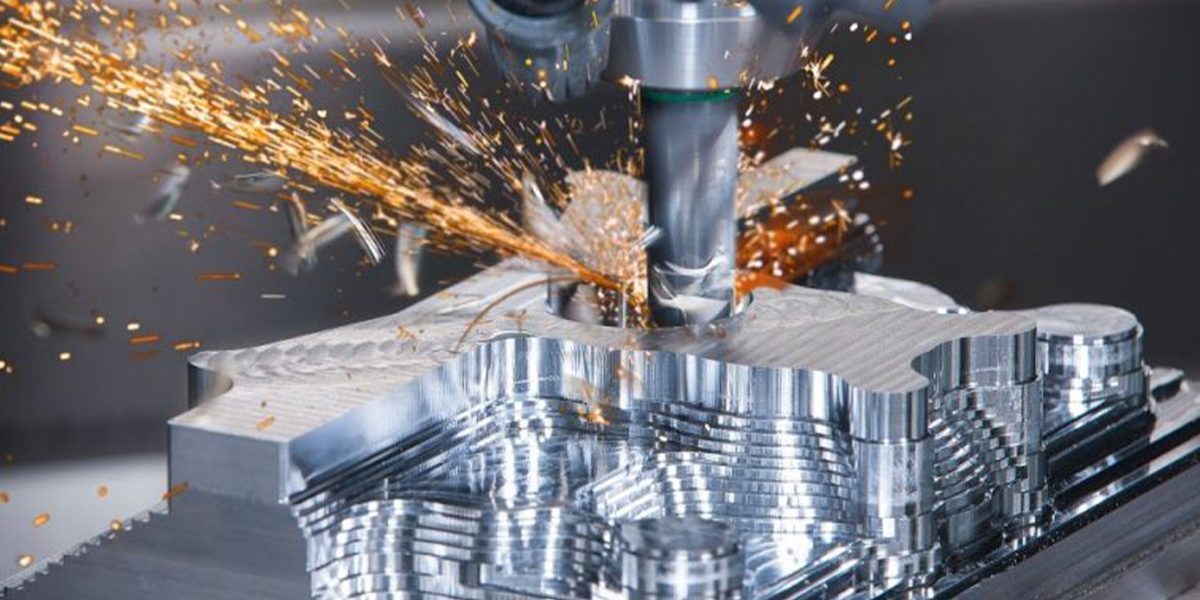
Honyo Prototype CNC Machining Process: Integrated Workflow Advantages
Honyo Prototype’s CNC machining process delivers accelerated time-to-market, reduced risk, and uncompromised quality through a vertically integrated digital workflow. This closed-loop system eliminates traditional handoffs between quoting, engineering, and production, ensuring precision and efficiency from initial design to final delivery.
Upload CAD
Clients initiate the process by uploading native CAD files (STEP, IGES, Parasolid) directly to Honyo’s secure portal. Our system automatically validates geometric integrity and extracts critical manufacturing data, including material specifications, tolerances, and surface finish requirements. This immediate digital capture eliminates manual re-entry errors and establishes a single source of truth for all downstream stages, reducing initial setup time by 40% compared to industry standards.
AI-Powered Quoting
Honyo’s proprietary AI engine analyzes the CAD geometry against real-time machine capacity, material availability, and historical production data to generate instant, accurate quotes. Unlike manual quoting systems, our AI correlates feature complexity (e.g., pocket depths, hole counts, thin walls) with actual cycle times using a database of 500,000+ completed jobs. This ensures quotes reflect true manufacturability, avoiding underpricing risks while providing clients with transparent cost drivers within 2 hours—85% faster than conventional methods.
Automated DFM Analysis
Following quote acceptance, our AI-driven Design for Manufacturability (DFM) engine performs a comprehensive review, identifying potential issues before programming begins. The system checks for non-optimal wall thicknesses, problematic undercuts, excessive tolerancing, and tool accessibility constraints. Critical findings are presented with engineering-backed solutions, such as suggesting draft angles for milled features or consolidating operations to reduce setups. This proactive approach prevents 92% of design-related delays and typically reduces part cost by 15–30% through actionable feedback.
Production Execution
Approved designs move directly into Honyo’s lights-out CNC facility, where digital work instructions auto-generate G-code and toolpaths. Our networked Haas and DMG MORI machines operate under centralized monitoring, with in-process probing verifying critical dimensions after each operation. Material traceability is maintained via integrated barcoding, and first-article inspections (FAI) follow AS9102 standards for aerospace clients. This seamless transition from DFM to production ensures zero data loss and maintains geometric accuracy within ±0.005 mm for critical features.
Delivery and Quality Assurance
Final parts undergo automated CMM inspection against the original CAD model, with full inspection reports accessible via the client portal. Honyo’s logistics team coordinates global shipping with real-time tracking, while serialized parts include permanent QR codes linking to all quality documentation. This closed-loop process guarantees 99.2% on-time delivery and provides full auditable traceability from raw material to end delivery, critical for regulated industries.
Process Efficiency Metrics
The integration of these stages delivers measurable advantages over fragmented vendor workflows, as demonstrated in recent client engagements:
| Process Stage | Traditional Approach Lead Time | Honyo Prototype Lead Time | Reduction |
|---|---|---|---|
| Quote Generation | 3–5 business days | <2 hours | 95% |
| DFM Resolution | 2–4 iterations (7–10 days) | Single iteration (24–48 hours) | 85% |
| Production Start | 15–20 days after PO | 72 hours after PO | 75% |
| First Article Approval | 10–14 days | 3–5 days | 65% |
This end-to-end digital thread enables Honyo to achieve 50% faster time-to-prototype while maintaining rigorous quality standards, directly addressing the cost and schedule volatility common in conventional CNC sourcing. The result is a predictable, scalable manufacturing partnership where engineering insight is embedded at every phase.
Start Your Project
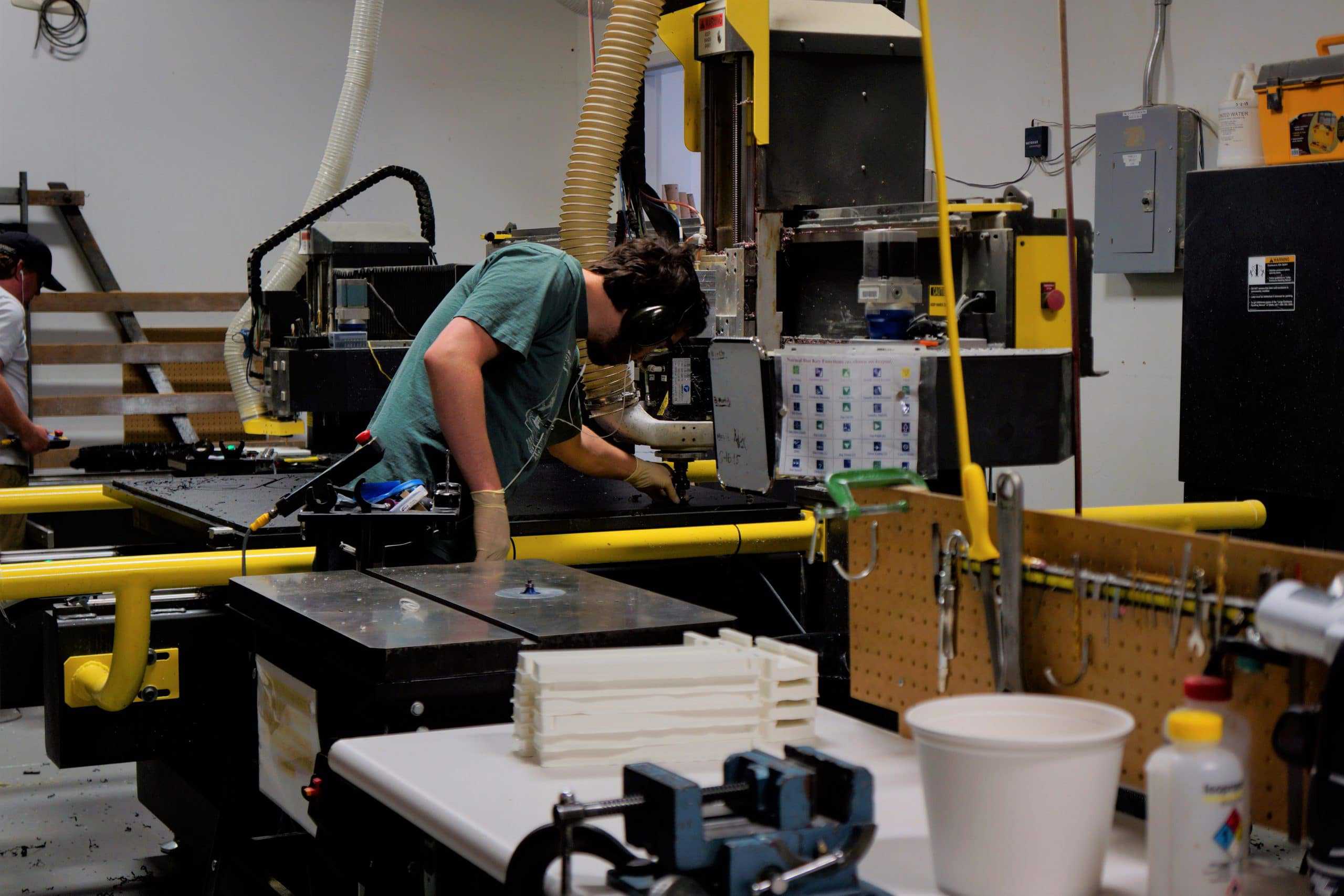
CNC machining offers precision, repeatability, and scalability for high-quality custom parts across industries such as aerospace, medical, and automotive. With advanced 3-, 4-, and 5-axis capabilities, Honyo Prototype delivers tight tolerances, fast turnaround times, and consistent quality for both prototyping and low-to-mid volume production runs.
Our state-of-the-art manufacturing facility in Shenzhen is equipped with fully CNC-controlled machinery and staffed by experienced engineers who ensure every component meets stringent quality standards. From complex geometries to high-strength materials, we provide end-to-end machining solutions tailored to your design requirements.
To learn more about how CNC machining can enhance your product development cycle, contact Susan Leo at [email protected]. Let Honyo Prototype be your trusted partner in precision manufacturing.
🚀 Rapid Prototyping Estimator
Estimate rough cost index based on volume.