
Contents
Manufacturing Insight: 8 Gauge Sheet Metal
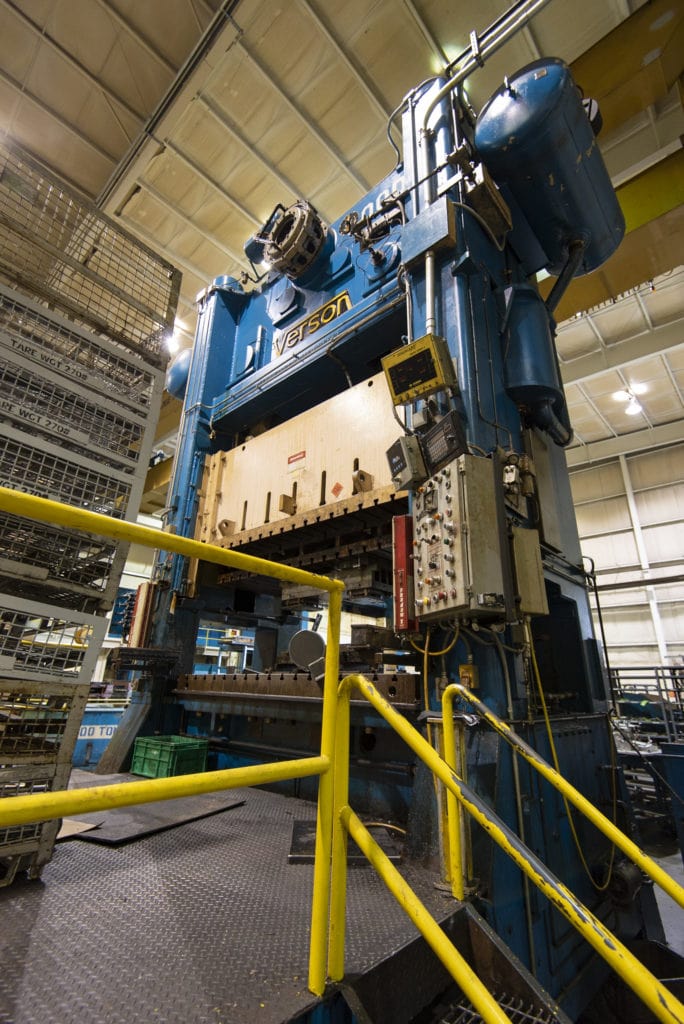
Precision 8 Gauge Sheet Metal Fabrication for Demanding Applications
At Honyo Prototype, we specialize in high-integrity fabrication of 8 gauge sheet metal, a critical material choice for structural components requiring robust strength and durability. With a nominal thickness of 0.1644 inches (4.175mm), 8 gauge steel, aluminum, or stainless steel delivers exceptional load-bearing capacity while maintaining workability for complex geometries—making it ideal for industrial enclosures, machinery frames, and transportation infrastructure. Our advanced manufacturing ecosystem ensures precision bending, forming, and assembly of this mid-weight gauge, where material stability and tolerance control are non-negotiable.
Leveraging state-of-the-art fiber laser cutting, CNC press brakes with ±0.005-inch accuracy, and certified welding protocols, we mitigate common challenges like warping or springback inherent in thicker gauges. Every 8 gauge component undergoes rigorous in-process inspection to uphold dimensional consistency and structural integrity, adhering strictly to ASME Y14.5 and client-specific requirements.
Accelerate your prototyping or low-volume production with Honyo’s Online Instant Quote platform. Upload your 3D CAD file or technical drawing to receive a detailed, transparent cost analysis and lead time estimate within minutes—no manual RFQ delays. This seamless integration of engineering expertise and digital procurement ensures your 8 gauge projects transition from concept to certified hardware faster, with uncompromised quality. Partner with us for fabrication where material performance meets manufacturing excellence.
Technical Capabilities
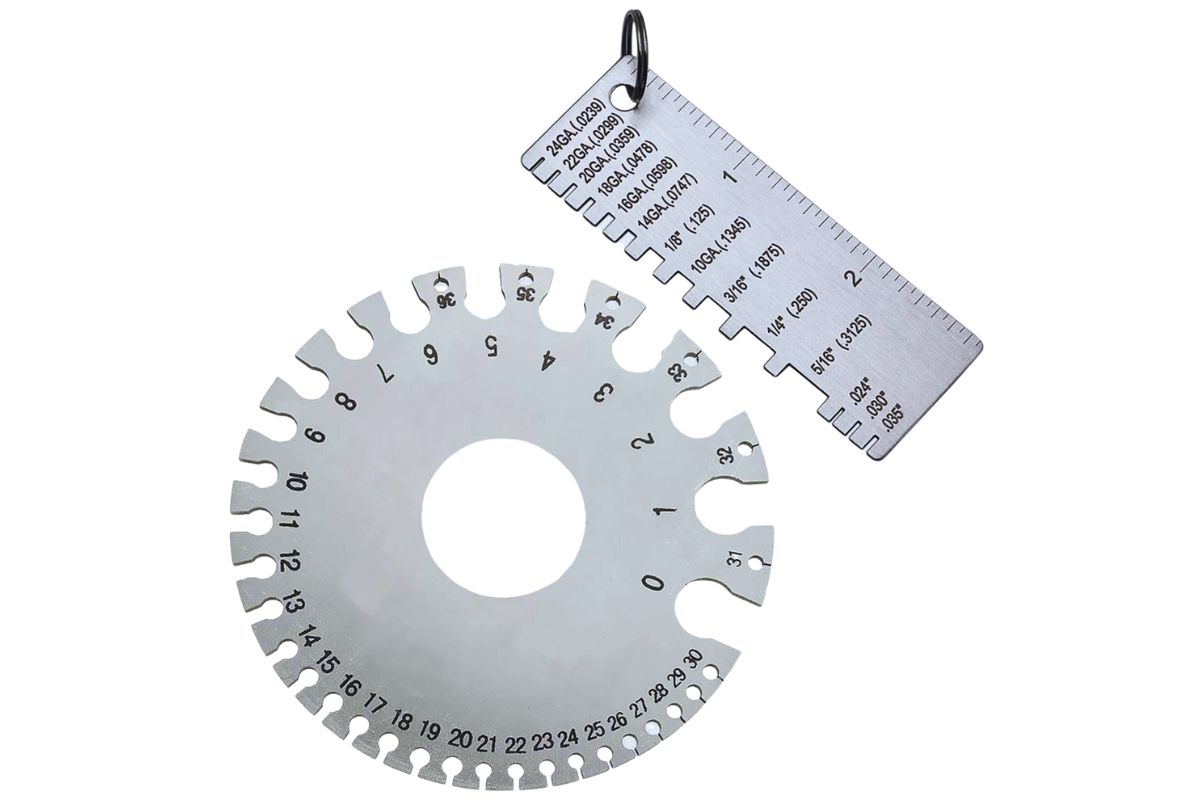
8 gauge sheet metal refers to a standardized thickness defined by the American Wire Gauge (AWG) system, commonly used in North America for sheet metal fabrication. For steel, 8 gauge corresponds to 0.1719 inches (4.366 mm). Equivalent thicknesses vary slightly by material due to differences in density and manufacturing standards, but in practice, sheet metal of the same gauge is produced to consistent dimensional tolerances regardless of material.
The following table outlines the technical specifications and fabrication considerations for 8 gauge material across common fabrication processes—laser cutting, bending, and welding—for key materials including aluminum, steel, ABS, and nylon. Note that ABS and nylon are not metals and are not typically referred to in gauge terms; however, for comparative purposes, 8 gauge equivalent thickness (4.366 mm) is used.
| Material | Thickness (in/mm) | Laser Cutting Compatibility | Bending Considerations | Welding Compatibility | Notes |
|---|---|---|---|---|---|
| Steel (Mild Steel) | 0.1719 in (4.366 mm) | Excellent – easily cut with fiber or CO₂ lasers; clean edges with minimal dross using proper assist gas (O₂ or N₂) | Requires high tonnage press brake; minimum bend radius of ~0.125 in (3.2 mm) recommended to avoid cracking; springback ~2–4° | Excellent – compatible with MIG, TIG, and spot welding; pre-cleaning required for consistent results | Most common material for 8 gauge applications; high strength and weldability |
| Aluminum (5052 or 6061) | 0.1719 in (4.366 mm) | Good – requires higher energy due to reflectivity and thermal conductivity; fiber lasers preferred; N₂ assist recommended | Moderate – higher springback (~5–7°); minimum bend radius of ~0.1875 in (4.8 mm) advised; prone to cracking if not properly annealed | Moderate – weldable with TIG or MIG; requires thorough cleaning and specialized filler alloys; 6061 less weldable than 5052 | Lightweight and corrosion-resistant; reflective surfaces require laser safety precautions |
| ABS (Acrylonitrile Butadiene Styrene) | ~4.366 mm (equivalent) | Good – easily cut with CO₂ lasers; may produce molten edge requiring post-processing; avoid excessive power to limit charring | Limited – thermoplastic behavior; can be heat-formed but not bent like metal; prone to warping under stress | Not weldable in traditional sense; joined via solvent bonding, adhesive, or ultrasonic welding | Not a metal; gauge designation not standard; used in non-structural enclosures or prototypes |
| Nylon (Polyamide) | ~4.366 mm (equivalent) | Moderate – CO₂ lasers can cut but may cause melting or flare-ups; requires precise control and ventilation | Poor – not suitable for metal-style bending; can be thermoformed with controlled heating | Not weldable using arc methods; compatible with hot gas or ultrasonic welding | High toughness and chemical resistance; used in wear components; flammable during laser processing |
Summary Notes:
Laser cutting of 8 gauge materials is highly effective for metals, especially steel and aluminum, with proper parameter tuning.
Bending 8 gauge steel or aluminum demands robust tooling due to material thickness; bend allowances and springback must be factored into design.
Welding is viable for steel and aluminum, but aluminum requires greater process control.
ABS and nylon, while machinable and laser-cuttable, are not suitable for metal-forming techniques like press braking or arc welding and are not true “sheet metal” materials. Their inclusion here is for dimensional comparison only.
From CAD to Part: The Process
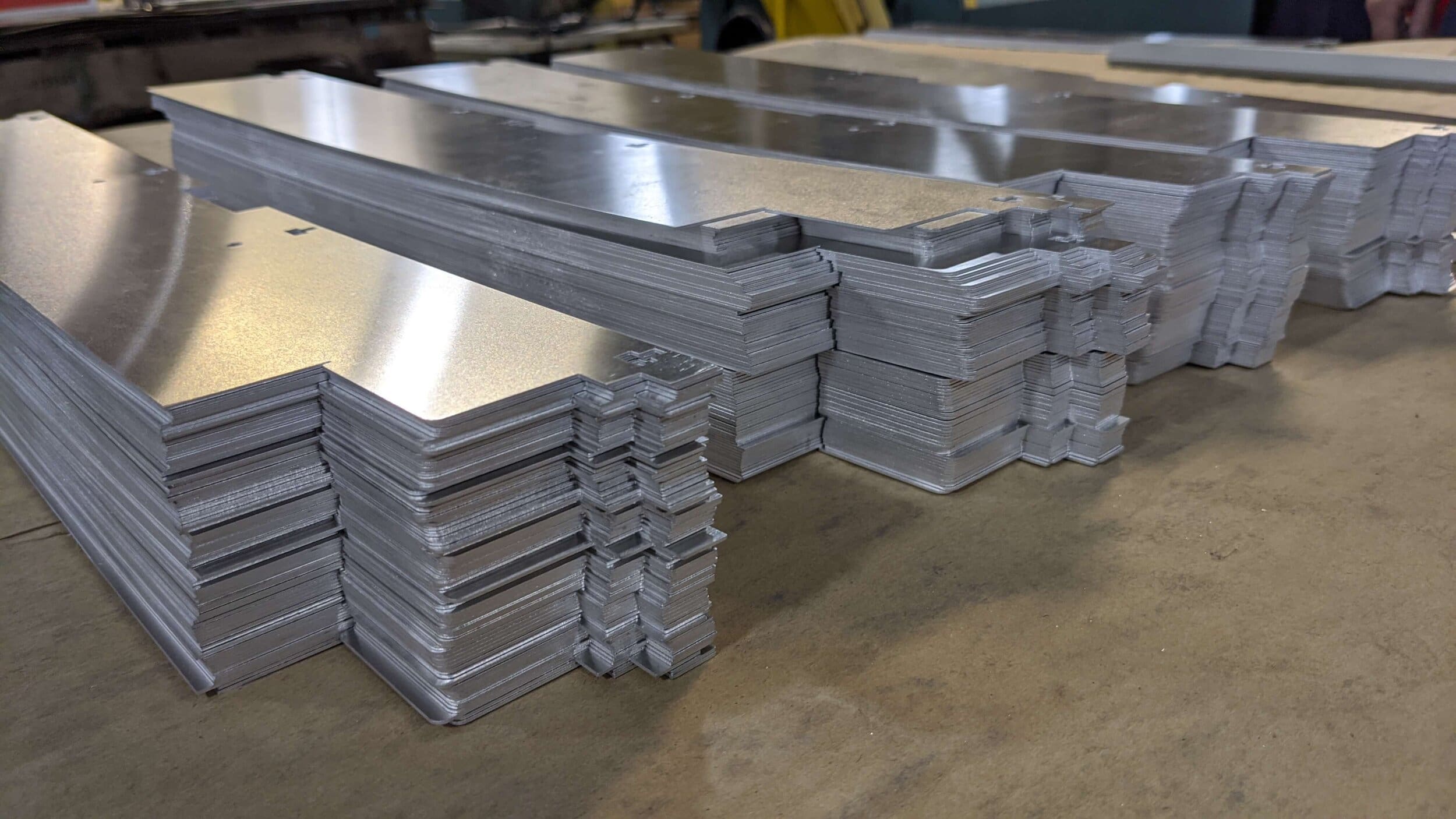
Honyo Prototype employs a rigorously defined workflow for 8 gauge sheet metal fabrication, ensuring precision, efficiency, and adherence to client specifications. This process integrates advanced technology with expert engineering oversight, specifically calibrated for the material properties and dimensional challenges of 8 gauge steel (0.1644 inches / 4.173 mm thick). Below is the detailed sequence:
CAD Upload and Material Specification
Clients initiate the process by uploading native or neutral format CAD files (STEP, IGES, DWG/DXF) via our secure customer portal. Critical parameters including material type (e.g., ASTM A36 cold-rolled steel, 304 stainless), finish requirements, and geometric tolerances are specified during upload. For 8 gauge material, we validate that the design accommodates minimum bend radii (typically 0.1875–0.250 inches for steel) and hole-to-edge distances to prevent deformation during forming.
AI-Powered Preliminary Quoting
Our proprietary AI quoting engine analyzes the CAD geometry, material selection, and finish requirements to generate an instant preliminary quote. The system calculates material utilization, estimated machine hours (laser cutting, punching, bending), and secondary operation needs. For 8 gauge sheets, the AI specifically accounts for higher tonnage requirements in press braking, slower cutting speeds, and potential laser power adjustments compared to thinner gauges. This quote includes a preliminary lead time estimate but is flagged for mandatory engineering review due to the structural demands of 8 gauge fabrication.
Engineering-Led DFM Analysis
All 8 gauge projects undergo mandatory Design for Manufacturability (DFM) review by our senior manufacturing engineering team. This phase identifies and resolves critical issues unique to thicker materials:
Verification of bend allowances and springback compensation for press brake tooling
Assessment of hole punching feasibility (requiring higher tonnage presses)
Evaluation of cut quality for fiber laser systems at 8 gauge thickness
Confirmation that flange lengths exceed minimum requirements to prevent tool interference
Material grain direction analysis for critical bends to avoid cracking
Clients receive a formal DFM report with actionable recommendations within 24 business hours. No production proceeds until DFM approval is obtained.
Precision Production Execution
Approved 8 gauge orders enter production with strict process controls:
Cutting: Fiber laser systems operate at optimized power (typically 6–8 kW) and reduced feed rates to ensure clean edges on 4.173 mm material. Nesting efficiency is prioritized to minimize waste of costly thick stock.
Forming: CNC press brakes with 100+ ton capacity execute bends using custom tooling; real-time springback compensation algorithms maintain angular accuracy within ±0.5°.
Secondary Operations: Deburring, welding (MIG/TIG as specified), and finishing (powder coating, plating) follow AS9100-controlled procedures. All dimensions are verified against first-article inspection (FAI) per ASME Y14.5.
Quality-Controlled Delivery
Final inspection includes dimensional validation using CMM or optical comparators, material certification traceability, and finish verification. For 8 gauge components, we specifically measure bend consistency and edge integrity. Shipments include full documentation: FAI reports, material certs, and process validation records. Standard lead time for 8 gauge projects is 10–15 business days after DFM sign-off, with expedited options available. Real-time logistics tracking is provided via the client portal.
Critical 8 Gauge Process Parameters
The table below outlines key operational differences between standard fabrication and 8 gauge-specific requirements:
| Parameter | Standard Gauge (e.g., 16ga) | 8 Gauge Requirement at Honyo |
|---|---|---|
| Laser Power | 2–4 kW | 6–8 kW |
| Press Brake Tonnage | 20–50 tons | 100+ tons |
| Minimum Bend Radius | 0.0625–0.125 in | 0.1875–0.250 in |
| Hole Diameter Minimum | 0.06 in (material thickness) | 0.25 in (avoid punching) |
| Typical Lead Time Adder | Baseline | +2–3 days |
This structured approach ensures 8 gauge components meet stringent functional and dimensional requirements while leveraging Honyo’s expertise in thick-sheet fabrication. All process deviations are documented and communicated transparently to maintain client trust and project integrity.
Start Your Project
Looking for high-precision fabrication in 8 gauge sheet metal? Honyo Prototype delivers professional metalworking solutions with fast turnaround and strict quality control. Our manufacturing facility in Shenzhen is equipped to handle low to mid-volume production runs with consistent accuracy.
Contact Susan Leo for project inquiries, quotes, or technical specifications.
Email: [email protected]
Leverage our Shenzhen-based factory for competitive pricing, scalable production, and reliable delivery—ideal for prototyping through to full-scale manufacturing.
🚀 Rapid Prototyping Estimator
Estimate rough cost index based on volume.