
Contents
Manufacturing Insight: 7075 Aluminum Young’S Modulus
Material Property Context for Precision Engineering
Understanding the Young’s modulus of 7075 aluminum alloy—approximately 71.7 GPa in the T6 temper—is critical for structural applications demanding high strength-to-weight ratios. This property directly influences deflection behavior under load, making it essential for aerospace, defense, and high-performance automotive components where dimensional stability cannot be compromised.
Honyo Prototype’s CNC Machining Expertise
At Honyo Prototype, we leverage deep material science knowledge to optimize CNC machining processes for 7075 aluminum. Our precision milling, turning, and multi-axis capabilities account for this alloy’s stiffness characteristics, ensuring tight tolerances (±0.005 mm) and surface integrity even in complex geometries. We mitigate challenges like work hardening and thermal distortion through proprietary toolpath strategies and in-process metrology, delivering parts that meet stringent AS9100 and ISO 2768 standards.
Accelerate Your Development Cycle
Validate designs faster with our Online Instant Quote platform. Upload CAD files in STEP, IGES, or native formats to receive detailed manufacturability feedback and competitive pricing within minutes—not hours. This seamless integration of material expertise and digital procurement streamlines your path from prototype to production, reducing time-to-market for mission-critical components.
Material Performance Reference
| Property | Value for 7075-T6 Aluminum | Relevance to Machining |
|——————-|—————————-|————————|
| Young’s Modulus | 71.7 GPa | Predicts elastic deformation under cutting forces; informs fixture design and step-over optimization |
| Ultimate Tensile Strength | 572 MPa | Dictates tool selection and feed rates to prevent chatter |
| Elongation at Break | 11% | Influences chip evacuation strategy to avoid recutting |
Technical Capabilities
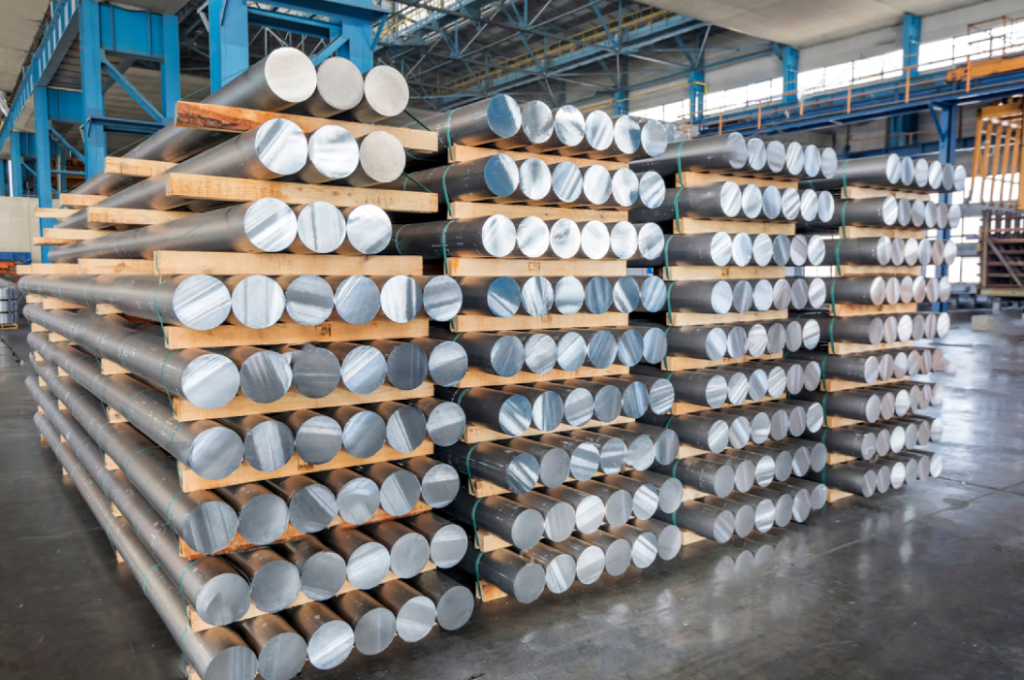
Young’s Modulus for 7075 aluminum is a critical mechanical property affecting dimensional stability and deflection during high-precision machining processes such as 3/4/5-axis milling and turning. With a Young’s Modulus of approximately 71.7 GPa (10.4 × 10⁶ psi), 7075 aluminum exhibits high stiffness relative to other aluminum alloys, making it well-suited for tight-tolerance applications in aerospace, defense, and performance engineering components. However, its stiffness is significantly lower than steel, which influences fixturing, toolpath strategy, and compensation for tool and part deflection during milling and turning operations.
In multi-axis milling, the lower stiffness compared to steel requires optimized cutting parameters and rigid setups to maintain tolerances typically within ±0.0005″ (12.7 µm) or tighter. Turning operations on 7075 aluminum benefit from high-speed machining but must account for thermal expansion and workpiece flex, especially in slender geometries. When compared to engineering plastics such as ABS and nylon, 7075 aluminum offers far superior dimensional stability and thermal resistance, though plastics may be preferred in non-structural, lightweight applications where tight tolerances are less critical.
Below is a comparative table of Young’s Modulus and relevant machining characteristics for selected materials in high-precision manufacturing environments.
| Material | Young’s Modulus (GPa) | Young’s Modulus (10⁶ psi) | Typical Use in 3/4/5-Axis Milling | Turning Suitability | Tight Tolerance Capability (Typical) | Notes for Precision Machining |
|---|---|---|---|---|---|---|
| 7075 Aluminum | 71.7 | 10.4 | High – common in aerospace components | High – excellent chip control | ±0.0005″ (12.7 µm) or better | High stiffness for aluminum; requires sharp tools and coolant to prevent built-up edge; stress relief critical for stability |
| 6061 Aluminum | 68.9 | 10.0 | High – general-purpose machining | High – good machinability | ±0.0005″ (12.7 µm) | Lower strength than 7075; better corrosion resistance; less prone to warpage |
| Mild Steel (1018) | 200–207 | 29.0–30.0 | Moderate – used for fixtures, housings | High – robust turning performance | ±0.0002″ (5 µm) with precision equipment | High stiffness reduces deflection; generates more heat and tool wear than aluminum |
| Stainless Steel (304) | 193 | 28.0 | Moderate – challenging due to work hardening | Moderate – requires rigid setup | ±0.0005″ (12.7 µm) with care | Lower thermal conductivity; prone to galling; high tool wear |
| ABS (Acrylonitrile Butadiene Styrene) | 2.0–3.5 | 0.29–0.51 | Moderate – low-speed, light cuts | Limited – poor heat resistance | ±0.005″ (127 µm) | Low stiffness; high thermal expansion; requires sharp tools and minimal cutting forces |
| Nylon (Polyamide 6/6) | 2.6–3.0 | 0.38–0.44 | Low to Moderate – prone to flexing | Moderate – flexible but tough | ±0.005″ (127 µm) | Elastic recovery affects dimensional accuracy; sensitive to moisture absorption |
Summary for 7075 Aluminum in Tight-Tolerance Machining:
7075 aluminum offers a favorable balance of strength and stiffness, enabling high-precision machining in complex 3/4/5-axis operations. Its Young’s Modulus supports good dimensional control, though not to the level of steel. Successful tight-tolerance machining requires properly aged (typically T6 temper), stress-relieved stock, rigid fixturing, and optimized toolpaths to minimize vibration and thermal effects. When compared to plastics like ABS and nylon, 7075 aluminum is vastly superior for tight-tolerance structural applications, though with higher density and machining cost.
From CAD to Part: The Process
Honyo Prototype’s Technical Process for 7075 Aluminum Components with Young’s Modulus Specification
When processing parts requiring precise Young’s modulus compliance for 7075 aluminum (specifically T6 temper), Honyo integrates material science rigor into every phase of our CAD-to-delivery workflow. This ensures mechanical properties meet aerospace, defense, and high-performance industrial standards where elastic modulus directly impacts structural integrity.
Upload CAD
Upon receiving CAD files, our system immediately flags material callouts for 7075 aluminum. Engineers verify that the design accounts for 7075-T6’s inherent Young’s modulus value of 71.7 GPa (per ASTM B221). Critical geometric features—such as thin walls, cantilevers, or load-bearing interfaces—are cross-referenced against this modulus to preempt deflection risks during downstream validation. Non-compliant CAD annotations (e.g., unspecified temper) trigger automated requests for clarification before progression.
AI Quote Generation
Our AI-driven quoting engine dynamically factors 7075 aluminum’s Young’s modulus into cost and lead time calculations. The system references real-time material batch certifications from our certified suppliers (e.g., Kaiser Aluminum, Alcoa) to confirm modulus consistency. Quotes explicitly state modulus tolerance adherence (±0.5 GPa) and include notes on how design complexity interacts with 7075’s high stiffness-to-weight ratio. If the CAD geometry suggests potential stress concentrations exceeding 7075’s yield strength (503 MPa), the quote flags mandatory DFM review.
DFM Analysis
During Design for Manufacturability, our engineers perform finite element analysis (FEA) simulations using the exact Young’s modulus of 71.7 GPa to model deflection under load. Key checks include:
Verifying that clamping forces during machining won’t induce permanent deformation due to 7075’s high modulus.
Assessing thermal stress risks during heat treatment (T6 tempering) where modulus stability is critical.
Recommending geometric adjustments if simulated deflections exceed 0.05 mm under operational loads.
The DFM report documents all modulus-sensitive decisions, including suggested tolerances for features where elastic recovery affects dimensional accuracy.
Production Execution
In manufacturing, 7075 aluminum billets undergo modulus validation via ultrasonic velocity testing per ASTM E494 before machining. Each batch’s certified modulus data (sourced from mill test reports) is logged in our traceability system. CNC programs are optimized to minimize residual stress—critical for maintaining modulus consistency—using lower spindle speeds and controlled depth-of-cut strategies specific to 7075’s properties. All post-machining heat treatments (e.g., solution heat treatment at 482°C ±5°C) are monitored to ensure no modulus degradation occurs.
Delivery Certification
Final inspection includes modulus verification for critical components using non-destructive ultrasonic methods. Batch-specific material certificates detailing Young’s modulus (with actual measured values), along with heat treatment records and FEA validation reports, are packaged with the shipment. For aerospace clients, we provide full AMS 4027 compliance documentation, including modulus test data traceable to NIST standards.
Material Property Reference for 7075-T6 Aluminum
| Property | Value | Standard |
|————————-|————-|————-|
| Young’s Modulus | 71.7 GPa | ASTM E111 |
| Tensile Yield Strength | 503 MPa | ASTM B557 |
| Elongation at Break | 11% | ASTM B557 |
This end-to-end process ensures 7075 aluminum components delivered by Honyo Prototype consistently achieve the Young’s modulus required for mission-critical applications, with zero tolerance for unverified material properties. All stages are governed by our AS9100D-certified quality management system, providing clients with auditable traceability from raw material to final part.
Start Your Project
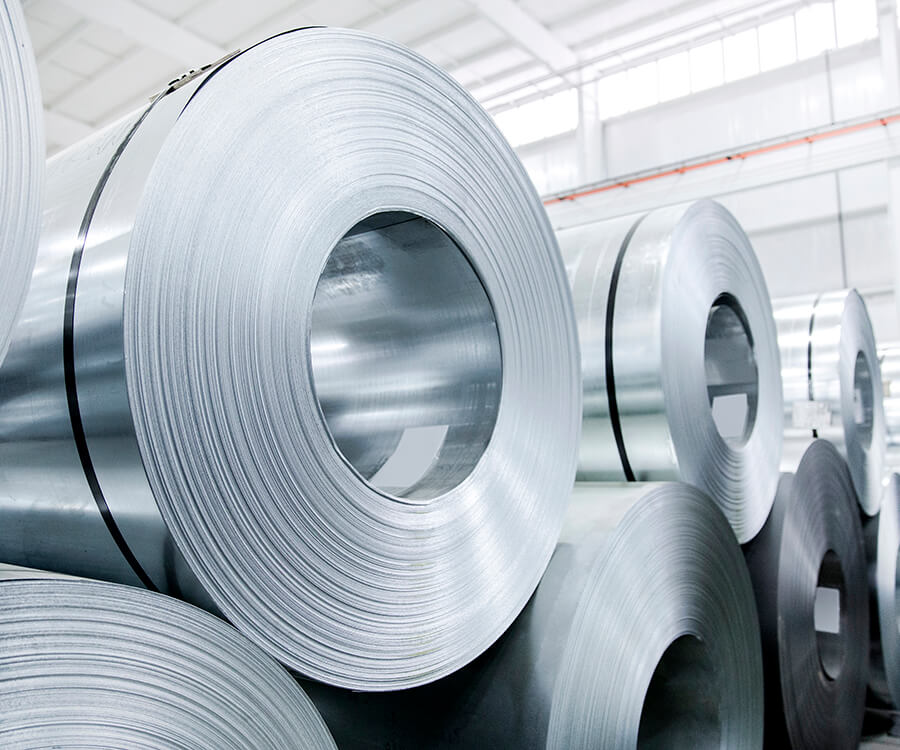
For precise engineering applications requiring the Young’s modulus of 7075 aluminum, rely on Honyo Prototype’s material expertise and advanced manufacturing capabilities. Our Shenzhen-based factory ensures tight tolerances and consistent material properties for prototyping and low-volume production.
Contact Susan Leo at [email protected] for technical specifications, material data sheets, or engineering support.
🚀 Rapid Prototyping Estimator
Estimate rough cost index based on volume.