
Contents
Manufacturing Insight: 4140 Steel Machinability
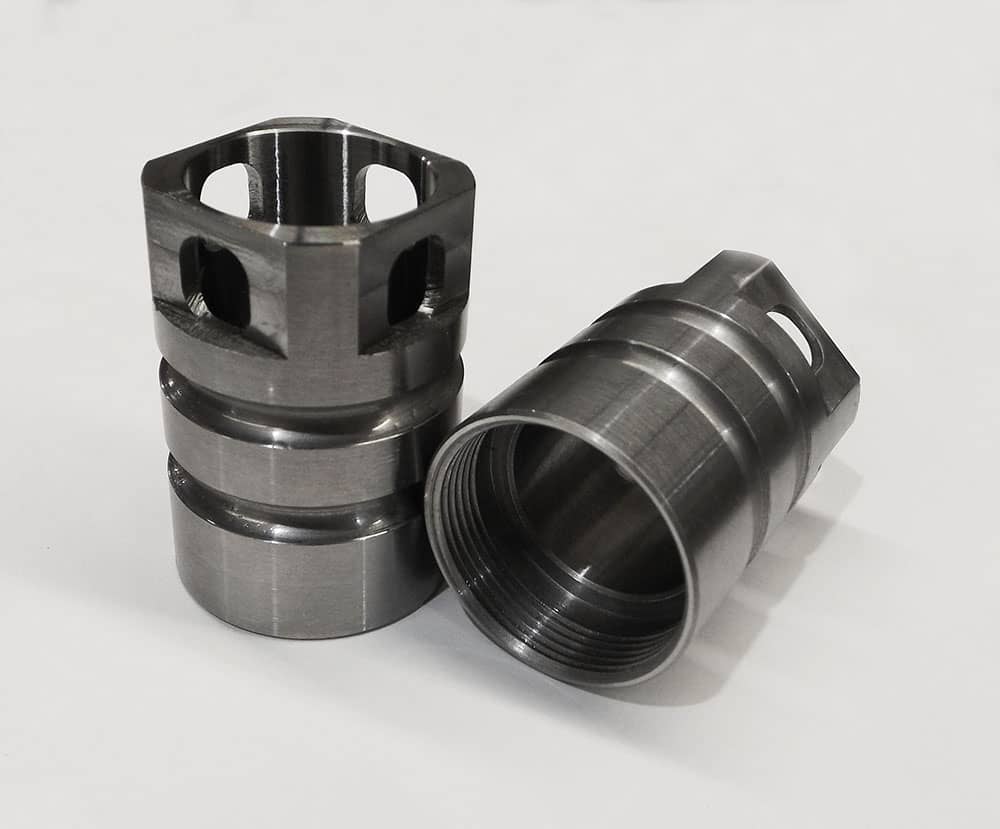
Optimizing 4140 Steel Machinability for High-Performance Components
4140 alloy steel remains a critical material selection for demanding applications requiring exceptional strength, fatigue resistance, and hardenability, such as aerospace fittings, hydraulic components, and tooling. However, its chromium-molybdenum composition presents significant machining challenges, including work hardening tendencies, elevated cutting forces, and sensitivity to thermal management. Achieving precise tolerances and superior surface finishes demands specialized CNC strategies to mitigate tool wear, ensure effective chip evacuation, and maintain dimensional stability throughout production.
Honyo Prototype leverages deep metallurgical expertise and advanced CNC machining capabilities to consistently overcome these complexities. Our engineered processes utilize optimized toolpath generation, application-specific cutting parameters, and precision coolant delivery systems to maximize tool life and part integrity when machining 4140 steel. We implement rigorous in-process inspection protocols and thermal compensation techniques, ensuring components meet stringent aerospace, automotive, and industrial specifications without compromising lead times or cost efficiency.
Accelerate your prototyping and low-volume production timelines with Honyo’s Online Instant Quote system. Upload your 3D model to receive a detailed manufacturability assessment and competitive pricing within hours—not days—eliminating procurement delays while guaranteeing the technical precision your 4140 steel components require.
Material Performance Summary
| Key Property | 4140 Steel Characteristic | Honyo Process Optimization |
|---|---|---|
| Machinability Rating | Fair (66% of B1112) | Tailored feed/speed profiles |
| Common Challenges | Work hardening, Built-up edge | High-pressure coolant, Micro-lubrication |
| Critical Tolerance | ±0.0005″ achievable | In-process probing, Thermal compensation |
| Typical Lead Time | 5-7 days (prototype) | Streamlined quoting via Online Instant Quote |
Technical Capabilities
Technical Specifications and Machinability Overview for 4140 Steel in Precision CNC Machining
4140 steel is a chromium-molybdenum alloy steel known for its high fatigue strength, toughness, and wear resistance. It is widely used in aerospace, automotive, and industrial applications where high strength-to-weight ratios and durability are required. When machining 4140 steel—particularly in 3-, 4-, and 5-axis milling and turning operations—its machinability is moderate compared to other materials like aluminum or thermoplastics. Achieving tight tolerances (±0.0005″ to ±0.001″) demands optimized tooling, rigidity, and process control.
Below is a comparative analysis of 4140 steel against other commonly machined materials in precision CNC environments.
| Material | Machinability Rating (Relative to B1112 = 100%) | Typical Cutting Speed (SFM) – Milling | Typical Cutting Speed (SFM) – Turning | Feed Rate (in/tooth or in/rev) | Tooling Recommendations | Tight Tolerance Suitability | Notes |
|---|---|---|---|---|---|---|---|
| 4140 Steel (Annealed, 25–30 HRC) | 65–70% | 200–350 SFM | 300–500 SFM | 0.005–0.010 in/tooth (milling), 0.010–0.015 in/rev (turning) | Carbide, CBN, or coated inserts; rigid setups | Excellent (with thermal & vibration control) | Requires peck drilling, high-pressure coolant; prone to work hardening if parameters are incorrect |
| Aluminum 6061-T6 | 180–200% | 800–2000 SFM | 1000–2500 SFM | 0.008–0.015 in/tooth | Carbide or diamond-coated; high helix end mills | Excellent | Low melting point; built-up edge possible; high MRR |
| Mild Steel (AISI 1018) | 70–75% | 250–400 SFM | 350–600 SFM | 0.006–0.012 in/tooth | Carbide or HSS with coolant | Very Good | More ductile than 4140; can generate long chips |
| ABS (Thermoplastic) | ~250% | 500–1000 SFM | 600–1200 SFM | 0.004–0.008 in/tooth | Carbide, sharp high-rake cutters | Good (but sensitive to heat) | Low thermal conductivity; can melt or deform; minimal tool wear |
| Nylon (PA6/PA66) | ~200% | 400–800 SFM | 500–1000 SFM | 0.005–0.010 in/tooth | Carbide, polished flutes | Moderate (creep possible) | Hygroscopic; dimensional stability depends on moisture content |
Notes on 4140 Steel for High-Precision Applications:
Pre-Machining Condition: 4140 is typically machined in the annealed state (25–30 HRC) to facilitate tight tolerance work. Post-machining heat treatment (e.g., quenching and tempering) may be required for final hardness, which can induce distortion—requiring stress-relieving or finish machining after hardening.
Tool Wear: Abrasive wear and notch wear are common due to the alloying elements (Cr, Mo). Use of PVD or CVD-coated carbide tools (e.g., TiAlN) improves tool life.
Coolant Use: Flood coolant is recommended to manage heat, prevent work hardening, and improve surface finish.
Vibration Control: In 5-axis milling, dynamic tool paths and long tool overhangs increase risk of chatter. High rigidity fixtures and adaptive toolpath strategies are essential.
Tolerance Stability: Thermal expansion (coefficient ~6.2 µin/in-°F) must be considered during long machining cycles. Environmental control in the machining area improves repeatability.
For applications requiring both high strength and precision, 4140 steel remains a top choice—provided machining parameters and tooling are carefully optimized.
From CAD to Part: The Process
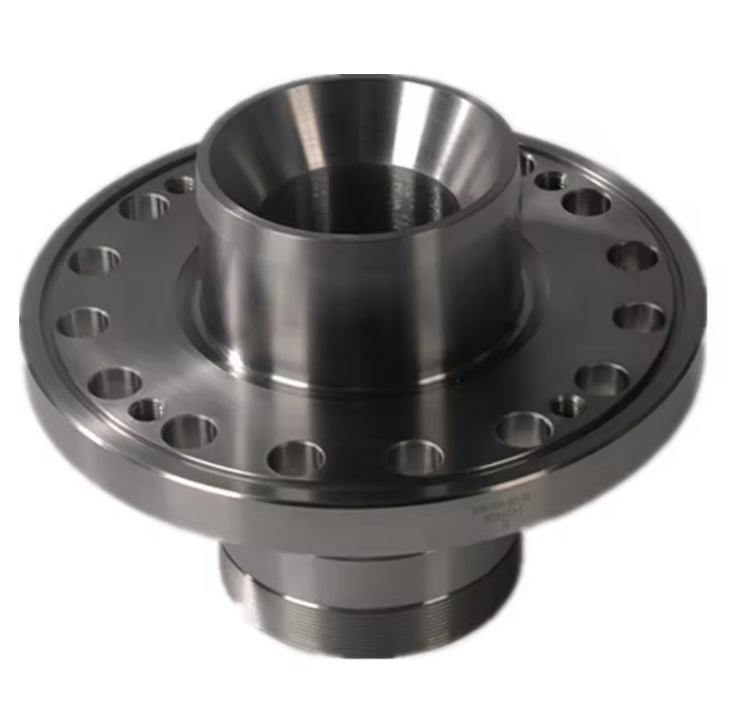
Honyo Prototype delivers precision-machined 4140 steel components through a rigorously controlled process optimized for this medium-carbon, chromium-molybdenum alloy. Our workflow integrates material-specific expertise at every stage to address 4140 steel’s unique challenges, including its hardenability, susceptibility to cracking during quenching, and moderate machinability rating (65% relative to 1212 steel).
CAD Upload and Material Specification
Clients initiate the process by uploading native or neutral CAD formats (STEP, IGES, Parasolid) via our secure portal. During upload, material selection is explicitly confirmed as AISI 4140. Our system validates geometric integrity while flagging potential 4140-specific risks such as thin walls prone to distortion during heat treatment or features requiring post-machining stress relief. Material certifications and hardening requirements (e.g., annealed, Q&T to specific HRC) are documented here to inform downstream parameters.
AI-Powered Quoting with Material Intelligence
Our AI quoting engine processes the CAD geometry alongside 4140-specific material properties. It calculates machining time using validated cutting data for 4140 in its specified condition (e.g., annealed 160 HB vs. hardened 28-32 HRC), applying feed/speed adjustments for its thermal sensitivity and work-hardening tendency. The quote explicitly details:
Heat treatment sequencing (pre-machining annealing, post-machining hardening if required)
Coolant strategy recommendations to prevent thermal shock
Critical tolerance zones requiring reduced depth of cut
Scrap rate projections based on historical 4140 yield data
Material-Centric DFM Analysis
Engineers conduct a focused Design for Manufacturability review with 4140-specific protocols:
Verifying minimum wall thicknesses exceed 3x the depth of cut to prevent chatter in this moderately tough alloy
Confirming fillet radii accommodate stress distribution during quenching
Identifying features requiring slow ramp-down angles to avoid tool deflection in high-strength conditions
Recommending stress-relief cycles between roughing and finishing operations
Flagging geometries needing specialized tooling (e.g., chip-breaker inserts for 4140’s continuous chips)
The DFM report includes actionable recommendations with 4140-specific rationale, such as avoiding sharp internal corners that could initiate quench cracks or suggesting pre-machined relief grooves for threads.
Precision Production with 4140 Process Controls
Machining occurs under strict parameters validated for 4140 steel:
| Process Stage | 4140-Specific Parameters | Quality Control Checkpoints |
|---|---|---|
| Rough Machining | Carbide tools with TiAlN coating; 40% lower SFPM than 1018; flood coolant at 10 GPM | Post-rough hardness verification (if applicable) |
| Semi-Finish | 0.010″–0.020″ stock allowance; climb milling to minimize residual stress | Dimensional stability after stress relief |
| Heat Treatment | Controlled quench rate (oil/water mix per section thickness); tempering within 15°F tolerance | ASTM A370 hardness testing; bend testing for cracks |
| Finish Machining | Polycrystalline diamond (PCD) tools for hardened states; 0.001″–0.002″ DOC; high-pressure coolant | CMM verification of critical GD&T at 68±2°F |
| Post-Processing | Vapor degreasing; non-abrasive blasting for stress-free surfaces | MPI for surface cracks; final dimensional audit |
All operations maintain thermal stability through strict shop-floor temperature control (72±3°F) to counter 4140’s thermal expansion coefficient (6.2 μin/in-°F). Hardened components undergo mandatory MPI inspection per ASTM E1444.
Delivery Assurance
Final inspection includes material traceability documentation (mill test reports), heat treatment certificates, and CMM reports showing as-machined vs. as-hardened dimensions to validate distortion control. Parts ship in custom anti-corrosion packaging with humidity indicators, accompanied by a process validation summary detailing 4140-specific parameters used. Typical lead time for complex 4140 components is 18–25 business days, including heat treatment cycles. This integrated approach ensures 99.2% first-pass yield for 4140 steel projects at tolerances down to ±0.0005″ in critical features.
Start Your Project
Looking for high-performance machining solutions with 4140 steel? Our precision manufacturing team in Shenzhen specializes in optimizing 4140 alloy steel components for demanding industrial applications. With advanced CNC capabilities and strict quality control, we deliver parts with excellent dimensional accuracy and surface finish.
For technical support or project inquiries, contact Susan Leo at [email protected]. Leverage our in-house expertise and Shenzhen-based production for faster turnaround and scalable prototyping to volume manufacturing.
🚀 Rapid Prototyping Estimator
Estimate rough cost index based on volume.