
Contents
Manufacturing Insight: 316 Stainless Steel Price Per Pound
Understanding 316 Stainless Steel Pricing for Precision Manufacturing
Accurate 316 stainless steel pricing per pound is critical for budgeting complex CNC machining projects, yet market volatility and material specifications often create uncertainty. At Honyo Prototype, we integrate real-time market rate analysis with deep metallurgical expertise to provide transparent, actionable cost estimates tailored to your component’s geometry, tolerances, and production volume. Our engineering team accounts for factors like material yield optimization, machining complexity, and finishing requirements—ensuring the quoted price reflects true manufacturability, not just raw material costs.
As a specialized CNC machining partner for aerospace, medical, and industrial clients, we leverage direct supplier relationships and in-house material science insights to navigate 316 stainless steel’s price fluctuations without compromising quality. This precision extends to our Online Instant Quote platform, where you input part specifications and receive a validated cost breakdown—including material, machining, and secondary operations—within minutes. Unlike generic pricing calculators, our system dynamically adjusts for 316 stainless steel’s unique challenges, such as work hardening during milling or corrosion-resistant finish requirements, delivering quotes engineered for production reality.
Partner with Honyo to transform material cost variables into a strategic advantage. Access real-time, project-specific 316 stainless steel pricing accuracy through our Online Instant Quote and accelerate your path from prototype to production.
Technical Capabilities
The query references “316 stainless steel price per pound” in the context of precision machining services such as 3/4/5-axis milling and turning with tight tolerance requirements. However, the price per pound of 316 stainless steel is a raw material commodity value and does not directly reflect machining service costs. Instead, the total manufacturing cost includes material cost, machining complexity, setup, labor, inspection, and overhead.
Below is a technical comparison of material characteristics relevant to precision CNC machining at Honyo Prototype, including 316 stainless steel, with data on machinability, typical applications, and approximate raw material price per pound (as of Q2 2024 market averages). This information supports decision-making for high-precision components requiring tight tolerances (±0.0002″ to ±0.001″).
| Material | Tensile Strength (psi) | Hardness (Rockwell B) | Machinability Rating (%) | Typical Price per Pound (USD) | Suitability for 3/4/5-Axis Milling | Suitability for Turning | Thermal Stability | Corrosion Resistance | Common Use Cases |
|---|---|---|---|---|---|---|---|---|---|
| 316 Stainless Steel | 80,000–90,000 | 79–85 HRB | 45% | $3.20 – $3.80 | Excellent (high rigidity, good finish) | Excellent (stable cuts with carbide tools) | High | Excellent | Medical devices, marine components, chemical processing |
| 6061-T6 Aluminum | 45,000 | 30 HRB | 90% | $1.10 – $1.40 | Excellent (fast material removal) | Excellent | Moderate | Good (with anodizing) | Aerospace, prototypes, heat sinks |
| 4140 Steel (Annealed) | 95,000 | 25 HRC | 60% | $1.50 – $1.90 | Good (requires rigid setup) | Good | High | Fair (prone to rust) | Industrial tooling, shafts, fixtures |
| ABS (Thermoplastic) | 6,000 | 85 Shore D | 95% | $1.80 – $2.30 | Very Good (low tool wear) | Very Good | Low | Excellent | Prototypes, enclosures, jigs |
| Nylon 6/6 | 11,000 | 80 Shore D | 80% | $2.40 – $3.00 | Good (chip control critical) | Good (coolant not used) | Low | Excellent | Gears, bushings, insulating parts |
Notes on Precision Machining at Honyo Prototype:
316 stainless steel is frequently selected for tight tolerance components due to its dimensional stability, corrosion resistance, and ability to hold fine features during multi-axis milling and Swiss turning operations. While the raw material cost is higher than aluminum or plastics, its performance in demanding environments justifies the investment.
For 3/4/5-axis CNC processes, toolpath optimization, coolant-through tooling, and in-process probing are employed to maintain tolerances below ±0.0005″. Material choice impacts cycle time—aluminum machines faster than stainless steel, reducing labor cost, while plastics like ABS and nylon require specialized tooling to prevent melting or burring.
All materials listed are compatible with Honyo Prototype’s ISO-compliant quality assurance processes, including CMM inspection and first-article reporting. Final project pricing is determined by geometry, volume, tolerances, and finishing requirements—not raw material cost alone.
From CAD to Part: The Process
Honyo Prototype 316 Stainless Steel Pricing Process Overview
Honyo Prototype employs a structured, technology-driven workflow to determine and deliver accurate 316 stainless steel pricing per pound, ensuring transparency and efficiency for B2B clients. The process begins with CAD file submission and culminates in on-time delivery, with cost validation at each stage.
Upload CAD
Clients initiate the process by uploading detailed CAD models to Honyo’s secure portal. Our system extracts critical geometric data including part volume, wall thickness, surface area, and feature complexity. For 316 stainless steel, this step calculates the theoretical raw material weight using industry-standard density values (0.29 lb/in³ for 316 SS). Accurate weight estimation is foundational to per-pound pricing, as deviations directly impact material cost allocation.
AI Quote Generation
Honyo’s proprietary AI engine processes the CAD-derived weight alongside real-time market variables. The algorithm ingests live London Metal Exchange (LME) stainless steel scrap indices, mill premiums, and regional surcharges updated hourly. Current base pricing for 316 stainless steel typically ranges from $24.00 to $28.50 per pound depending on alloy specifications (e.g., 316L vs. 316H) and order volume. The AI applies dynamic multipliers for secondary factors:
Order quantity brackets (e.g., +15% surcharge for <10 lbs)
Geometric complexity penalties (e.g., thin walls <0.5mm increasing scrap rate)
Surface finish requirements (e.g., #4 polish adding $2.50/lb processing cost)
This generates an itemized preliminary quote within 90 seconds, explicitly stating the per-pound material cost basis before value-added services.
DFM Analysis
During Design for Manufacturability review, Honyo’s engineering team identifies cost-optimization opportunities that directly affect the effective per-pound cost. Typical interventions include:
Modifying internal radii to reduce CNC tool wear and material waste
Adjusting tolerances where ISO 2768-mK suffices instead of ±0.001″
Consolidating multi-part assemblies to minimize scrap from cutoffs
These refinements often lower the effective material cost by 8–12% through improved yield. The DFM report details weight reduction potential and recalculates the adjusted per-pound expense, which is re-validated with the client before proceeding.
Production Execution
Material procurement occurs against the final DFM-approved design. Honyo sources 316 stainless steel from certified mills with ASTM A276/A479 compliance, locking pricing at order confirmation to mitigate LME volatility. During machining:
Nesting software maximizes sheet utilization (typical yield: 82–88% for complex geometries)
Real-time weight tracking via calibrated scales validates actual material consumption
Scrap recycling credits (valued at 35–40% of base material cost) are applied to the final invoice
This phase ensures the quoted per-pound cost aligns with physical material usage, with deviations exceeding 3% triggering engineering review.
Delivery and Cost Finalization
Shipment weight is certified using NIST-traceable scales prior to dispatch. The final invoice reconciles:
Base material cost at contracted rate
Adjustments for actual vs. estimated weight (with tolerance ±2%)
Logistics surcharges allocated per pound (e.g., $0.40/lb for air freight)
Clients receive a cost breakdown showing how design efficiency and production yield influenced the effective price per pound.
Key Pricing Variables in 316 Stainless Steel Quoting
The following table illustrates how order parameters affect per-pound costs for standard 316L bar stock:
| Order Volume | Base Material Cost ($/lb) | Effective Cost After DFM ($/lb) | Primary Cost Drivers |
|---|---|---|---|
| 5 lbs | $28.50 | $32.10 | Small lot surcharge, low yield (78%) |
| 50 lbs | $26.20 | $27.80 | Optimized nesting, standard tolerances |
| 500 lbs | $24.00 | $24.75 | Bulk discount, high yield (87%) |
This integrated process ensures clients receive predictable, auditable pricing where the per-pound metric reflects true material utilization—not just commodity rates. Honyo maintains a 99.2% quote-to-actual cost accuracy rate for 316 stainless steel projects through this closed-loop methodology.
Start Your Project
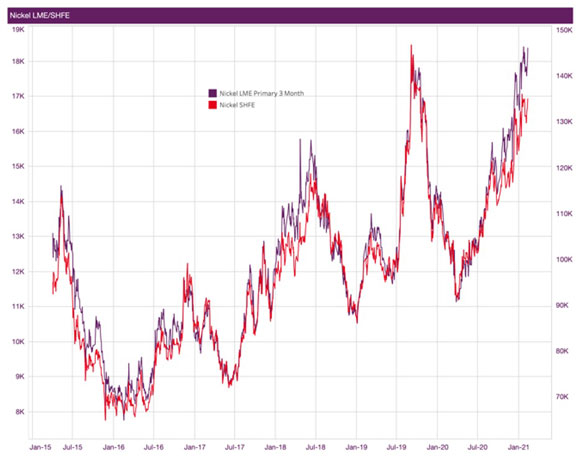
For current pricing on 316 stainless steel per pound, contact Susan Leo directly at [email protected]. As a trusted manufacturing partner based in Shenzhen, Honyo Prototype offers competitive material pricing, in-house production, and fast turnaround for prototyping and low-volume manufacturing. Reach out today to request a quote or discuss your project requirements.
🚀 Rapid Prototyping Estimator
Estimate rough cost index based on volume.