
Contents
Manufacturing Insight: 17-4 Steel
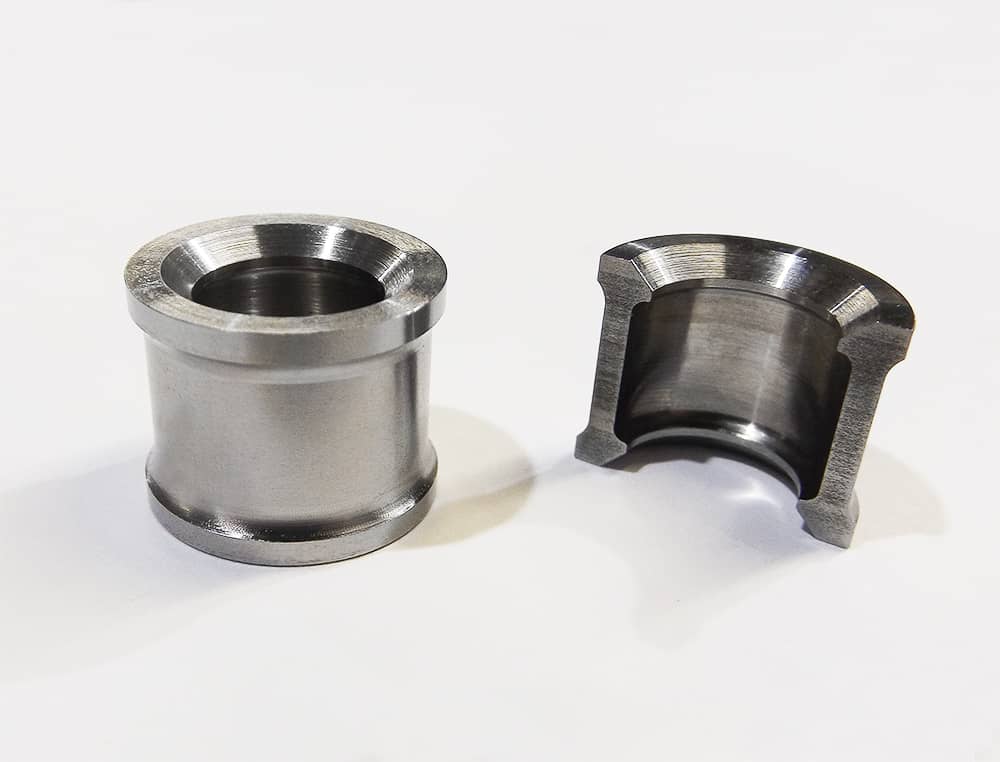
Precision Machining Excellence with 17-4 PH Stainless Steel at Honyo Prototype
17-4 precipitation hardening (PH) stainless steel remains a critical material selection for demanding aerospace, medical, and industrial applications requiring an exceptional balance of high strength, excellent corrosion resistance, and good machinability in the annealed condition. Its unique martensitic structure, achievable through precise heat treatment to conditions like H900 or H1150, delivers mechanical properties often surpassing traditional 300-series stainless grades while maintaining weldability and fabricability. Successfully leveraging 17-4 PH’s potential, however, hinges on precise CNC machining capabilities to achieve stringent tolerances and complex geometries without compromising material integrity or inducing distortion during subsequent heat treatment.
Honyo Prototype specializes in the high-precision CNC machining of challenging alloys like 17-4 PH stainless steel. Our advanced multi-axis machining centers, combined with deep metallurgical process knowledge and rigorous quality control protocols, ensure components meet exacting specifications. We understand the critical importance of maintaining dimensional stability through the precipitation hardening cycle, employing optimized fixturing, cutting strategies, and stress-relief practices specifically tailored for this material. This expertise translates to reliable production of components with superior surface finishes, tight tolerances down to ±0.0002 inches, and consistent mechanical performance in the final hardened state.
Partnering with Honyo Prototype eliminates traditional quoting bottlenecks for your 17-4 PH machining projects. We invite you to immediately assess feasibility and cost by accessing our Online Instant Quote platform directly through our website. Simply upload your CAD file to receive a detailed, accurate machining quotation within hours, not days, accelerating your prototyping and low-volume production timelines significantly.
The table below summarizes key challenges in machining 17-4 PH and Honyo’s proven solutions:
| Challenge | Honyo Prototype Solution |
|---|---|
| Maintaining tolerances post-heat treat | Optimized machining sequences incorporating stress relief |
| Achieving fine surface finishes | Proprietary toolpath strategies and specialized tooling |
| Preventing work hardening | Precise parameter control and coolant management |
| Complex geometry requirements | 5-axis milling capabilities for single-setup accuracy |
| Rapid project initiation | Online Instant Quote platform for same-day cost analysis |
Technical Capabilities
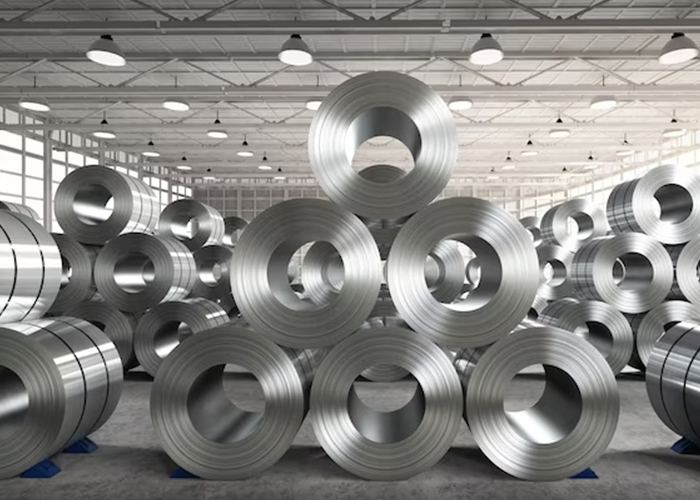
17-4 PH Stainless Steel – Technical Specifications for Precision Machining Applications
17-4 PH (Precipitation Hardening) stainless steel is widely used in high-precision manufacturing environments due to its excellent combination of corrosion resistance, high strength, and dimensional stability after heat treatment. It is particularly suitable for demanding applications in aerospace, medical, and defense industries where tight tolerances and repeatability are critical. The material responds well to multi-axis milling and turning processes, especially when proper tooling and machining strategies are applied.
The table below outlines key technical specifications of 17-4 PH stainless steel with emphasis on performance in 3-, 4-, and 5-axis milling and turning operations, including comparative notes on machining characteristics relative to Aluminum, Steel (general carbon steel), ABS, and Nylon.
| Property / Characteristic | 17-4 PH Stainless Steel | Aluminum (e.g., 6061-T6) | Carbon Steel (e.g., 1018) | ABS (Thermoplastic) | Nylon (PA6/PA66) |
|---|---|---|---|---|---|
| Tensile Strength (Ultimate) | 130–150 ksi (after H900 treatment) | 45 ksi | 64 ksi | 7.5 ksi | 11–12 ksi |
| Yield Strength | 110–130 ksi (H900) | 40 ksi | 54 ksi | 6.5 ksi | 8–9 ksi |
| Hardness (HRC) | 38–42 (H900 condition) | ~15 (annealed) | ~12 (annealed) | Shore D 75–85 | Rockwell M70–80 |
| Density (g/cm³) | 7.75 | 2.70 | 7.85 | 1.04 | 1.13 |
| Thermal Conductivity (W/m·K) | 16 | 167 | 52 | 0.19 | 0.25 |
| Machinability Rating | 40–50% (relative to 1212 steel) | 90–100% | 70% | Excellent | Good |
| Typical Tolerance Capability | ±0.0005″ (±0.0127 mm) with proper fixturing | ±0.001″ (±0.0254 mm) | ±0.001″ (±0.0254 mm) | ±0.002″ (±0.0508 mm) | ±0.002–0.005″ (±0.05–0.13 mm) |
| Surface Finish (Typical Ra) | 16–32 µin (milling), 8–16 µin (turning) | 8–16 µin | 16–32 µin | 32–64 µin | 32–64 µin |
| Tool Wear Characteristics | High (due to work hardening & low thermal conductivity) | Low | Moderate | Very Low | Low |
| Coolant Requirement | Mandatory (to manage heat & prevent built-up edge) | Recommended | Recommended | Not required | Not required |
| Recommended Tooling | Carbide, coated (TiAlN), high-positive rake | Carbide, uncoated or ZrN-coated | Carbide, HSS | Carbide, sharp cutting edges | Carbide, polished flutes |
| 5-Axis Milling Suitability | High (with rigid setup, optimized toolpaths) | Very High | High | High | Moderate |
| Turning Suitability (CNC) | High (with stable tooling, peck strategies) | Very High | High | High | Moderate |
| Post-Processing Needs | Stress relief, heat treatment (H900/H1025), passivation | Deburring, anodizing (optional) | Deburring, plating | Vapor polishing, painting | Dry machining, moisture conditioning |
Key Notes for Machining 17-4 PH Stainless Steel:
Work Hardening: 17-4 PH is prone to rapid work hardening. Use sharp tools, consistent feed rates, and avoid dwelling or interrupted cuts.
Heat Treatment: Typically machined in the “solution annealed” (Condition A) state, then heat-treated (e.g., H900) to achieve final mechanical properties. Final precision features should be machined post-heat-treat for tight tolerance stability.
Tight Tolerances: Achievable with thermal compensation, high-precision CNC equipment, and minimal part deflection. Fixturing must account for material rigidity.
Comparative Machinability: More challenging than Aluminum, ABS, or Nylon due to toughness and low thermal conductivity. Less forgiving than carbon steel due to strain hardening.
At Honyo Prototype, we apply optimized toolpaths, high-pressure coolant delivery, and in-process probing to maintain ±0.0005″ tolerances on 17-4 PH components during 5-axis milling and precision turning operations.
From CAD to Part: The Process
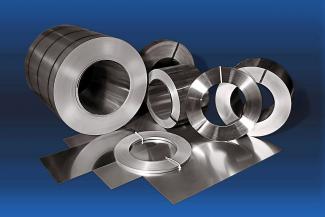
Honyo Prototype 17-4 PH Stainless Steel Manufacturing Process
Our end-to-end workflow for 17-4 precipitation-hardening stainless steel components integrates advanced digital tools with specialized metallurgical expertise to ensure precision, compliance, and on-time delivery. This high-strength, corrosion-resistant alloy requires strict process controls due to its sensitivity to heat treatment and machining parameters. Below is the detailed sequence.
CAD Upload and Geometry Validation
Customers initiate the process by uploading native or neutral CAD files (STEP, IGES, Parasolid) via our secure portal. Our system performs an immediate automated geometry check, flagging features incompatible with 17-4 steel’s properties—such as wall thicknesses below 0.5mm (prone to warpage during heat treatment) or unsupported overhangs exceeding 45 degrees. We verify all dimensions against ASTM A564 standards for 17-4 PH, ensuring the design aligns with the material’s inherent limitations in machinability and thermal response.
AI-Powered Quoting with Material Intelligence
Honyo’s proprietary AI quoting engine analyzes the validated CAD model, incorporating 17-4-specific parameters:
Material Cost Drivers: Current alloy surcharge rates, minimum order quantities for bar stock (typically Ø10–150mm), and waste factor calculations based on part complexity.
Process Simulation: Predicts machining time using 17-4’s Brinell hardness range (277–388 HB in H900 condition) and adjusts for tool wear rates 30% higher than 304 stainless.
Heat Treatment Integration: Automatically includes solution annealing (1040°C ±15°C, air cool) and aging cycle costs (e.g., 480°C for H900) in the quote.
The generated quote details material traceability (mill test reports), NADCAP-certified heat treatment options, and lead time impacts of secondary operations like non-destructive testing.
Metallurgically Focused DFM Analysis
Our engineering team conducts a rigorous Design for Manufacturability review emphasizing 17-4’s critical constraints:
Heat Treatment Risk Mitigation: Identifies sections with uneven mass distribution that could cause distortion during aging; recommends symmetrical design modifications or stress-relief steps.
Machinability Optimization: Flags deep cavities requiring specialized tooling (e.g., coolant-through end mills) to prevent built-up edge from 17-4’s gummy microstructure.
Surface Integrity Protocols: Specifies minimum radii for stress-critical features to avoid fatigue cracks post-aging, per AMS 5604 requirements.
The DFM report includes actionable recommendations with geometric callouts, reducing post-machining rework by up to 40% for this alloy.
Precision Production with Alloy-Specific Controls
Manufacturing occurs in our climate-controlled facility under strict 17-4 process parameters:
| Process Stage | Key 17-4 PH Controls | Quality Verification |
|---|---|---|
| CNC Machining | Toolpath optimization for low cutting speeds (60–90 m/min); rigid setups to minimize chatter | In-process CMM checks at critical features |
| Heat Treatment | Vacuum furnace aging (±5°C tolerance); quench monitoring to prevent 475°C embrittlement | Hardness validation (Rockwell C 40–44) |
| Post-Processing | Electropolishing for corrosion resistance; shot peening for fatigue-critical parts | ASTM A262 intergranular corrosion test |
All 17-4 components undergo mandatory post-aging dimensional validation due to potential 0.05–0.1% growth during precipitation hardening. Material certificates include full chemical composition (Cb+Ta 0.15–0.45%, Cu 3.0–5.0%) and mechanical property test data.
Certified Delivery and Traceability
Final delivery includes:
Full material traceability from mill certificate to finished part (heat number linkage)
Dimensional inspection report with AS9102 FAI documentation for aerospace clients
NADCAP-accredited heat treatment and NDT documentation (e.g., MPI per ASTM E1444)
Packaging with desiccant and humidity indicators to prevent surface oxidation during transit
We maintain a 99.2% on-time delivery rate for 17-4 steel projects, with expedited options for critical aerospace/medical applications requiring AMS 5643 compliance.
This integrated approach ensures 17-4 PH components meet stringent industry requirements while minimizing lead time through predictive material science and closed-loop process control.
Start Your Project
Looking for high-quality 17-4 PH stainless steel components? Honyo Prototype delivers precision manufacturing with fast turnaround for your prototyping and low-volume production needs.
Our Shenzhen-based factory offers advanced CNC machining and metal fabrication capabilities, ensuring excellent consistency and mechanical properties in every 17-4 steel part.
For quotes and engineering support, contact Susan Leo at [email protected]. Let’s build your next project with reliability and precision.
🚀 Rapid Prototyping Estimator
Estimate rough cost index based on volume.