
Contents
Manufacturing Insight: 17 4 Stainless Steel Vs 304
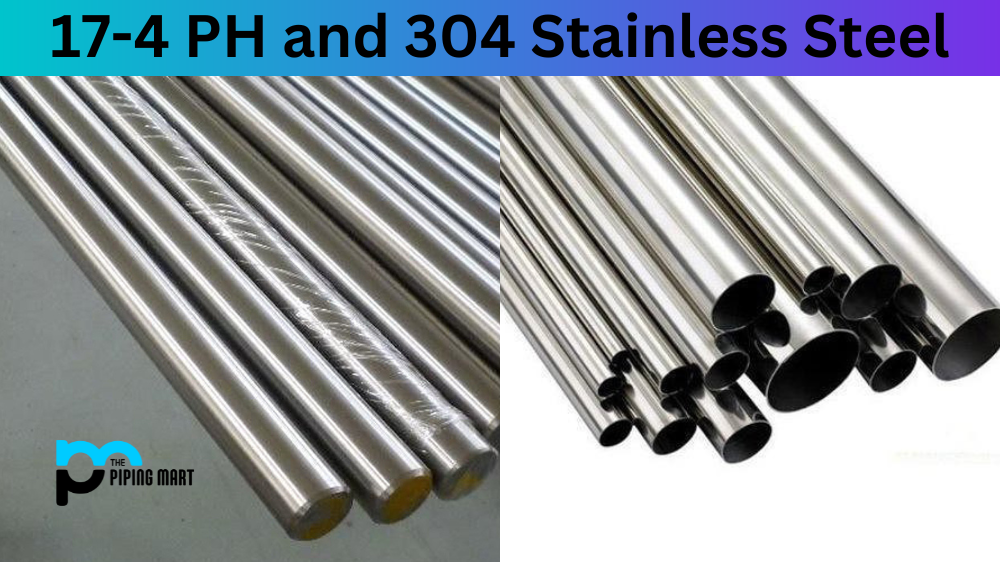
Material Selection Precision: Optimizing Your 17-4 PH vs. 304 Stainless Steel CNC Machining Project
Selecting between 17-4 precipitation hardening (PH) stainless steel and standard 304 austenitic stainless steel is a critical engineering decision that directly impacts machinability, final part performance, and project timelines. While 304 offers excellent corrosion resistance and formability with relatively straightforward machining characteristics, 17-4 PH delivers superior strength and hardness post-heat treatment, making it ideal for demanding aerospace, medical, and tooling applications, albeit presenting greater challenges during precision CNC milling and turning due to its abrasiveness and work-hardening tendencies. Understanding these material-specific nuances is paramount to achieving optimal yield, dimensional accuracy, and cost efficiency in prototype and low-volume production.
Key differences influencing CNC machining strategy include:
| Property | 17-4 PH Stainless Steel | 304 Stainless Steel |
|---|---|---|
| Primary Machining Challenge | High abrasiveness, rapid tool wear, work hardening | Gummy chip formation, built-up edge |
| Typical Yield Strength (Annealed) | ~300 MPa (Significantly higher after H900/H1025) | ~205 MPa |
| Corrosion Resistance | Good (less than 304 in some environments) | Excellent (benchmark grade) |
| Heat Treat Required for Max Strength | Yes (Critical process step) | No |
| Best Suited For | High-stress components, shafts, molds, surgical instruments | Chemical equipment, food processing, architectural trim, general hardware |
At Honyo Prototype, our senior engineering team leverages deep metallurgical expertise and advanced CNC machining centers to expertly navigate these material complexities. We implement optimized toolpaths, specialized cutting tool geometries, and precise coolant strategies specifically tailored for each alloy, ensuring exceptional surface finishes, tight tolerances (±0.0002″), and minimized lead times—whether you require the corrosion resilience of 304 or the high-strength integrity of 17-4 PH. Our rigorous in-process inspection protocols mitigate the risks associated with challenging materials, guaranteeing your precision components meet exacting specifications on schedule. Accelerate your project start with Honyo’s Online Instant Quote system, providing accurate, real-time pricing for CNC-machined stainless steel parts within minutes, backed by our engineering review for manufacturability feedback.
Technical Capabilities
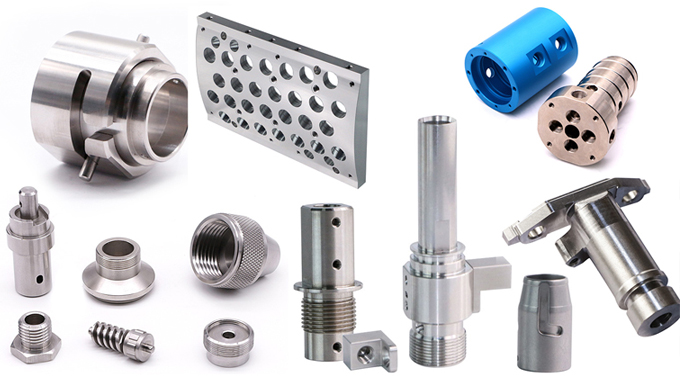
Comparison of 17-4 PH Stainless Steel and 304 Stainless Steel for Precision Machining Applications
When evaluating 17-4 PH and 304 stainless steels for high-precision 3-, 4-, and 5-axis milling and turning operations—particularly under tight tolerance requirements (±0.0005″ or better)—several technical and machinability factors must be considered. This comparison also includes context relative to other common prototype and production materials such as aluminum, steel (general), ABS, and nylon.
| Parameter | 17-4 PH Stainless Steel | 304 Stainless Steel | Notes on Other Materials (Aluminum, Steel, ABS, Nylon) |
|---|---|---|---|
| Composition | Precipitation-hardening stainless steel with 15–17.5% Cr, 3–5% Ni, 3–5% Cu, and Nb+Ta | Austenitic stainless steel with 18–20% Cr, 8–10.5% Ni | Aluminum (e.g., 6061) is lightweight with high thermal conductivity; general carbon steel is magnetic and less corrosion-resistant; ABS and nylon are thermoplastics with low melting points. |
| Tensile Strength (Ultimate) | 130–185 ksi (condition H900) | 73–90 ksi | Aluminum: 45 ksi (6061-T6); ABS: ~7 ksi; Nylon: ~10 ksi; General steel: ~60–80 ksi. |
| Hardness (Rockwell C) | 33–45 HRC (depending on aging temp) | 70–90 HRB (~20–25 HRC) | Aluminum: ~60 HRB; ABS/Nylon: not typically measured in HRC; hardened tool steels can exceed 60 HRC. |
| Machinability (Relative to 1212 steel = 100%) | 45–50% (poor due to work hardening, abrasive nature) | 45% (also poor; high ductility causes built-up edge) | Aluminum: 70–100%; free-machining steels: 100%; ABS/Nylon: excellent but require sharp tools and low heat. |
| Work Hardening Tendency | High (especially after aging) | Very high (austenitic structure promotes rapid work hardening) | Aluminum (6061): moderate; ABS/Nylon: minimal; carbon steel: moderate. |
| Thermal Conductivity (BTU/hr·ft·°F) | ~9.8 | ~9.4 | Aluminum: ~120 (excellent); ABS/Nylon: ~0.1–0.2 (very low); carbon steel: ~25–30. |
| Thermal Expansion (µin/in-°F) | 6.0–6.5 | 9.6 | Aluminum: ~13; ABS: ~50; Nylon: ~55; carbon steel: ~6.5. High expansion affects tight-tolerance stability. |
| Typical Applications in Precision Machining | Aerospace components, medical instruments, high-strength fittings requiring corrosion resistance | Food processing equipment, chemical containers, architectural parts | Aluminum: enclosures, lightweight structural parts; ABS/Nylon: jigs, fixtures, non-load-bearing components. |
| Tooling Requirements | Carbide or CBN tools required; sharp cutting edges; low feed rates; high pressure coolant | Carbide tools; avoid dwelling; high-pressure coolant to manage heat | Aluminum: carbide or HSS; ABS/Nylon: sharp HSS or carbide with high rake angles. |
| Tight Tolerance Suitability | Good (after stress relief and aging); stable post-heat treat | Challenging (due to work hardening and thermal movement) | Aluminum: excellent; ABS/Nylon: limited by creep and moisture absorption; steel: good if stress-relieved. |
| Surface Finish Achievable | 8–16 µin Ra (with fine finishing passes) | 16–32 µin Ra (prone to smearing) | Aluminum: <8 µin Ra; ABS/Nylon: 32–64 µin Ra; steel: 16–32 µin Ra. |
| Post-Machining Heat Treatment | Required for full properties (e.g., H900, H1025) | Not typically required (annealed condition used) | Aluminum: T6 aging common; ABS/Nylon: none; steel may require tempering. |
Summary for High-Axis Milling and Turning:
17-4 PH stainless steel offers superior strength and moderate corrosion resistance, making it suitable for high-performance, tight-tolerance components in aerospace and medical fields. However, its high hardness and work hardening rate demand robust tooling, rigid setups, and conservative cutting parameters. Pre- and post-machining heat treatments must be carefully managed to maintain dimensional stability.
304 stainless steel, while easier to form and weld, presents significant challenges in high-precision machining due to its high ductility and thermal expansion. It is less ideal for complex 5-axis contours requiring fine tolerances unless machined with optimized strategies and constant thermal monitoring.
In comparison, aluminum remains the preferred choice for rapid, tight-tolerance prototyping and complex 5-axis work due to its excellent machinability and dimensional stability. ABS and nylon are useful for non-metallic prototypes but lack the thermal and mechanical stability for high-precision metal-like tolerances. General carbon steels occupy a middle ground but require attention to corrosion and heat treatment.
From CAD to Part: The Process
Honyo Prototype’s Material-Specific Process: 17-4 PH Stainless Steel vs. 304 Stainless Steel
Upon CAD file upload, Honyo’s system immediately identifies the specified stainless steel grade and initiates material-specific workflows. For 17-4 PH (precipitation-hardening), the system flags requirements for solution annealing and age-hardening cycles, while 304 (austenitic) triggers protocols for intergranular corrosion prevention and stress-relief considerations. This early differentiation ensures downstream processes account for critical metallurgical properties.
AI-Powered Quoting with Material Intelligence
Our AI quotation engine dynamically adjusts cost and lead time based on inherent material characteristics. 17-4 PH pricing reflects higher raw material costs, required secondary heat treatments (e.g., H900, H1150), and tighter machining tolerances due to its post-heat-treat hardness. For 304, the AI factors in weldability premiums, potential need for low-carbon variants (304L) to avoid sensitization, and extended machining times for its galling-prone nature. Real-time supplier data validates material availability, with 17-4 often carrying longer lead times due to specialized mill processing.
DFM Analysis: Material-Driven Design Validation
Honyo’s DFM review rigorously assesses manufacturability against each alloy’s limitations. Key differentiators include:
17-4 PH: Verification of section homogeneity to prevent distortion during aging, avoidance of sharp corners that induce cracking in hardened states, and confirmation of achievable tolerances post-heat treatment (±0.001″ typical vs. ±0.005″ for annealed 304).
304: Scrutiny of weld joint designs to mitigate distortion, validation of non-magnetic requirements through low-iron contamination controls, and assessment of deep-drawing geometries against its lower yield strength.
Our engineers explicitly call out risks like 17-4’s susceptibility to hydrogen embrittlement in threaded features or 304’s thermal expansion challenges in assemblies.
Production Execution: Alloy-Specific Process Control
Material segregation begins at raw material staging. 17-4 PH bars undergo solution treatment (1900°F/1038°C water quench) before machining, while 304 is processed in annealed condition. Machining parameters differ significantly:
17-4 PH requires reduced feed rates (30% slower than 304) and rigid setups to manage work hardening during final hardening stages.
304 demands aggressive coolant application and specialized tool geometries to combat built-up edge formation.
Critical divergence occurs in post-processing: 17-4 PH enters dedicated aging ovens (900–1150°F/482–593°C) with precise time-temperature control, while 304 undergoes passivation per ASTM A967 and optional electropolishing. All heat treatment batches are traceable to certified mill test reports.
Delivery Assurance with Material Certification
Final inspection includes material-specific validation: 17-4 PH parts receive Rockwell C hardness verification at multiple points per AMS 5643, while 304 undergoes ferroxyl testing for free iron contamination per ASTM A380. Certificates of Conformance explicitly detail heat treatment parameters for 17-4 PH (solution temp, aging cycle) or weld procedure specifications for 304 assemblies. Parts are segregated in packaging with alloy-specific handling labels to prevent cross-contamination.
Material Property Comparison Impacting Process Flow
| Parameter | 17-4 PH Stainless Steel | 304 Stainless Steel | Honyo Process Impact |
|---|---|---|---|
| Machinability (Free Machining %) | 40% | 45% | 17-4 requires slower speeds in hardened state; 304 needs chip-breaking strategies |
| Typical Hardness (Annealed) | 25–31 HRC | 70–80 HRB | 17-4 DFM mandates post-heat-treat tolerance allowances |
| Critical Post-Process | Precipitation Hardening | Passivation / Stress Relief | 17-4 adds 24–48hr furnace scheduling; 304 requires acid bath validation |
| Weldability | Moderate (pre/ post-heat req.) | Excellent | 304 DFM focuses on distortion control; 17-4 welding requires strict procedure qualification |
| Key Risk | Over-aging causing embrittlement | Sensitization at 800–1500°F | 17-4 production monitors aging dwell time; 304 enforces interpass temp control |
This structured approach ensures material properties dictate process parameters at every phase, eliminating generic manufacturing assumptions. Clients receive not just parts, but documented validation that 17-4 PH achieves target strength levels or that 304 meets non-magnetic requirements per contractual specifications.
Start Your Project
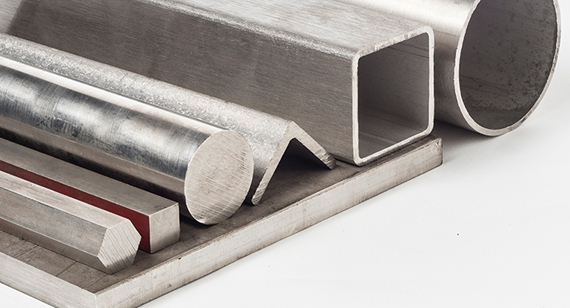
Looking to understand the key differences between 17-4 PH and 304 stainless steel for your next precision manufacturing project? From corrosion resistance to mechanical strength, material selection impacts performance and longevity.
17-4 PH stainless steel offers high strength and hardness with good corrosion resistance, making it ideal for aerospace, medical, and industrial applications requiring durability under stress. In contrast, 304 stainless steel provides excellent corrosion resistance and formability, commonly used in food processing, chemical containers, and architectural components where moderate strength and superior weldability are critical.
Make an informed decision based on your application’s mechanical, thermal, and environmental demands.
Contact Susan Leo at [email protected] to discuss your project requirements. With our ISO-certified factory located in Shenzhen, Honyo Prototype delivers rapid prototyping and high-precision CNC machining tailored to your material and production needs.
🚀 Rapid Prototyping Estimator
Estimate rough cost index based on volume.