
Contents
Manufacturing Insight: 17-4 Stainless Steel Machinability
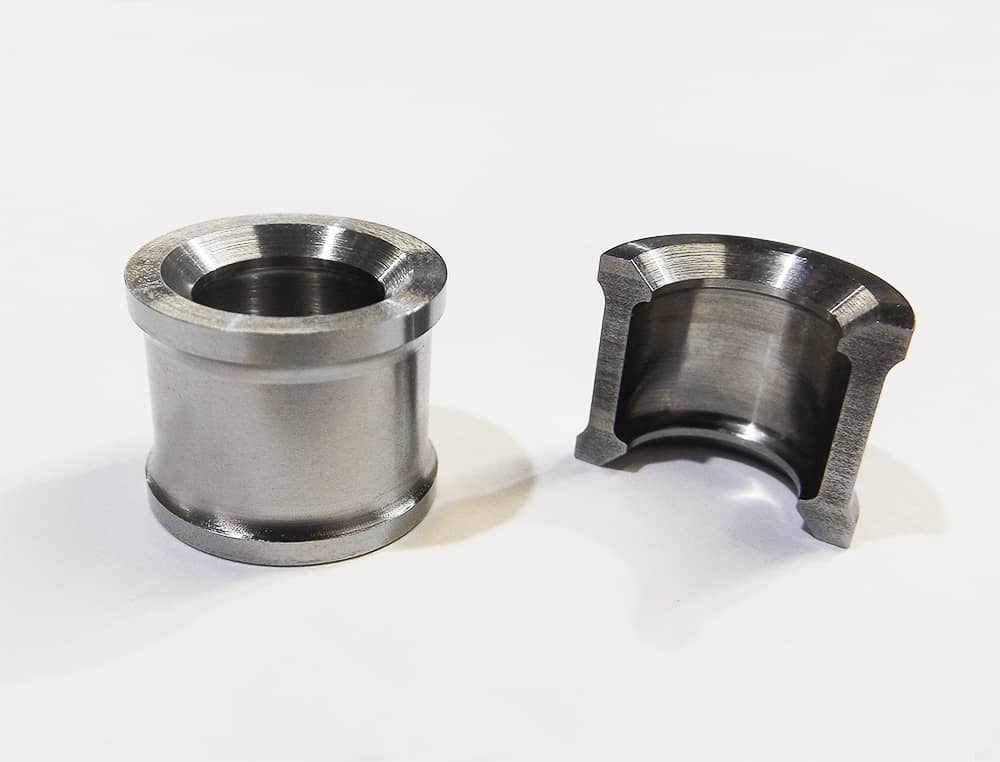
Mastering 17-4 PH Stainless Steel Machinability for Precision Components
17-4 precipitation hardening (PH) stainless steel remains a critical material choice for demanding aerospace, medical, and industrial applications due to its exceptional strength-to-weight ratio, corrosion resistance, and ability to achieve high hardness through heat treatment. However, its unique martensitic structure and work-hardening characteristics present significant machining challenges, including tool wear acceleration, thermal sensitivity, and stringent surface finish requirements. Suboptimal machining parameters often lead to dimensional inaccuracies, compromised microstructure, or costly rework—risks that directly impact project timelines and component reliability.
At Honyo Prototype, our CNC machining expertise is specifically engineered to overcome the complexities of 17-4 PH stainless steel. Our senior manufacturing team leverages decades of material-specific experience to optimize cutting strategies, tooling selection, and coolant management, ensuring consistent dimensional precision within tight tolerances (±0.0002″) while mitigating work hardening and thermal distortion. We implement rigorous in-process inspection protocols and adaptive machining techniques tailored to the material’s phase-transition behaviors, transforming 17-4 PH’s machining hurdles into opportunities for flawless part production.
For engineering teams requiring rapid validation of 17-4 PH components, Honyo’s Online Instant Quote platform delivers transparent, technical-driven cost and lead time estimates within minutes. Simply upload your CAD file to receive a manufacturability analysis and competitive quote—backed by our commitment to material mastery and on-time delivery for mission-critical prototypes and low-volume production runs.
Technical Capabilities
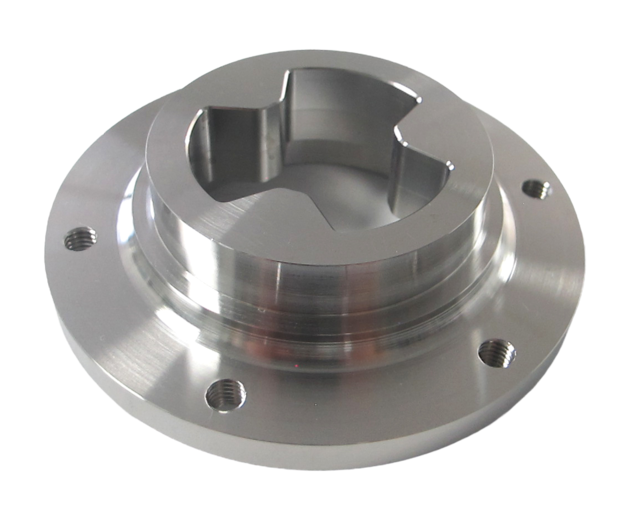
17-4 PH Stainless Steel Machinability Technical Specifications for 3/4/5-Axis Milling and Turning – Tight Tolerance Applications
17-4 precipitation hardening (PH) stainless steel is widely used in aerospace, medical, and industrial applications due to its excellent strength, corrosion resistance, and ability to maintain tight tolerances after heat treatment. When machining 17-4 PH for high-precision components using 3/4/5-axis milling and turning, several technical considerations must be addressed to ensure dimensional accuracy, surface finish, and tool life. Below is a comparative analysis of machinability parameters with other common materials used in prototyping and production.
| Parameter | 17-4 PH Stainless Steel | Aluminum (6061-T6) | Mild Steel (1018) | ABS (Thermoplastic) | Nylon (PA6) |
|---|---|---|---|---|---|
| Hardness (HB) | 277–331 (H900 condition) | 95 | 125–150 | ~100 (Shore D) | ~80 (Shore D) |
| Tensile Strength (MPa) | 1276–1310 (H900) | 310 | 440 | 45 | 70 |
| Machinability Rating (%) | 25–30% (Poor compared to free-machining steels) | 100–150% (Excellent) | 55–60% | ~100% | ~80% |
| Recommended Cutting Speed (Vc) – Milling | 60–90 m/min (coated carbide) | 500–1000 m/min | 100–150 m/min | 150–250 m/min | 100–200 m/min |
| Recommended Feed per Tooth (fz) | 0.05–0.10 mm/tooth | 0.15–0.30 mm/tooth | 0.10–0.20 mm/tooth | 0.10–0.25 mm/tooth | 0.10–0.20 mm/tooth |
| Turning – Cutting Speed (Vc) | 70–100 m/min | 600–900 m/min | 150–200 m/min | 200–300 m/min | 150–250 m/min |
| Tooling Recommendation | PVD-coated carbide (TiAlN), sharp geometries, high positive rake | Uncoated or ZrN-coated carbide | Coated carbide (TiCN, Al2O3) | High-speed steel or carbide | Carbide or HSS, polished flutes |
| Coolant Requirement | Mandatory – high-pressure through-tool preferred | Recommended (flood) | Required (flood) | Optional (air blast sufficient) | Optional (air or light mist) |
| Work Hardening Tendency | High – avoid dwell, maintain engagement | Negligible | Low | None | Low |
| Thermal Conductivity (W/mK) | 16–18 | 167 | 52 | 0.19 | 0.25 |
| Typical Tolerance (Milling) | ±0.005 mm (achievable with thermal stability and rigidity) | ±0.0125 mm | ±0.01 mm | ±0.05 mm | ±0.05 mm (hygroscopic) |
| Challenges in Tight Tolerance Work | Heat buildup, work hardening, tool wear, thermal drift | Chatter, burring, softness | Built-up edge, deflection | Melting, burring, static | Moisture absorption, creep |
Key Machining Notes for 17-4 PH Stainless Steel:
Preconditioning: Machine in solution-annealed (Condition A) state for complex geometries, then heat treat to H900 or other required condition for final strength.
Tool Path Strategy: Use constant engagement, high-feed milling, and climb milling to reduce heat and tool pressure.
Fixturing & Stability: Rigid setups are critical due to high cutting forces and work hardening.
Thermal Management: Minimize thermal expansion effects using consistent coolant and avoiding intermittent cuts.
Post-Machining: Stress relief may be required before final heat treatment to maintain tight tolerances.
Compared to aluminum, steel, ABS, and nylon, 17-4 PH stainless steel presents significantly higher challenges in machinability, especially in multi-axis operations requiring micron-level tolerances. However, with optimized tooling, parameters, and process control, it is routinely machined to high precision in critical applications.
From CAD to Part: The Process
Honyo Prototype executes precision machining of 17-4 PH stainless steel through a rigorously controlled workflow designed to address its unique material challenges. This grade exhibits excellent corrosion resistance and high strength after heat treatment but presents significant machinability hurdles including work hardening, low thermal conductivity, and sensitivity to improper cutting parameters. Our process ensures dimensional stability and surface integrity while mitigating these risks.
CAD Upload and Initial Assessment
Upon receiving your 3D CAD model, our engineering team immediately identifies features critical to 17-4 PH performance. We analyze wall thicknesses, tight tolerances (especially < ±0.0005″), deep cavities, and thin sections prone to distortion during machining or subsequent heat treatment. Material certification requirements (AMS 5604, AMS 5643) and specified condition (e.g., H900, H1150) are verified against your documentation. Any geometry incompatible with 17-4’s machining characteristics triggers early consultation.
AI-Powered Quoting with Material Intelligence
Our proprietary quoting AI integrates real-time machine shop data with 17-4 PH-specific machining databases. It calculates cycle times using empirically derived parameters for this alloy: reduced surface speeds (80-120 SFM for milling), optimized feed rates to prevent work hardening, and mandatory use of through-coolant tooling. The system flags high-risk operations like deep slotting or fine-pitch threading where chip evacuation issues could cause tool failure. Cost estimates include mandatory stress relief steps and non-destructive testing if specified.
Material-Specific DFM Analysis
Our DFM engineers focus on 17-4 PH’s critical constraints during this phase. We verify sufficient stock allowance for stress relief distortion (typically +0.005″ per inch), recommend strategic relief cuts for complex geometries, and assess heat treatment sequence impacts. For H900 condition parts, we enforce minimum 0.030″ radii to prevent stress concentration cracking. The DFM report details required toolpath strategies such as climb milling to minimize heat buildup and strict spindle power monitoring to avoid sudden work hardening events. Any feature risking built-up edge formation receives specific tooling recommendations (e.g., CVD-coated carbide inserts with sharp positive geometries).
Precision Production with Process Controls
Machining occurs on monitored CNC equipment with live thermal compensation. Key 17-4 PH protocols include:
Pre-machining stress relief at 1750°F ±15°F for 1 hour followed by air cooling
Mandatory use of high-pressure coolant (1000+ PSI) during all cutting operations
Strict adherence to depth-of-cut limits (≤ 50% of tool diameter) to prevent work hardening
In-process CMM checks after critical operations to detect early distortion
Dedicated tooling sets per job to avoid cross-contamination with other materials
Heat treatment follows AMS 2759/3 standards with in-house furnace certification. Critical parameters for common conditions are:
| Condition | Aging Temp (°F) | Time (hrs) | Typical Yield (ksi) | Critical Notes |
|---|---|---|---|---|
| H900 | 900 ±10 | 4 | 130 min | Max strength; avoid sharp corners |
| H1025 | 1025 ±10 | 4 | 115 min | Balanced strength/toughness |
| H1150M | 1150 ±10 | 4 | 90 min | Max corrosion resistance; double aging recommended |
Final Inspection and Delivery
Post-heat treatment, parts undergo mandatory dimensional verification at stabilized room temperature (24+ hours). We perform penetrant testing per ASTM E165 for critical aerospace components and validate hardness within specified ranges (e.g., 31-36 HRC for H900). All 17-4 PH shipments include certified material test reports, heat treatment logs with furnace thermocouple charts, and first-article inspection data. Parts are packaged with desiccant and vapor corrosion inhibitors to prevent flash rust during transit, with delivery timelines strictly maintained through our real-time production tracking system.
Start Your Project
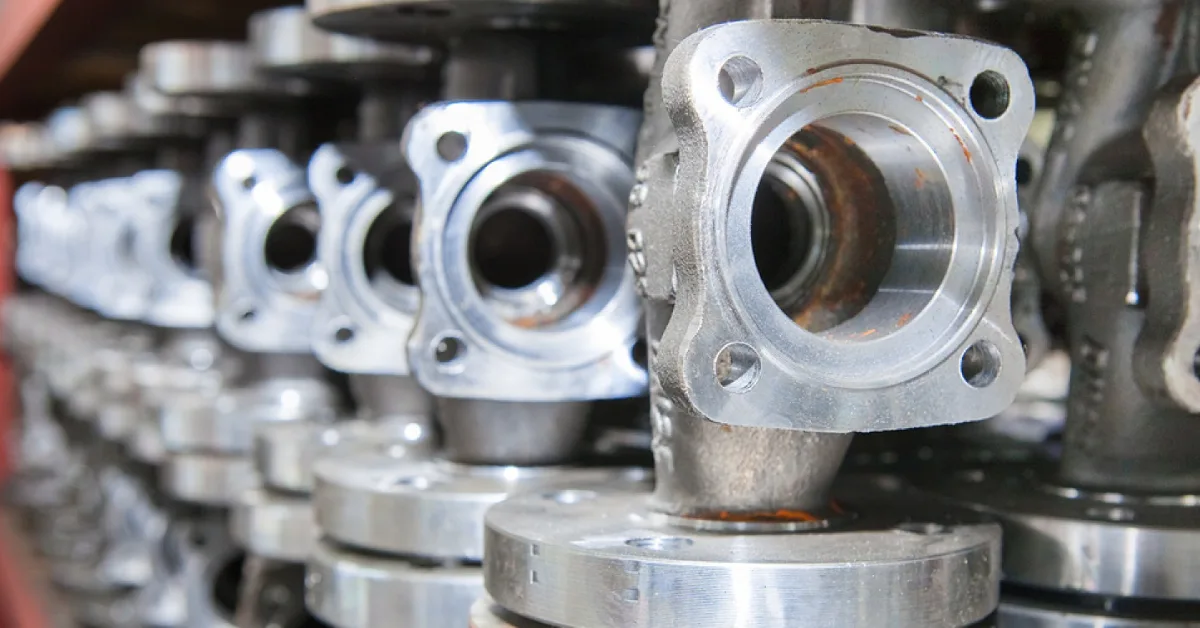
17-4 stainless steel offers an excellent balance of strength, corrosion resistance, and machinability—making it ideal for precision components in aerospace, medical, and industrial applications. At Honyo Prototype, our Shenzhen-based factory leverages advanced CNC machining capabilities to deliver tight-tolerance parts with fast turnaround.
Take advantage of our in-house expertise in machining 17-4 PH stainless steel with consistent quality and competitive pricing.
Contact Susan Leo at [email protected] to discuss your project requirements and receive a prompt quotation.
🚀 Rapid Prototyping Estimator
Estimate rough cost index based on volume.