
Contents
Manufacturing Insight: 17 4 Stainless Steel Machinability
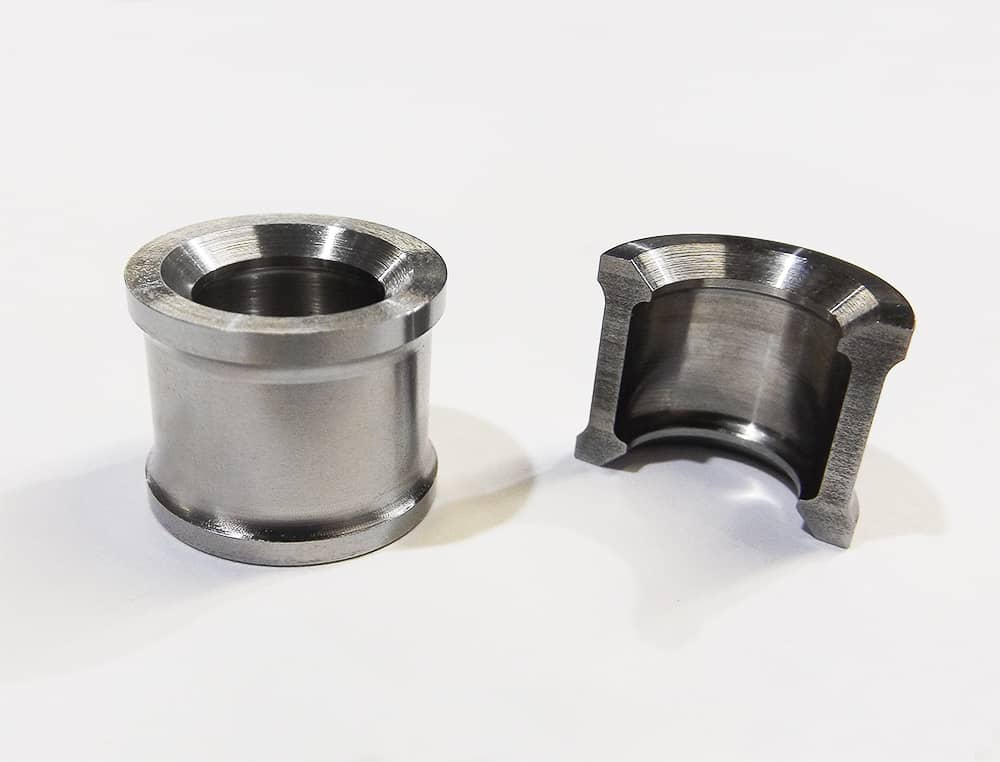
Optimizing 17-4 PH Stainless Steel Machinability Through Precision CNC Expertise
17-4 precipitation-hardening stainless steel remains a cornerstone material for demanding aerospace, medical, and industrial applications due to its exceptional strength-to-weight ratio, corrosion resistance, and heat-treatable properties. However, its inherent machinability challenges—primarily rapid work hardening, low thermal conductivity, and abrasive wear tendencies—often lead to tool deflection, surface integrity issues, and dimensional instability during conventional CNC operations. At Honyo Prototype, we specialize in transforming these challenges into opportunities for precision. Our advanced CNC machining services leverage proprietary toolpath strategies, optimized coolant delivery systems, and rigorously validated process parameters specifically calibrated for 17-4 PH in both H900 and H1150 conditions. This ensures superior surface finishes, tight tolerances (±0.0002″), and consistent microstructural integrity without compromising production timelines.
Material-Specific Machinability Factors and Honyo’s Countermeasures
| Challenge | Standard Industry Impact | Honyo Prototype Solution |
|————————–|——————————–|—————————————-|
| Work Hardening Rate | Premature tool failure | Custom cryogenic-cooled tooling with reduced feed rates per depth of cut |
| Thermal Conductivity | Heat buildup causing distortion | High-pressure through-spindle coolant & intermittent cutting cycles |
| Abrasive Carbide Content | Accelerated flank wear | CVD-coated carbide inserts with tailored edge hone geometries |
Beyond technical execution, we streamline your procurement workflow through Honyo’s Online Instant Quote platform. Upload your 17-4 PH part CAD file to receive a fully detailed machining quotation—including material sourcing, heat treatment coordination, and FAI documentation—in under 90 seconds. This system eliminates traditional quotation delays while providing transparent cost drivers for complex geometries. For engineers requiring mission-critical components where material performance cannot be compromised, Honyo Prototype delivers certified precision machining with zero trade-offs in speed or quality. Initiate your next 17-4 PH project with confidence by accessing our instant quoting engine today.
Technical Capabilities
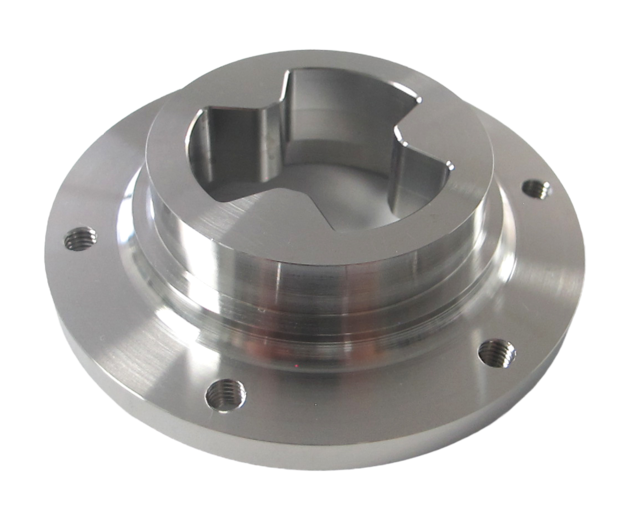
Technical Specifications for 17-4 PH Stainless Steel Machinability in Precision CNC Machining
17-4 PH (precipitation-hardening) stainless steel is widely used in aerospace, medical, and industrial applications due to its excellent strength, corrosion resistance, and ability to achieve tight tolerances after heat treatment. When machining this material using 3-, 4-, or 5-axis milling and turning operations, specific considerations must be addressed to maintain tool life, surface finish, and dimensional accuracy.
Below is a comparative overview highlighting key machining parameters and behaviors of 17-4 PH stainless steel relative to other common prototype and production materials such as aluminum, steel (general low-carbon), ABS, and nylon.
| Material | Machinability Rating (%) | Typical Cutting Speed (SFM) | Feed Rate (IPR / IPT) | Tooling Requirements | Heat Sensitivity | Surface Finish (Ra µin) | Tight Tolerance Capability (±) | Notes on CNC Machining |
|---|---|---|---|---|---|---|---|---|
| 17-4 PH Stainless Steel | 25–30 | 150–300 | 0.0005–0.003 (IPR) | Carbide or ceramic inserts; high-pressure coolant recommended | High | 16–32 | 0.0002″ – 0.0005″ | Work hardens rapidly; rigid setups essential; peck drilling advised |
| Aluminum (6061) | 100 | 800–2000 | 0.003–0.010 (IPR) | High-speed steel or carbide; polished flutes | Low | 8–16 | 0.0001″ – 0.0005″ | High metal removal rates; minimal tool wear; chip evacuation critical |
| Mild Steel (1018) | 55 | 100–150 | 0.005–0.015 (IPR) | Carbide inserts; coolant for extended tool life | Moderate | 16–32 | 0.0002″ – 0.001″ | Predictable cutting; moderate tool wear; good for turning and milling |
| ABS (Thermoplastic) | 85 | 500–1000 | 0.002–0.006 (IPT) | Sharp high-speed steel or carbide; low heat buildup | High (melts) | 32–64 | 0.001″ – 0.005″ | Use sharp tools; light cuts; avoid excessive heat; minimal clamping force |
| Nylon (PA6/PA66) | 75 | 400–800 | 0.002–0.005 (IPT) | Polished carbide or HSS; non-coated tools preferred | High (softens) | 32–64 | 0.001″ – 0.005″ | Elastic recovery; prone to burring; requires sharp cutting edges |
Key Notes on Machining 17-4 PH Stainless Steel for Tight Tolerance Applications:
Precision machining of 17-4 PH stainless steel demands optimized toolpaths, especially in multi-axis environments. Prior to final finishing, stress relief or solution treating (condition H900 or H1150) is often performed to minimize distortion during high-accuracy operations. For 3-, 4-, and 5-axis milling, use of rigid tool holders, high-precision spindles, and dynamic tool compensation ensures geometric accuracy.
In turning applications, consistent depth of cut and avoidance of interrupted cuts help prevent notch wear and chipping. Peck routines and through-tool coolant are essential for deep hole drilling and cavity milling.
Compared to aluminum and plastics like ABS or nylon, 17-4 PH requires significantly higher spindle torque and lower RPMs. However, it offers superior dimensional stability and repeatability under load, making it ideal for mission-critical components requiring long-term tolerance retention.
From CAD to Part: The Process
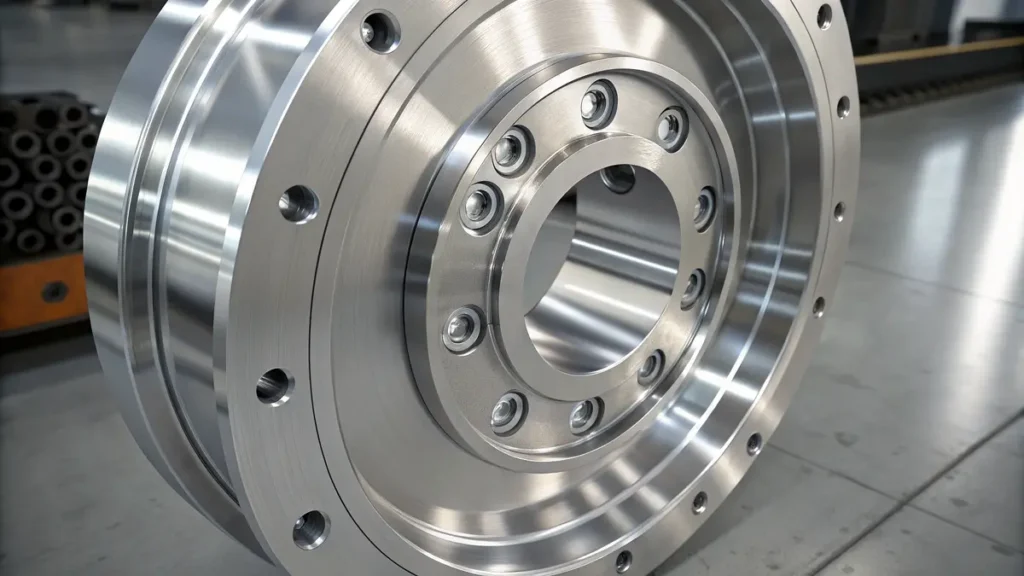
Honyo Prototype’s 17-4 Stainless Steel Machinability Process
Honyo Prototype optimizes 17-4 PH (Precipitation Hardening) stainless steel machining through a disciplined workflow designed to address this material’s unique challenges. 17-4 PH exhibits high strength and moderate corrosion resistance but requires precise thermal and machining controls due to its susceptibility to work hardening, tool wear, and distortion if improperly processed. Our end-to-end process ensures dimensional accuracy, structural integrity, and compliance with AMS 5643/ASTM A564 standards.
Upload CAD
Clients submit 3D CAD models (STEP, IGES, or native formats) with explicit material callouts specifying 17-4 PH (e.g., H900, H1025, or annealed condition). Critical features requiring tight tolerances (±0.0005″), surface finishes (e.g., 16 Ra), or secondary operations (e.g., passivation) must be annotated. For 17-4 PH, we verify if the design accounts for post-machining heat treatment-induced distortion—common in complex geometries—and confirm the required final hardness (e.g., 31-45 HRC for H900).
AI Quote
Our AI-driven quoting engine analyzes CAD geometry while incorporating 17-4 PH-specific parameters:
Toolpath complexity (e.g., deep pockets requiring slow feed rates to avoid chatter)
Estimated tool wear (carbide inserts with TiAlN coating recommended; 30-50% slower speeds vs. 303 SS)
Heat treatment sequencing (solution treatment pre-machining vs. final aging post-machining)
Scrap rate adjustments (17-4 PH’s hardness increases tooling costs by 15-25% vs. 304 SS)
The quote details thermal processing requirements, lead time implications, and cost drivers unique to this alloy, such as mandatory stress relief cycles for thin-wall features.
DFM (Design for Manufacturability)
Honyo’s engineering team conducts a rigorous DFM review focused on 17-4 PH’s metallurgical behavior:
Recommending minimum wall thicknesses (>0.06″) to prevent warpage during aging
Adjusting fillet radii to reduce stress concentrations before heat treatment
Flagging deep cavities requiring specialized tooling (e.g., variable-helix end mills) to dissipate heat
Verifying that critical dimensions align with post-aging tolerances (typical growth: 0.0002-0.0005″/inch)
Clients receive a formal DFM report with actionable revisions, including suggested heat treatment schedules to balance machinability and final properties.
Production
Machining 17-4 PH follows a strict sequence to mitigate material-specific risks:
1. Solution Treatment: Parts are heated to 1020-1060°C, quenched, and held at -73°C for cryogenic stress relief (if required by design).
2. Rough Machining: Performed in the annealed state (≤35 HRC) using high-pressure coolant and rigid setups to minimize vibration.
3. Aging: Parts undergo precise aging (e.g., 480°C for H900) to achieve target hardness.
4. Finish Machining: Conducted post-aging with sharp tools, reduced depths of cut (≤0.010″), and optimized feeds to prevent surface tears.
All processes adhere to NADCAP-accredited procedures, with in-process CMM checks for distortion control.
Heat Treatment Parameters for 17-4 PH
| Condition | Aging Temp (°C) | Time (hrs) | Typical Hardness (HRC) | Machinability Notes |
|———–|—————–|————|————————|———————|
| H900 | 480 | 1 | 39-45 | Avoid aggressive finishing; prone to micro-cracking |
| H1025 | 540 | 4 | 31-36 | Optimal for complex geometries; reduced distortion risk |
| Annealed | N/A | N/A | ≤35 | Required for initial roughing; not suitable for final part |
Delivery
Final inspection includes:
Hardness validation (Rockwell C scale) at multiple points
Dimensional verification per ASME Y14.5, with thermal history documentation
Material certification (mill test reports per AMS 5643) and NDT results if specified
Parts are passivated per ASTM A967 and packaged with desiccants to prevent corrosion during transit. Lead time transparency is maintained via real-time dashboards, with typical 17-4 PH projects requiring 12-18 business days due to mandatory thermal cycles.
Honyo’s integrated approach ensures 17-4 PH components meet aerospace, medical, and defense requirements by treating material science as foundational to manufacturability—not an afterthought. This eliminates costly rework from unanticipated distortion or hardness variations common in less-specialized facilities.
Start Your Project
For expert insights on the machinability of 17-4 stainless steel, contact Susan Leo at [email protected]. Our precision machining team in Shenzhen leverages advanced CNC capabilities and material expertise to optimize performance with 17-4 PH stainless steel, ensuring tight tolerances and superior surface finish for your prototyping and production needs.
Reach out today to discuss your project requirements and discover how our manufacturing solutions can support your application.
Contact:
Susan Leo
Email: [email protected]
Factory Location: Shenzhen, China
🚀 Rapid Prototyping Estimator
Estimate rough cost index based on volume.