
Contents
Manufacturing Insight: 13 Gauge Sheet Metal
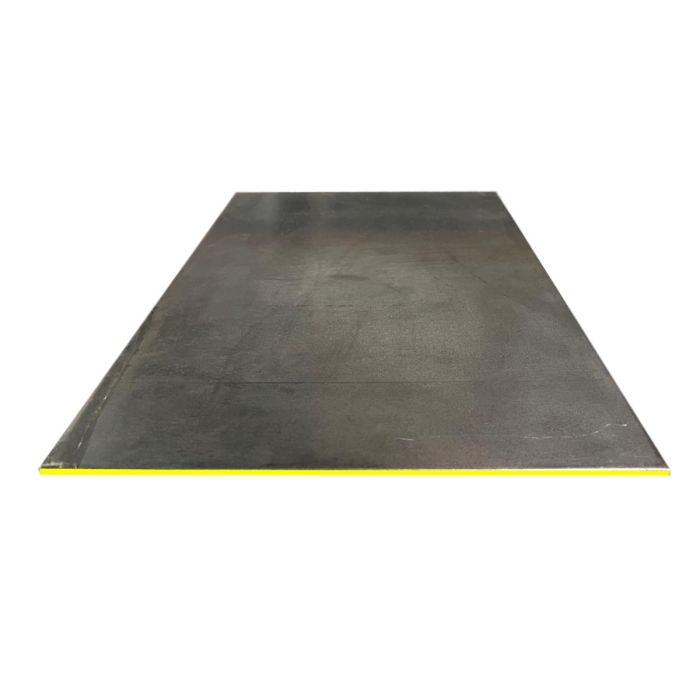
Precision 13 Gauge Sheet Metal Fabrication for Demanding Industrial Applications
Thirteen gauge sheet metal represents a critical material choice for structural components requiring robust strength-to-weight ratios, commonly specified in industrial enclosures, automotive brackets, and heavy-duty equipment frames. At Honyo Prototype, we engineer 13 gauge (0.0747″ / 1.897mm steel equivalent) fabrication with uncompromising precision across laser cutting, CNC punching, precision bending, and weld assembly. Our processes maintain tight tolerances on this mid-thickness material, mitigating common challenges like springback in high-yield-strength alloys while ensuring dimensional stability for mission-critical assemblies.
Honyo’s vertically integrated manufacturing ecosystem leverages advanced fiber laser technology and automated press brakes to transform 13 gauge raw stock into complex geometries with minimal lead time. We specialize in DFM optimization for this gauge range, advising on bend radii, hole placement, and material selection (including stainless steel, aluminum, and galvanized variants) to eliminate costly rework during prototyping or low-volume production. Every component undergoes rigorous in-process inspection, with first-article reports validating conformance to ISO 2768-mK or customer-specific standards.
Accelerate your project timeline through Honyo’s Online Instant Quote platform. Upload your 13 gauge sheet metal design in STEP, DWG, or DXF format to receive a detailed cost breakdown and manufacturability analysis within hours—no sales intermediary required. Our system dynamically factors material utilization, machine time, and secondary operations specific to 13 gauge thickness, providing transparent pricing for rapid decision-making. For engineers prioritizing speed without sacrificing quality, Honyo delivers production-ready 13 gauge components with a 72-hour turnaround on qualified prototypes.
Material Specification Reference
| Property | Value (Steel) | Common Alloys |
|——————-|———————|—————————–|
| Thickness | 0.0747″ (1.897 mm) | A36, 304 SS, 5052 Aluminum |
| Typical Applications | Chassis, Brackets, Enclosures | Structural Frames, Machinery Guards |
Technical Capabilities
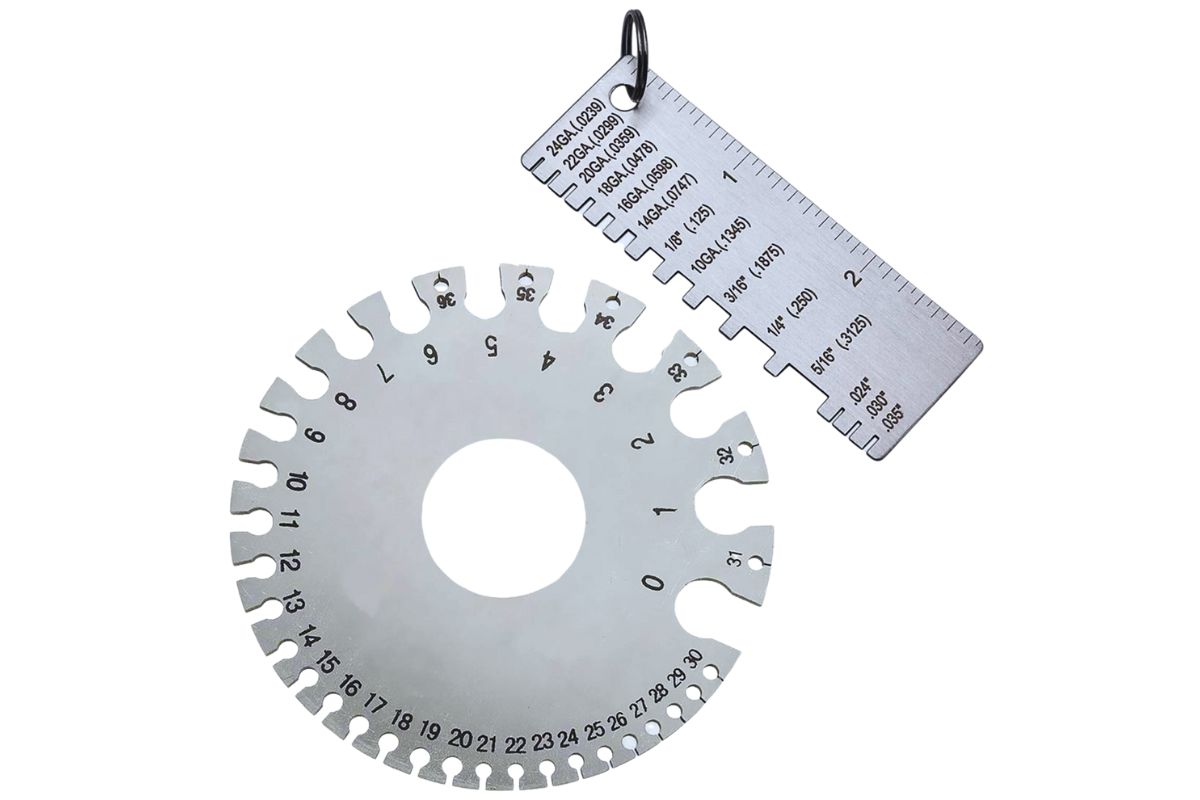
Technical Specifications for 13 Gauge Sheet Metal in Laser Cutting, Bending, and Welding Applications
13 gauge sheet metal refers to a standardized thickness defined by the American Wire Gauge (AWG) system, commonly used in North America for sheet metal fabrication. The nominal thickness varies slightly depending on the material type due to differences in material density and manufacturing standards. This specification is widely used in structural and industrial applications where moderate strength and formability are required.
Below is a detailed breakdown of 13 gauge sheet metal properties and process considerations for laser cutting, bending, and welding across common materials used at Honyo Prototype.
| Material | Nominal Thickness (in) | Nominal Thickness (mm) | Laser Cutting Compatibility | Bending Guidelines | Welding Process & Notes |
|---|---|---|---|---|---|
| Steel (Mild/Cold Roll) | 0.090 | 2.29 | Excellent – clean cuts with CO₂ or fiber laser; minimal dross with proper assist gas (N₂ or O₂) | Bend radius ≥ 1.5× material thickness (≥ 0.135 in / 3.4 mm) to avoid cracking; springback ~2–3° | MIG or TIG welding recommended; pre-clean surface to remove oils; minimal warpage with proper fixturing and stitch welding |
| Aluminum (5052, 6061) | 0.080 | 2.03 | Good – requires higher energy and reflective-safe laser systems; use N₂ assist to prevent oxidation | Bend radius ≥ 2× material thickness (≥ 0.160 in / 4.1 mm); annealing may be needed for tight bends | TIG preferred for precision; MIG acceptable; high thermal conductivity requires preheat for thick sections; avoid hydrogen-rich shielding gases |
| ABS (Thermoplastic Sheet) | 0.085 | 2.16 | Limited – possible with CO₂ laser but risk of melting, charring, and poor edge quality; not recommended for production | Not applicable – thermoplastic; forming done via thermoforming, not cold bending | Not weldable via traditional methods; join using solvent bonding or hot plate welding; laser processing not advised |
| Nylon (Cast or Extruded Sheet) | 0.095 | 2.41 | Poor – high absorption and melting lead to poor edge definition; excessive smoke and recast; not suitable for laser cutting | Not applicable – limited cold forming; typically machined or molded | Not weldable with arc processes; use hot gas or ultrasonic welding; not suitable for structural metal-style welding |
Notes:
Gauge consistency varies by material: 13 gauge steel is thicker than 13 gauge aluminum due to differing gauge standards (e.g., US Standard for Steel vs. Aluminum).
For precision laser cutting, material flatness and surface condition are critical to maintain focus and cut quality.
Bending should account for grain direction in rolled materials, especially in aluminum and steel, to prevent edge cracking.
ABS and nylon are not true “sheet metals” but are included for comparative purposes in prototyping; they require entirely different processing methods.
At Honyo Prototype, we recommend steel or aluminum for 13 gauge sheet metal projects involving laser cutting, bending, and welding due to their dimensional stability, structural integrity, and compatibility with standard fabrication equipment.
From CAD to Part: The Process
CAD Upload & Validation
Clients initiate the process by uploading native or neutral format CAD files to Honyo’s secure portal. Our system performs automated geometry validation specific to 13 gauge material (0.0747″ / 1.897mm nominal thickness), checking for critical parameters such as minimum bend radii (typically ≥0.093″ for steel), hole-to-edge distances, and feature spacing. Files failing validation trigger immediate client notification with precise error diagnostics, ensuring only manufacturable designs proceed.
AI-Powered Quoting Engine
Validated CAD data feeds into our proprietary AI quoting system, which analyzes 13 gauge-specific factors: material type (e.g., A36 steel, 304 stainless, 5052 aluminum), flat pattern area, cut path length, bend count, and secondary operations. The algorithm cross-references real-time material costs, machine capacity, and historical production data to generate accurate cost/time estimates within 2 business hours. Crucially, the AI flags potential cost drivers unique to 13 gauge, such as increased laser power requirements for thicker cuts or press brake tonnage limitations for tight bends.
Engineering-Led DFM Analysis
Every 13 gauge project undergoes mandatory Design for Manufacturability review by our engineering team. This phase addresses gauge-specific challenges including springback compensation in bending, weld distortion mitigation for thicker sections, and burr management from punching/laser cutting. We provide actionable feedback on optimizing bend sequences, adjusting tolerances to ISO 2768-mK standards for 13g, and material grain orientation effects. Clients receive detailed markups within 4 business hours, with collaborative revision sessions available to resolve complex issues.
Precision Production Execution
Approved designs move to production using dedicated 13 gauge-capable equipment: Amada LC-3015 AJ fiber lasers with adaptive piercing for clean edges, Trumpf TruBend 7030 press brakes with real-time angle correction, and automated welding cells. In-process inspections at critical stages verify:
Flatness within 0.008″ per foot for cut blanks
Bend angles ±0.5° tolerance
Hole positional accuracy ±0.005″
All 13 gauge parts undergo deburring and CMM validation against first-article requirements before secondary operations.
Quality-Controlled Delivery
Final inspection includes material certification traceability, dimensional reporting against client drawings, and surface finish verification. Parts are packaged using custom foam-in-place systems to prevent deformation during transit of heavier 13 gauge components. Standard lead time is 7-10 business days from DFM approval, with expedited options. Real-time shipment tracking and digital quality documentation are provided via client portal.
Material-Specific Considerations for 13 Gauge
| Parameter | Standard Tolerance | Critical Consideration for 13g |
|——————–|——————-|——————————-|
| Thickness | ±0.005″ | Increased springback requires overbending compensation |
| Bend Radius | ≥0.093″ | Grain direction affects crack risk in 90° bends |
| Hole Diameter | ≥0.093″ | Punching requires 1.5x material thickness clearance |
| Flatness | 0.008″/ft | Weld distortion control requires strategic sequencing |
This integrated workflow ensures 13 gauge components meet stringent functional requirements while minimizing cost and lead time through proactive engineering collaboration. Honyo maintains AS9100 and ISO 9001 certifications with dedicated process controls for medium-thickness sheet metal fabrication.
Start Your Project
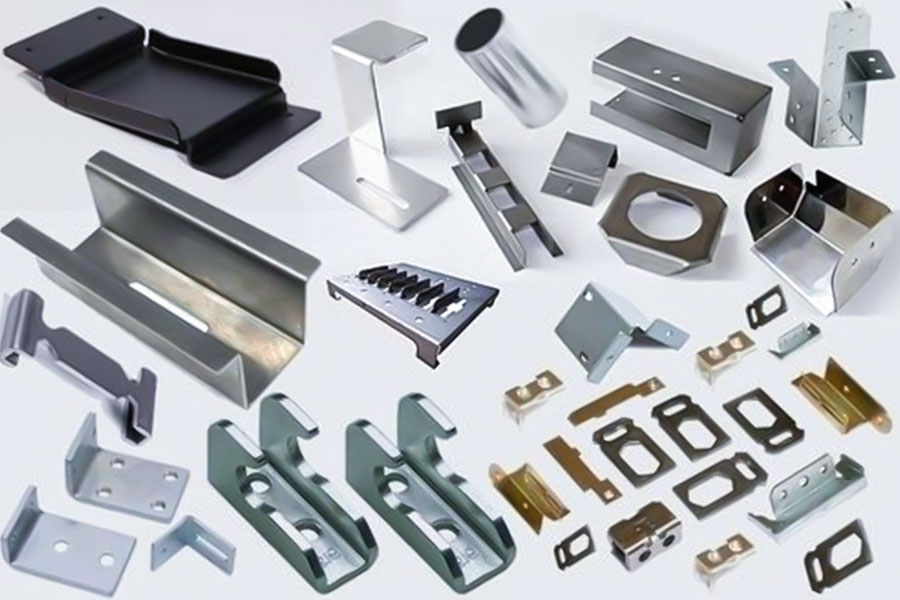
Looking for precision-manufactured 13 gauge sheet metal solutions? Partner with Honyo Prototype for high-quality fabrication services from our state-of-the-art facility in Shenzhen.
For project inquiries and material specifications, contact Susan Leo directly at [email protected].
We deliver reliable, on-time sheet metal components tailored to your engineering requirements.
🚀 Rapid Prototyping Estimator
Estimate rough cost index based on volume.