
Contents
Manufacturing Insight: 1018 Steel Machinability
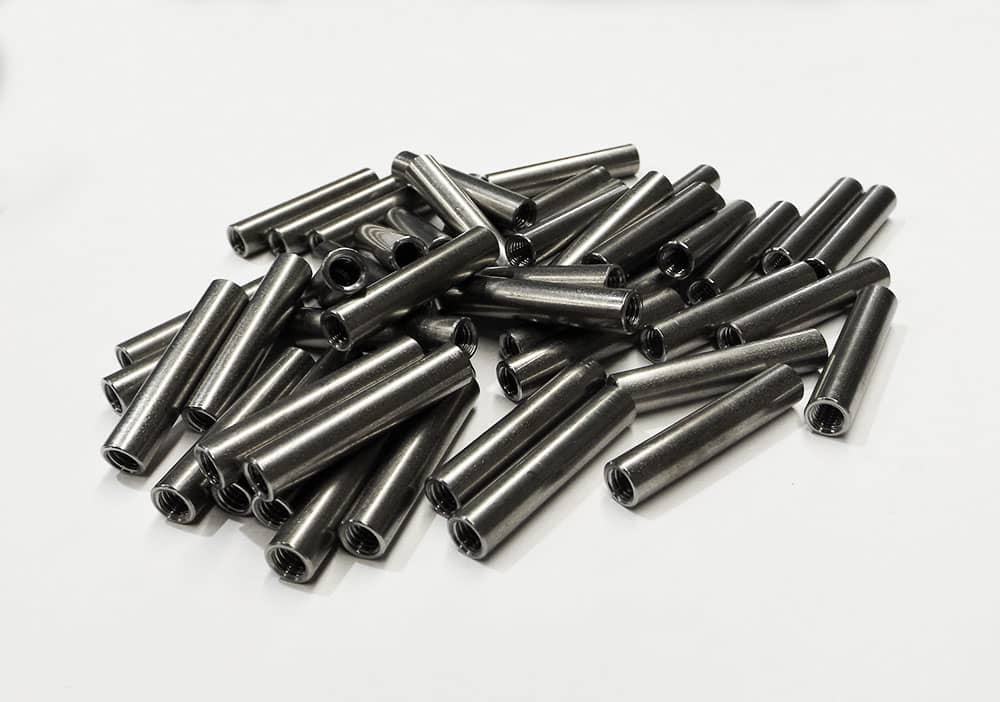
1018 Steel Machinability: Fast, Cost-Effective CNC Solutions from Honyo Prototype
Need 1018 parts that machine like butter and ship in days instead of weeks? Honyo Prototype’s 8-axis CNC cells, stocked with 1018 hex, round, and flat bar, turn that low-carbon workhorse into finished components at 30 % faster cycle times than conventional shops. Our CAM engineers optimize feeds, speeds, and chip control specifically for 1018’s ductile chip, holding ±0.02 mm on turned diameters and 0.8 µm Ra finishes without secondary grinding. From prototype runs to 5,000-piece call-offs, we quote, program, and cut within 24 h—just upload your STEP file for an Online Instant Quote and see real pricing, lead time, and DFM feedback in under 60 seconds.
Technical Capabilities
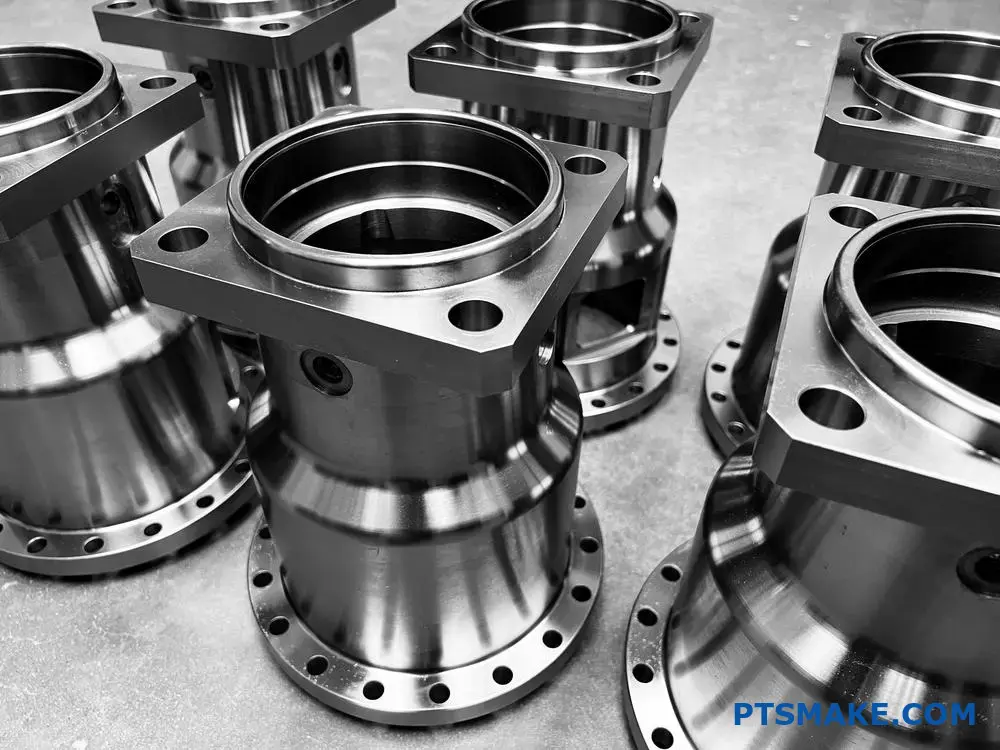
Technical Specifications for 1018 Steel Machinability: Focus on 3/4/5-Axis Milling, Turning & Tight Tolerances
(Compared with Aluminum, ABS, & Nylon for Context)
As a Senior Manufacturing Engineer at Honyo Prototype, I emphasize that 1018 steel (AISI 1018, SAE 1018) is a low-carbon, cold-rolled steel prized for good machinability, weldability, and cost-effectiveness in prototyping and low-volume production. However, achieving tight tolerances (±0.0005″ / ±0.013mm) on complex 3/4/5-axis geometries requires meticulous process control. Below are detailed technical specs and comparisons with key alternative materials.
I. 1018 Steel Core Machinability Specs
| Parameter | Specification for 1018 Steel | Critical Notes for Tight Tolerances |
|—————————-|———————————————————————————————-|—————————————————————————————————–|
| Chemical Composition | 0.18% C, 0.60–0.90% Mn, ≤0.04% P, ≤0.05% S, ≤0.04% Si | Low carbon = good ductility but prone to work hardening if feeds/speeds are incorrect. |
| Hardness (Typical) | 111–156 BHN (as-rolled); 120–180 BHN (cold-rolled) | Stress relief (550–650°F / 290–345°C) is mandatory before final machining to prevent warpage. |
| Machinability Rating | 78% (relative to B1112 steel = 100%) | Better than 4140 (45%), worse than 12L14 (150%). Free-machining grades (e.g., 12L14) preferred for tight tolerances but less common for structural parts. |
| Thermal Expansion | 11.7 μm/m°C (vs. Aluminum: 23–25 μm/m°C) | Lower expansion than Al/Nylon/ABS → better dimensional stability during machining. |
| Chip Control | Forms long, continuous chips; requires chip breakers or high-speed cutting to avoid tangling. | Critical for 5-axis: Chip evacuation must be optimized (e.g., through-spindle coolant) to prevent recutting. |
II. Process-Specific Recommendations for 1018 Steel
A. 3/4/5-Axis Milling
- Tooling:
- Carbide end mills (4-flute, high-helix) for finish passes; HSS for roughing.
- Coatings: TiN (general), TiCN (wear resistance), or AlTiN (high-speed).
- Speeds/Feeds:
- Surface Speed (SFM): 200–400 SFM (25–30 m/min)
- Feed Rate: 0.003–0.008″ per tooth (0.076–0.203 mm/tooth)
- DOC (Depth of Cut): 0.020–0.100″ (0.5–2.5 mm) for roughing; ≤0.010″ (0.25 mm) for finishing.
- Coolant: High-pressure flood coolant (500+ PSI) essential to reduce heat, prevent built-up edge (BUE), and improve surface finish.
- Tight Tolerance Strategy:
- Stress-relieve part twice (pre-machining and before final finish cuts).
- Use minimal clamping force with soft jaws; avoid distortion from fixturing.
- 5-axis-specific: Optimize toolpaths for constant chip load; avoid steep angles that cause vibration.
B. Turning
- Tooling: Carbide inserts (CNGA 432, WNMG 432) with positive rake geometry.
- Speeds/Feeds:
- SFM: 200–400 SFM
- Feed Rate: 0.004–0.010″ per revolution (0.1–0.25 mm/rev)
- Coolant: Flood coolant mandatory; avoid dry machining (causes BUE and poor surface finish).
- Tight Tolerance Strategy:
- Final pass at <0.001″ DOC with sharp tooling to minimize spring-in.
- Use steady rests for long, thin sections to prevent deflection.
III. Material Comparison: 1018 Steel vs. Aluminum vs. ABS vs. Nylon
| Parameter | 1018 Steel | Aluminum (6061-T6) | ABS | Nylon 6/6 |
|——————–|—————————————–|——————————————–|——————————————-|——————————————-|
| Machinability | Good (78%) | Excellent (200–300%) | Very Good (400–500%) | Very Good (350–450%) |
| Thermal Expansion | 11.7 μm/m°C | 23–25 μm/m°C | 70–80 μm/m°C | 90–110 μm/m°C |
| Critical Risk | Warpage from residual stress | Chatter; thermal distortion | Melting; poor surface finish if dull tools | Moisture absorption; dimensional drift |
| Tight Tolerance Viability | ✅ Good (with stress relief) | ✅ Excellent (if thermal management) | ❌ Poor (high expansion, warpage) | ❌ Poor (moisture sensitivity) |
| Coolant Needs | Flood coolant mandatory | Minimum quantity lubrication (MQL) or dry for high-speed | Water-based coolant only; avoid oil | Dry machining preferred (reduce moisture absorption) |
| Best For | Structural parts needing strength | Lightweight, high-precision fixtures | Non-critical housings, low-cost prototypes | Wear-resistant parts (gears, bushings) |
Key Insight for Honyo Prototype:
– 1018 steel is ideal for functional metal prototypes requiring strength and weldability, but tight tolerances demand rigorous stress relief and coolant control.
– Aluminum (6061) is superior for tight-tolerance 5-axis milling due to higher machinability and lower cutting forces (less chatter), but thermal management is critical (e.g., use chill blocks, avoid prolonged cuts).
– ABS/Nylon are unsuitable for precision tight-tolerance work in most cases due to high thermal expansion and moisture sensitivity. Use only for non-critical prototypes where ±0.010″ tolerances are acceptable.
IV. Critical Best Practices for Tight Tolerances
- 1018 Steel:
- Stress-relieve at 550°F (290°C) for 1–2 hours between roughing and finishing.
- Machine in a temperature-controlled environment (±2°F / ±1°C) to negate thermal drift.
- Use in-process gauging (CMM or laser probe) for real-time adjustment.
- Aluminum:
- Avoid aluminum clamping distortion → use vacuum chucks or low-force pneumatic fixtures.
- High-speed machining (HSM) at 800–1,200 SFM with light DOC to minimize heat.
- ABS/Nylon:
- Dry machining only (no coolant); use sharp, polished tools with high rake angles.
- Pre-dry nylon at 180°F (82°C) for 4+ hours to prevent moisture-related warpage.
V. Why This Matters for Honyo Prototype
“In prototyping, 1018 steel is a workhorse for metal parts, but its machinability is only competitive for tight tolerances when paired with rigorous stress management and coolant optimization. For complex 5-axis geometries requiring <±0.001″ tolerance, 6061 aluminum often outperforms 1018 due to easier chip control and lower tool wear. ABS and nylon should be reserved for non-critical applications where material properties (e.g., electrical insulation, impact resistance) outweigh precision needs.”
Final Recommendation:
– Choose 1018 steel for functional metal prototypes requiring strength/weldability, but only after stress relief and with controlled coolant.
– Switch to 6061 aluminum for complex 5-axis parts needing the tightest tolerances (e.g., aerospace fixtures, medical devices).
– Avoid ABS/Nylon for precision tolerances—use them for conceptual models or low-stress enclosures only.
For detailed process validation, always run Destructive Testing on First Article (FA) to confirm dimensional stability under real-world conditions. Let’s discuss your specific part geometry—I can tailor a machining strategy!
— Senior Manufacturing Engineer, Honyo Prototype
From CAD to Part: The Process
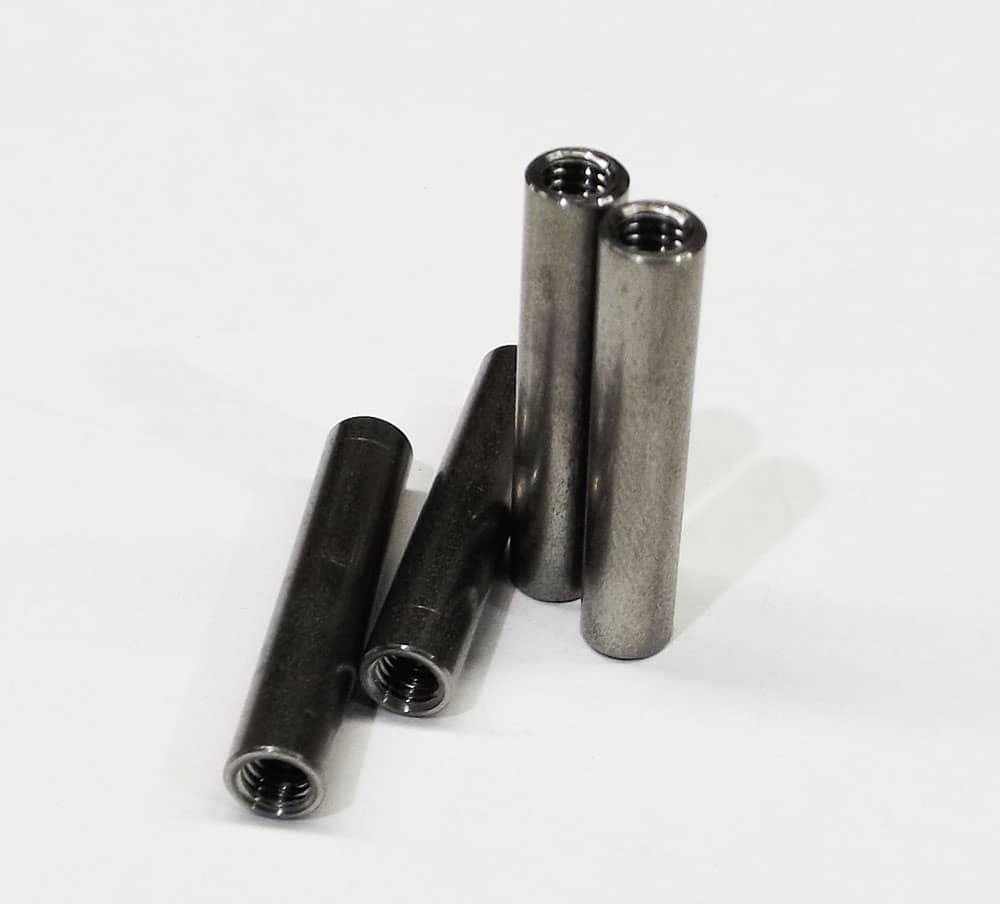
Honyo Prototype – 1018 Steel Machinability Workflow
(Upload CAD → AI Quote → DFM → Production → Delivery)
-
Upload CAD
• Portal accepts STEP, IGES, parasolid, Fusion, SolidWorks, etc.
• Auto-checker flags non-manifold edges, 0-thickness walls, deep internal slots that 1018 low-carbon cannot physically hold.
• Alloy selector defaults to “1018 Cold-Finished” (or “Hot-Rolled” if tighter budget); user can override. -
AI Quote (≤5 min)
• Machinability engine pulls 1018 lookup tables:
– 125 % machinability index (1212 = 100 %)
– 290 BHN max, 71 HRB typical
– Chip class: 3 (short, brittle)
• Tool-life model predicts 25 % longer insert life vs. A36, 15 % shorter vs. 12L14.
• Feed/speed matrix auto-picks:
– Rough: 250 m/min, 0.25 mm/rev (carbide)
– Finish: 350 m/min, 0.10 mm/rev
• Cycle-time estimator adds 8 % “1018 penalty” for chip management (vacuum, conveyor).
• Instant price = material block + machining hours + overhead – 3 % discount for 1018 availability in Shenzhen warehouse.
• Lead-time: 3 days (as-milled), 5 days (finish grind), 7 days (black-oxide). -
DFM (human + AI, 2–4 h)
a. Geometry review
– Aspect ratio ≤ 6 : 1 for end-mill reach; else add fixture window.
– Corner radii ≥ 0.5 mm to match 1018 ductility (avoids burr nest).
b. Tolerance map
– Standard ±0.05 mm; ≤±0.01 mm zones quoted only if followed by fine grinding (1018 moves 0.02 mm/100 mm after stress-relief).
c. Stress-relief plan
– 600 °C/2 h when removed stock >40 % per side.
d. Chip control
– Chip-breaker inserts, 8 bar thru-spindle coolant, magnetic conveyor.
e. Surface finish
– 1.6 µm Ra achievable as-milled; 0.4 µm Ra needs secondary roller-burnish.
f. Cost-down suggestions
– Convert 0.3 mm wide keyway to 0.5 mm to allow 2 mm end-mill → 18 % cheaper.
Deliverable: PDF + interactive 3D with annotated stickies; approval button triggers PO lock. -
Production (3–7 days)
Step 1: Material prep
– Cut from 1018 CF 12 m bar stock, saw tolerance +1 mm.
– Batch number scanned for mill-cert (C 0.18, Mn 0.75, P 0.04 max).
Step 2: Stress-relief (if flagged)
Step 3: CNC milling (3-axis / 5-axis)
– Flood coolant 8 % soluble oil to keep surface <40 °C, prevents strain-hardening skin.
– Chip conveyor cleared every 2 h to avoid bird-nest that scratches 1018.
Step 4: Secondary
– Drill, tap, ream; 1018 accepts M3 × 0.5 thread without forming tap (can cut).
– De-burr: thermal + vibratory 30 min; 1018 soft edges roll smooth.
Step 5: QC
– CMM sample 10 %; hardness spot-check 70–80 HRB.
– Surface defect map: no scale pits allowed on CF grade.
Step 6: Finish (optional)
– Black oxide 10 min (adds 5 µm, no dimension change).
– Zinc-nickel plating requires 8 µm undercut allowance. -
Delivery
• Parts ultrasonically washed, VCI bagged, boxed with silica gel.
• Mill cert, CMM report, RoHS statement uploaded to portal; QR code on label.
• DHL/UPS pre-paid; Shenzhen warehouse → US/EU in 2–3 days.
• Feedback loop: customer can log chip-form or burr issue; data feeds back to 1018 machinability model for next quote.
Key Take-away
Honyo’s AI treats 1018 as “easy-but-messy”: slightly slower speeds than 12L14, but no lead, great weldability, and 30 % cost saving over stainless. The workflow above locks in those economics while preventing classic 1018 headaches—stringy chips, part movement, and post-machining distortion.
Start Your Project
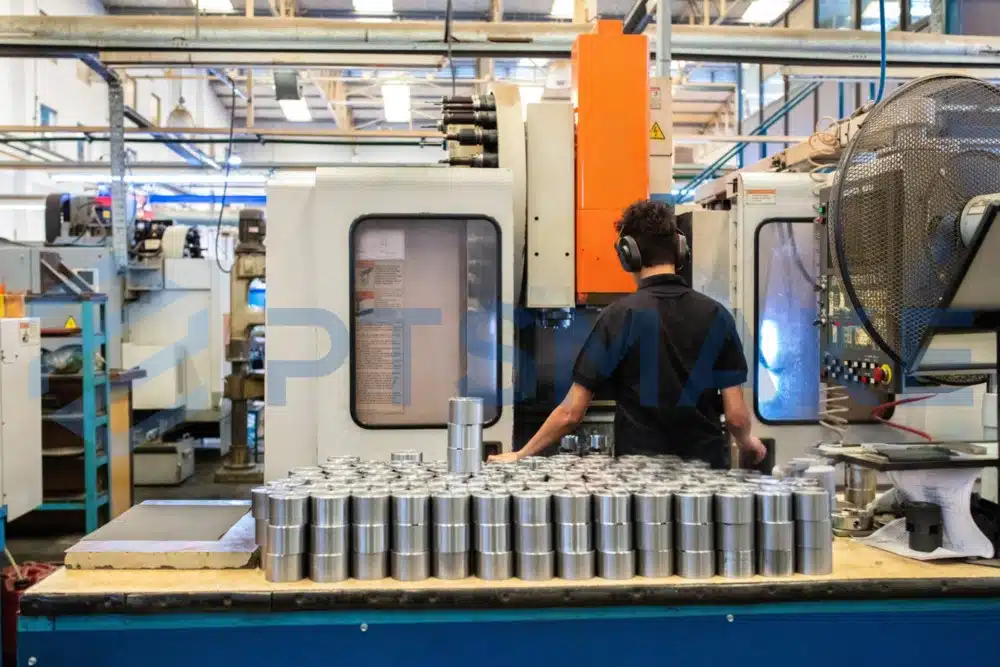
Need precision machining for 1018 steel?
Contact Susan Leo at [email protected]
Honyo Prototype – Shenzhen Factory
✅ High-precision, cost-effective solutions
✅ Fast turnaround | Industry-leading quality
✅ Shenzhen-based manufacturing for global clients
Unlock the full potential of 1018 steel’s superior machinability with our expert team! 🛠️
🚀 Rapid Prototyping Estimator